THE ADVENTURE COLLECTIVE® · Independent discovery and booking for outdoor travel

A six-day hut-based ascent via the classic Marangu Route climbs from rainforest to the icy rim of Kibo. Expect steady gains, communal huts, and a long midnight summit push to Uhuru Peak.
A six-day hut-based ascent via the classic Marangu Route climbs from rainforest to the icy rim of Kibo. Expect steady gains, communal huts, and a long midnight summit push to Uhuru Peak.
You step out of Moshi into cool morning air and the road tightens toward Marangu Gate, where tropical forest leans over a narrow trail and porters shoulder canvas duffels with practiced ease.
Verified experiences and guided adventures in the surrounding area.
Operated by Miles to Smile · Moshi, Kilimanjaro Region
You step out of Moshi into cool morning air and the road tightens toward Marangu Gate, where tropical forest leans over a narrow trail and porters shoulder canvas duffels with practiced ease.
The Marangu Route advances like a living geological primer: rainforest gives way to heath, then moorland, and finally the lunar Saddle between Mawenzi and Kibo. Kibo’s ice fields and Uhuru Peak sit above 5,800 meters—a dormant volcanic summit that records East Africa’s tectonic past in black lava and glacial ridges. The climb threads Chagga agricultural terraces at lower elevations; local guides share stories of mountain reverence and the significance of water from Kilimanjaro’s slopes to nearby communities.
Practical guidance is straightforward: this is a hut-based, six-day ascent with daily gains from ~1,860m to the 5,895m summit. Expect 4–8 hour days up to the long, technical summit push that begins around midnight; hiking time on summit day can reach 6–8 hours each way at extreme altitude and cold. Huts provide bunks and basic facilities; water is provided by porters but plan to treat or boil extra if needed. Acclimatize with the Mawenzi day-hike on day three to increase success. Gear for variable conditions—stiff boots, layered insulation, headlamp, and a sleeping bag rated for sub-zero—matters as much as fitness.
Respect park rules, carry out waste, and budget time for tipping porters and guides: the human team makes the mountain accessible. Summiting is less a sprint than a patient, altitude-aware strategy—pace, hydrate, and listen to your guide.
challenging.
6 days.
Good aerobic fitness with experience hiking 4–8 hours per day; prior multi-day trekking is recommended
Physically demanding due to altitude and a long summit push; hiking durations vary 4–8 hours/day and require stamina and good pacing.
No technical climbing skills are required, but prior multi-day trekking experience and familiarity with long uphill sections help significantly.
This is a hut-based route with communal bunks, basic dining huts, and pit or running-water toilets at several camps; bring personal hygiene items and a spare dry bag.
Acute mountain sickness is a risk above 3,000m; guides monitor symptoms, enforce acclimatization, and will descend a client if needed—be honest about your condition.
Mount Kilimanjaro is a dormant stratovolcano; its first recorded ascent was by Hans Meyer and Ludwig Purtscheller in 1889, and the mountain holds cultural importance for Chagga communities on its slopes.
Kilimanjaro National Park requires permits and fees; practice pack-in/pack-out, avoid off-trail travel, and respect porter welfare to limit environmental and social impact.
Miles to Smile operates guided outdoor trips and adventures with an emphasis on safety, stewardship, and memorable experiences.
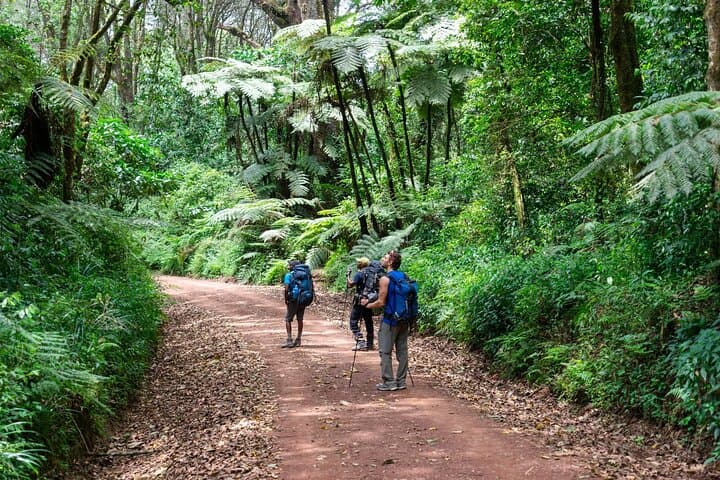
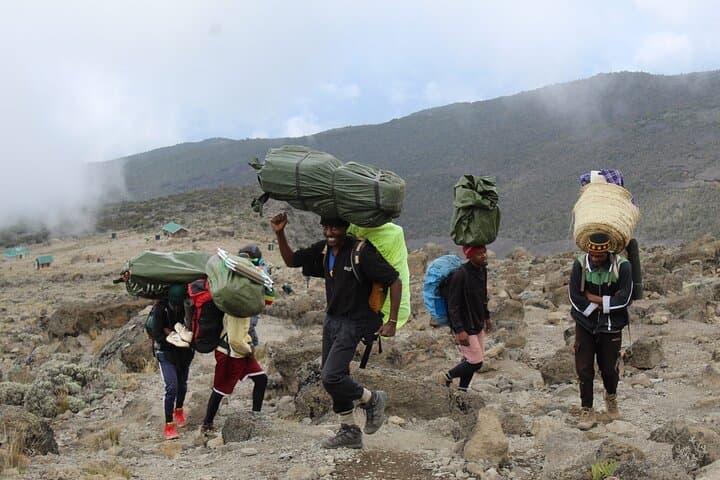
You step out of Moshi into cool morning air and the road tightens toward Marangu Gate, where tropical forest leans over a narrow trail and porters shoulder canvas duffels with practiced ease.
You step out of Moshi into cool morning air and the road tightens toward Marangu Gate, where tropical forest leans over a narrow trail and porters shoulder canvas duffels with practiced ease.
The Marangu Route advances like a living geological primer: rainforest gives way to heath, then moorland, and finally the lunar Saddle between Mawenzi and Kibo. Kibo’s ice fields and Uhuru Peak sit above 5,800 meters—a dormant volcanic summit that records East Africa’s tectonic past in black lava and glacial ridges. The climb threads Chagga agricultural terraces at lower elevations; local guides share stories of mountain reverence and the significance of water from Kilimanjaro’s slopes to nearby communities.
Practical guidance is straightforward: this is a hut-based, six-day ascent with daily gains from ~1,860m to the 5,895m summit. Expect 4–8 hour days up to the long, technical summit push that begins around midnight; hiking time on summit day can reach 6–8 hours each way at extreme altitude and cold. Huts provide bunks and basic facilities; water is provided by porters but plan to treat or boil extra if needed. Acclimatize with the Mawenzi day-hike on day three to increase success. Gear for variable conditions—stiff boots, layered insulation, headlamp, and a sleeping bag rated for sub-zero—matters as much as fitness.
Respect park rules, carry out waste, and budget time for tipping porters and guides: the human team makes the mountain accessible. Summiting is less a sprint than a patient, altitude-aware strategy—pace, hydrate, and listen to your guide.