THE ADVENTURE COLLECTIVE® · Independent discovery and booking for outdoor travel

A single-day ascent along Kilimanjaro’s Marangu Route delivers rainforest hiking to Mandara Hut, a side visit to Maundi Crater, and clear views across northern Tanzania. Ideal for travelers short on time who still want the mountain experience.
A single-day ascent along Kilimanjaro’s Marangu Route delivers rainforest hiking to Mandara Hut, a side visit to Maundi Crater, and clear views across northern Tanzania. Ideal for travelers short on time who still want the mountain experience.
You step out of a minibus as the air cools and the trail tilts upward, the eastern slopes of Kilimanjaro unfurling in tiers of green. The path threads into a living ceiling of moss and giant lobelia, water dripping from leaves as you climb from roughly 6,000 ft to the Mandara Hut at about 9,000 ft. Clouds shift overhead and, on a clear day, the rim of Maundi Crater and distant plains toward Kenya appear like an atlas flipped open.
Verified experiences and guided adventures in the surrounding area.
Operated by Bujo Tours · Marangu, Kilimanjaro Region
You step out of a minibus as the air cools and the trail tilts upward, the eastern slopes of Kilimanjaro unfurling in tiers of green. The path threads into a living ceiling of moss and giant lobelia, water dripping from leaves as you climb from roughly 6,000 ft to the Mandara Hut at about 9,000 ft. Clouds shift overhead and, on a clear day, the rim of Maundi Crater and distant plains toward Kenya appear like an atlas flipped open.
Geology here is readable: layers of volcanic debris and ancient lava flows give way to deep, well-draining volcanic soils that feed montane forest. The Marangu Route follows a long-established access corridor — historically used by the Chagga people for trade and cultivation — and is the same corridor early climbers first used to approach Kilimanjaro’s higher slopes.
Cultural notes show in roadside coffee plots and simple village life near Marangu village; guides often share Chagga stories and explain traditional land stewardship. Conservation is visible too: Kilimanjaro National Park manages trails and monitors changing glacier limits higher up.
Practically, expect a steady 3–4 hour uphill through rainforest with a lunch stop and a short side-trip to Maundi Crater before returning to the gate and a transfer back to Moshi. The trail is rooted and sometimes muddy — good hiking shoes, layered clothing, rain protection, and 1–2 liters of water are sensible. Altitude is moderate at 9,000 ft; go slow, hydrate, and alert your guide to any symptoms. This day option delivers tangible mountain time without the summit push, pairing accessible hiking with sharp vistas and a window into Kilimanjaro’s ecological zones.
moderate.
8–9 hours.
Suitable for travelers with moderate fitness; expect steady uphill sections and uneven trail surfaces.
The tour runs about 8–9 hours total, with an ascent from ~6,000 ft (Marangu Gate) to ~9,000 ft (Mandara Hut) taking roughly 3–4 hours before returning.
Yes; standard day-tour inclusions typically cover park entry, guide fees, lunch, and bottled water as listed in the tour inclusions.
Transport options and some facilities are wheelchair accessible, but the rainforest trail to Mandara Hut includes uneven, steep sections that are not wheelchair-friendly.
No previous high-altitude experience is required, but moderate fitness and awareness of altitude effects are important; guides can adjust pace.
The Marangu corridor has long been used by the Chagga people for trade and agriculture and became the first widely used route for early Kilimanjaro visitors.
Kilimanjaro National Park regulates access to reduce erosion and protect montane forest; glacial retreat at higher elevations highlights the need for sustainable tourism and trail stewardship.
Bujo Tours operates guided outdoor trips and adventures with an emphasis on safety, stewardship, and memorable experiences.
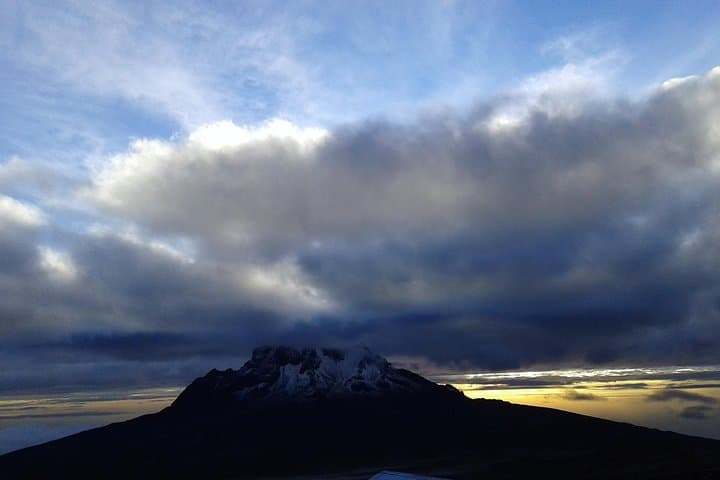
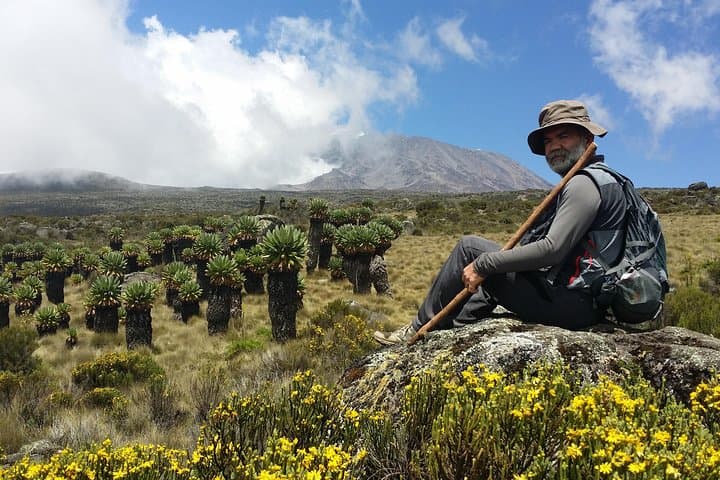
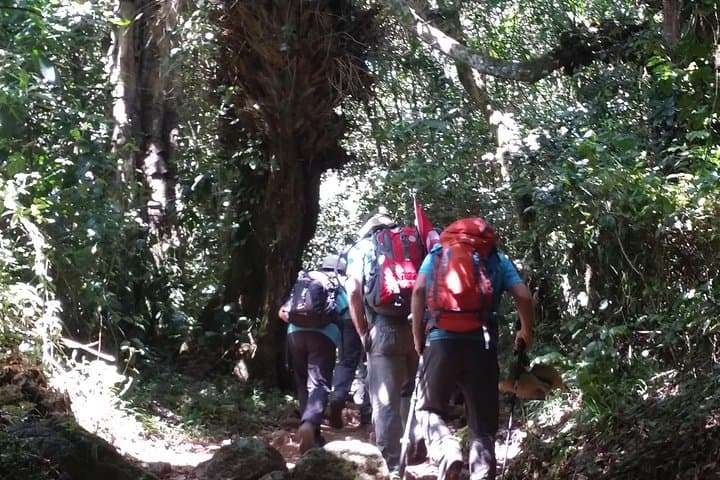
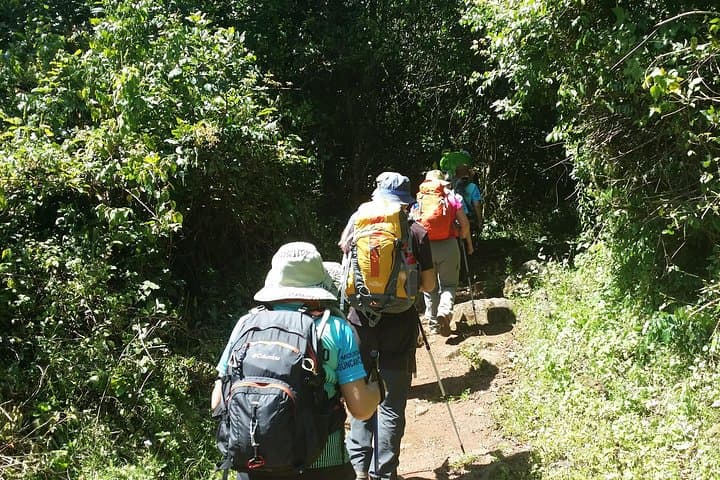
You step out of a minibus as the air cools and the trail tilts upward, the eastern slopes of Kilimanjaro unfurling in tiers of green. The path threads into a living ceiling of moss and giant lobelia, water dripping from leaves as you climb from roughly 6,000 ft to the Mandara Hut at about 9,000 ft. Clouds shift overhead and, on a clear day, the rim of Maundi Crater and distant plains toward Kenya appear like an atlas flipped open.
You step out of a minibus as the air cools and the trail tilts upward, the eastern slopes of Kilimanjaro unfurling in tiers of green. The path threads into a living ceiling of moss and giant lobelia, water dripping from leaves as you climb from roughly 6,000 ft to the Mandara Hut at about 9,000 ft. Clouds shift overhead and, on a clear day, the rim of Maundi Crater and distant plains toward Kenya appear like an atlas flipped open.
Geology here is readable: layers of volcanic debris and ancient lava flows give way to deep, well-draining volcanic soils that feed montane forest. The Marangu Route follows a long-established access corridor — historically used by the Chagga people for trade and cultivation — and is the same corridor early climbers first used to approach Kilimanjaro’s higher slopes.
Cultural notes show in roadside coffee plots and simple village life near Marangu village; guides often share Chagga stories and explain traditional land stewardship. Conservation is visible too: Kilimanjaro National Park manages trails and monitors changing glacier limits higher up.
Practically, expect a steady 3–4 hour uphill through rainforest with a lunch stop and a short side-trip to Maundi Crater before returning to the gate and a transfer back to Moshi. The trail is rooted and sometimes muddy — good hiking shoes, layered clothing, rain protection, and 1–2 liters of water are sensible. Altitude is moderate at 9,000 ft; go slow, hydrate, and alert your guide to any symptoms. This day option delivers tangible mountain time without the summit push, pairing accessible hiking with sharp vistas and a window into Kilimanjaro’s ecological zones.