THE ADVENTURE COLLECTIVE® · Independent discovery and booking for outdoor travel

Explore Te Puia’s geothermal valley after dark as geysers, terraces and native plantings are brought to life with light and sound. This hosted, 1.5 km night walk blends Māori storytelling, contemporary art and geothermal spectacle—allow 60–90 minutes to experience it fully.
Explore Te Puia’s geothermal valley after dark as geysers, terraces and native plantings are brought to life with light and sound. This hosted, 1.5 km night walk blends Māori storytelling, contemporary art and geothermal spectacle—allow 60–90 minutes to experience it fully.
The first step off the festival-lit entrance and into the valley feels like sinking into a different planet: steam ghosts rising, pools reflecting colour, and the steady breath of Pōhutu Geyser marking the night. Lights trace the edges of terraces and paths, and Maisey Rika’s music threads through the experience, guiding visitors past ten illuminated scenes that recast geothermal features as theatrical players.
Verified experiences and guided adventures in the surrounding area.
Operated by Te Puia · Rotorua, Bay of Plenty
The first step off the festival-lit entrance and into the valley feels like sinking into a different planet: steam ghosts rising, pools reflecting colour, and the steady breath of Pōhutu Geyser marking the night. Lights trace the edges of terraces and paths, and Maisey Rika’s music threads through the experience, guiding visitors past ten illuminated scenes that recast geothermal features as theatrical players.
Te Puia sits in the Whakarewarewa geothermal valley, an area long inhabited and managed by Tūhourangi and Ngāti Whakaue iwi. The geology here is recent and volatile—mud, silica terraces and the Pōhutu vent are products of the Taupō volcanic zone’s restless heat. The event layers contemporary art and Māori storytelling onto a landscape of boiling springs and bubbling fumaroles, bringing cultural context to the raw geology.
Practical information is straightforward: the trail is approximately 1.5 km and takes 60–90 minutes at an easy pace. Paths are unpaved and dimly lit between installations—comfortable, closed-toe footwear and warm, water-resistant layers are recommended. Some effects use rapid light changes; the event is not recommended for guests with epilepsy or severe light sensitivity. The route finishes through Pikirangi Village with a terrace stop where snacks and hot drinks are available for purchase.
Mārama runs mid-week to weekend evenings with gates open a fixed window—arrive at least 30 minutes before your planned start to collect wristbands and orient yourself. Respect marked walkways, keep a safe distance from geothermal features, and charge your camera: the light installations transform familiar topography into unexpected angles worth photographing.
moderate.
1–1.5 hours.
Suitable for people able to walk 1.5 km on uneven ground and stand for short periods; moderate fitness recommended.
The route is about 1.5 km; plan 60–90 minutes to walk at a relaxed pace, stop at installations and visit the Terrace area.
No. The trail includes unpaved, uneven sections and steps; it is not suitable for wheelchairs or prams.
Yes—there’s a Terrace near Pōhutu offering snacks and hot drinks for purchase, but options are limited so consider bringing water.
Children can attend under supervision, but some visual effects may be intense; the experience is not recommended for guests with epilepsy or severe light-triggered conditions.
Te Puia sits within the Whakarewarewa valley, long inhabited by Tūhourangi and Ngāti Whakaue iwi; the site blends geothermal science and Māori cultural practice and is home to the New Zealand Māori Arts and Crafts Institute.
Geothermal features are delicate; stay on marked paths, avoid touching terraces, and follow Te Puia guidelines to reduce erosion and disturbance from foot traffic.
Te Puia operates guided outdoor trips and adventures with an emphasis on safety, stewardship, and memorable experiences.
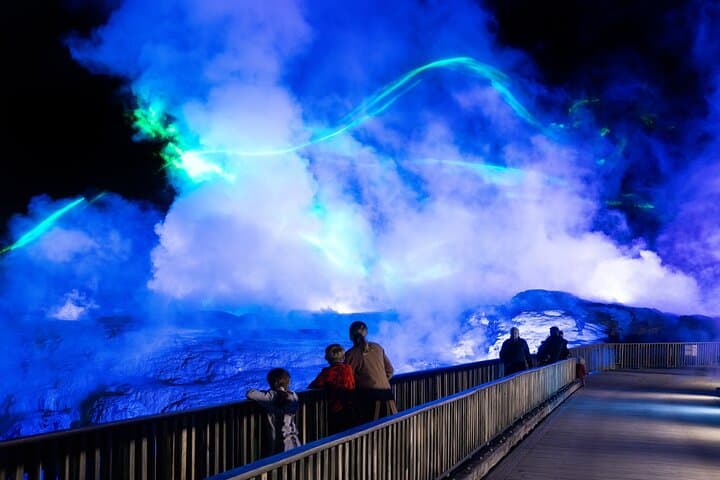
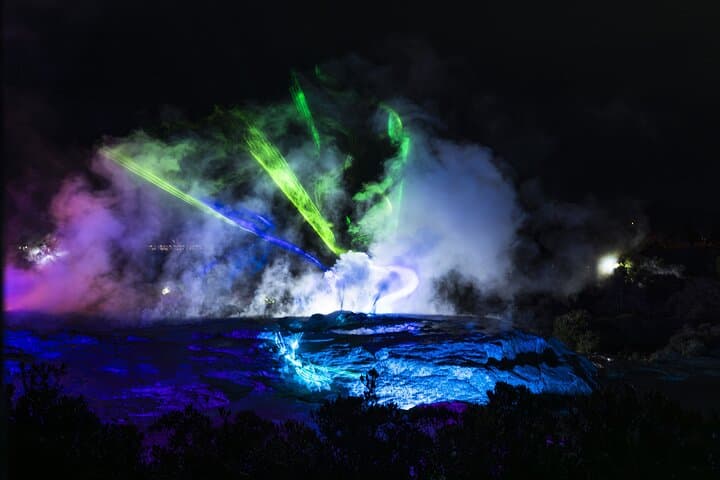
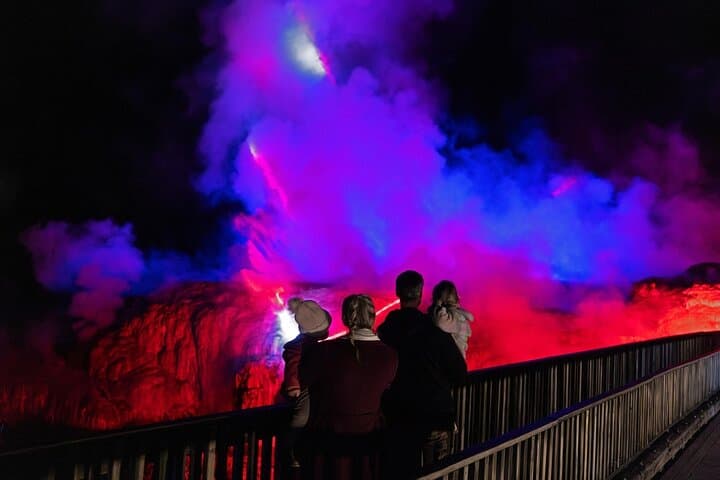
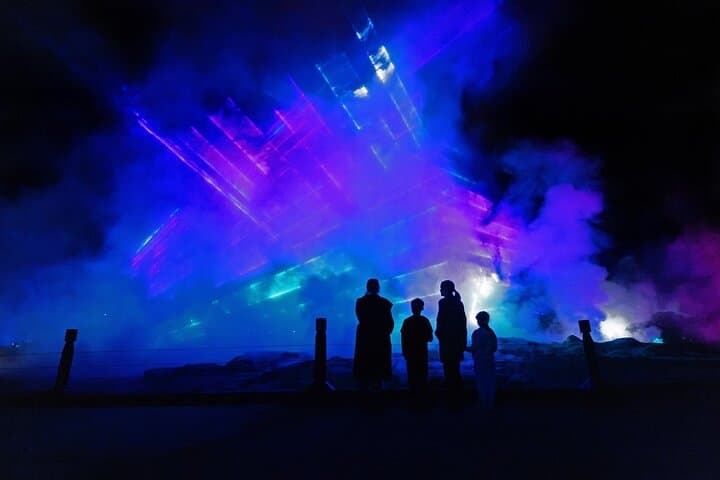
The first step off the festival-lit entrance and into the valley feels like sinking into a different planet: steam ghosts rising, pools reflecting colour, and the steady breath of Pōhutu Geyser marking the night. Lights trace the edges of terraces and paths, and Maisey Rika’s music threads through the experience, guiding visitors past ten illuminated scenes that recast geothermal features as theatrical players.
The first step off the festival-lit entrance and into the valley feels like sinking into a different planet: steam ghosts rising, pools reflecting colour, and the steady breath of Pōhutu Geyser marking the night. Lights trace the edges of terraces and paths, and Maisey Rika’s music threads through the experience, guiding visitors past ten illuminated scenes that recast geothermal features as theatrical players.
Te Puia sits in the Whakarewarewa geothermal valley, an area long inhabited and managed by Tūhourangi and Ngāti Whakaue iwi. The geology here is recent and volatile—mud, silica terraces and the Pōhutu vent are products of the Taupō volcanic zone’s restless heat. The event layers contemporary art and Māori storytelling onto a landscape of boiling springs and bubbling fumaroles, bringing cultural context to the raw geology.
Practical information is straightforward: the trail is approximately 1.5 km and takes 60–90 minutes at an easy pace. Paths are unpaved and dimly lit between installations—comfortable, closed-toe footwear and warm, water-resistant layers are recommended. Some effects use rapid light changes; the event is not recommended for guests with epilepsy or severe light sensitivity. The route finishes through Pikirangi Village with a terrace stop where snacks and hot drinks are available for purchase.
Mārama runs mid-week to weekend evenings with gates open a fixed window—arrive at least 30 minutes before your planned start to collect wristbands and orient yourself. Respect marked walkways, keep a safe distance from geothermal features, and charge your camera: the light installations transform familiar topography into unexpected angles worth photographing.