THE ADVENTURE COLLECTIVE® · Independent discovery and booking for outdoor travel

Short, private and scenic — Maoi Hill’s reservation‑only winter terrace pairs a brief snowshoe approach with floor‑to‑horizon views of the Ishikari Plain and coffee from a local roastery. Ideal for travelers seeking a quiet, accessible winter moment close to New Chitose Airport.
Short, private and scenic — Maoi Hill’s reservation‑only winter terrace pairs a brief snowshoe approach with floor‑to‑horizon views of the Ishikari Plain and coffee from a local roastery. Ideal for travelers seeking a quiet, accessible winter moment close to New Chitose Airport.
The wind on Maoi Hill cuts clean and cold; the Ishikari Plain unfolds below as a vast white sheet, 3,800 km² of winter that seems to hold the horizon at bay. Visitors arrive by car or taxi, step into snowshoes, and make a short 150‑metre trek through deep drifts to a reservation‑only deck where a guide pours coffee from a local roastery and the plain stretches uninterrupted to the sea.
Verified experiences and guided adventures in the surrounding area.
Operated by Go Hokkaido · Naganuma, Hokkaido
The wind on Maoi Hill cuts clean and cold; the Ishikari Plain unfolds below as a vast white sheet, 3,800 km² of winter that seems to hold the horizon at bay. Visitors arrive by car or taxi, step into snowshoes, and make a short 150‑metre trek through deep drifts to a reservation‑only deck where a guide pours coffee from a local roastery and the plain stretches uninterrupted to the sea.
Geology here is recent and plain — sediment and volcanic ash leveled by glacial and river action to form Hokkaido’s largest lowland. Culturally the region sits on land long used by the Ainu and later developed for agriculture during Hokkaido’s settlement; the view is as much an agricultural landscape as a winterstage for solitude. Guides often point out farmsteads, river channels, and the distant ridge lines that frame Sapporo’s skyline.
Practically: this is a short, easy winter outing — ninety minutes from meet to farewell — designed for a single private group. Snowshoes are worn for a gentle walk to the deck; guests should expect deep snow underfoot and steady wind on the exposed hilltop. Timing matters: morning light and late afternoon have the cleanest visibility and the warmest coffee feels earned.
Bring waterproof boots, layered insulation, windproof outerwear, and a camera with spare batteries. Book in advance, allow 30 minutes from New Chitose Airport or roughly 50 minutes from central Sapporo, and be prepared for weather cancellations that preserve safety and the view.
easy.
90 minutes.
Suitable for most fitness levels; requires short, flat snowshoe walk of about 150 metres.
Yes—snowshoes are used to access the private deck; the operator provides them as part of the activity.
Yes—the terrace is reserved for one group at a time so you can enjoy the view without other visitors.
Most guests arrive by rental car or taxi from New Chitose Airport (≈30 minutes) or Sapporo (≈50 minutes); public transport options exist nearby but may require additional local transfer.
The experience can be cancelled for safety or visibility concerns; cancel at least 24 hours before for a full refund per the operator’s policy.
The Ishikari Plain developed through sedimentation and irrigation works; the surrounding towns grew during Hokkaido’s 19th–20th century agricultural settlement and include Ainu cultural history.
Stay on provided access routes and the deck to avoid crushing winter vegetation and disturbing wildlife; local guides manage group size to minimize impact.
Go Hokkaido operates guided outdoor trips and adventures with an emphasis on safety, stewardship, and memorable experiences.
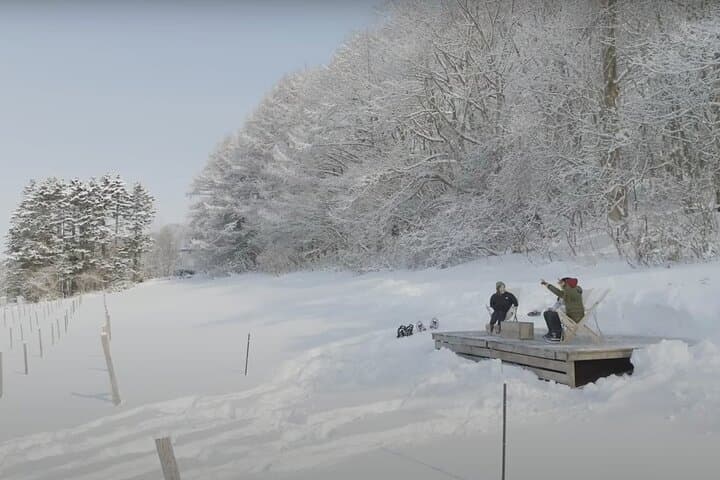
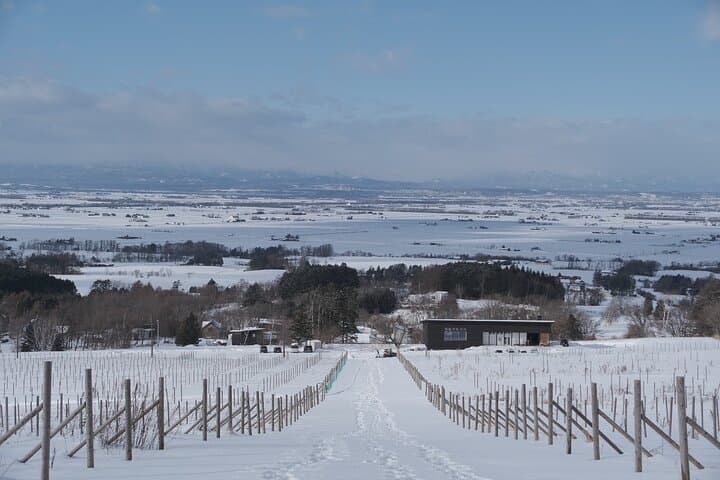
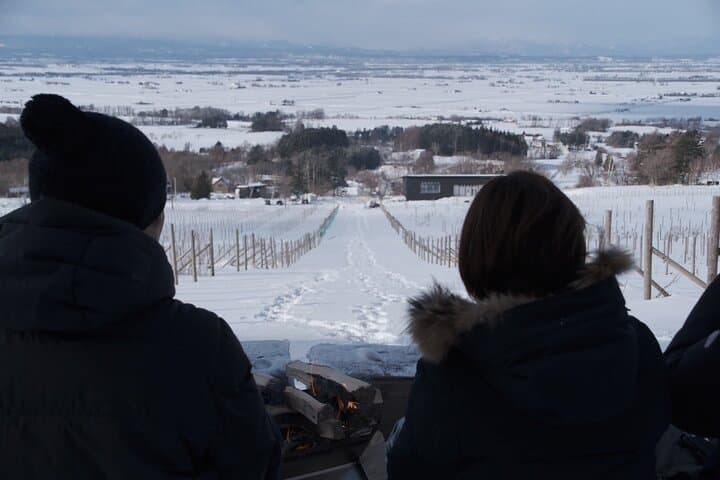
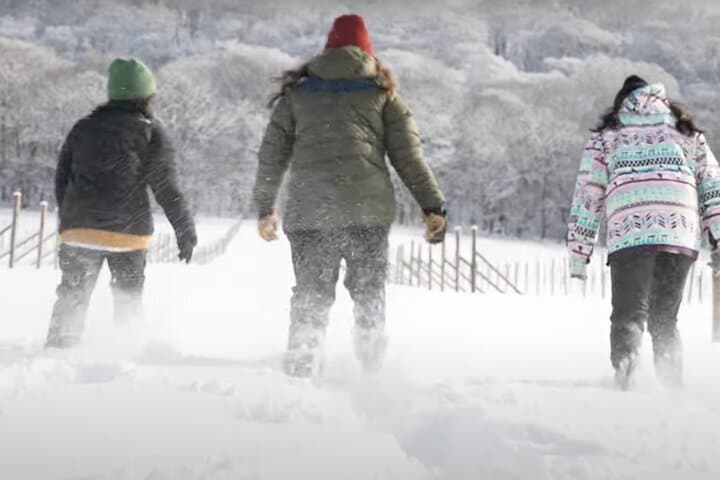
The wind on Maoi Hill cuts clean and cold; the Ishikari Plain unfolds below as a vast white sheet, 3,800 km² of winter that seems to hold the horizon at bay. Visitors arrive by car or taxi, step into snowshoes, and make a short 150‑metre trek through deep drifts to a reservation‑only deck where a guide pours coffee from a local roastery and the plain stretches uninterrupted to the sea.
The wind on Maoi Hill cuts clean and cold; the Ishikari Plain unfolds below as a vast white sheet, 3,800 km² of winter that seems to hold the horizon at bay. Visitors arrive by car or taxi, step into snowshoes, and make a short 150‑metre trek through deep drifts to a reservation‑only deck where a guide pours coffee from a local roastery and the plain stretches uninterrupted to the sea.
Geology here is recent and plain — sediment and volcanic ash leveled by glacial and river action to form Hokkaido’s largest lowland. Culturally the region sits on land long used by the Ainu and later developed for agriculture during Hokkaido’s settlement; the view is as much an agricultural landscape as a winterstage for solitude. Guides often point out farmsteads, river channels, and the distant ridge lines that frame Sapporo’s skyline.
Practically: this is a short, easy winter outing — ninety minutes from meet to farewell — designed for a single private group. Snowshoes are worn for a gentle walk to the deck; guests should expect deep snow underfoot and steady wind on the exposed hilltop. Timing matters: morning light and late afternoon have the cleanest visibility and the warmest coffee feels earned.
Bring waterproof boots, layered insulation, windproof outerwear, and a camera with spare batteries. Book in advance, allow 30 minutes from New Chitose Airport or roughly 50 minutes from central Sapporo, and be prepared for weather cancellations that preserve safety and the view.