THE ADVENTURE COLLECTIVE® · Independent discovery and booking for outdoor travel

Walk the rainforest after dark with a certified local guide and encounter frogs, nocturnal mammals, and an immersive night soundscape. This easy, slow-paced expedition is tailored for photographers, families with older kids, and curious nature lovers.
Walk the rainforest after dark with a certified local guide and encounter frogs, nocturnal mammals, and an immersive night soundscape. This easy, slow-paced expedition is tailored for photographers, families with older kids, and curious nature lovers.
Dusk slides over the Pacific and the forest exhales — a chorus of insects, distant surf, and the thin, curious calls of frogs. On the Manuel Antonio Night Walk Expedition, a certified local guide leads small groups along lowland rainforest trails lit by moon and headlamp, pausing to point out eyeshine, listen for rustling in the understory, and frame low-light photos.
Verified experiences and guided adventures in the surrounding area.
Operated by Nature Tribe Costa Rica · Quepos, Puntarenas
Dusk slides over the Pacific and the forest exhales — a chorus of insects, distant surf, and the thin, curious calls of frogs. On the Manuel Antonio Night Walk Expedition, a certified local guide leads small groups along lowland rainforest trails lit by moon and headlamp, pausing to point out eyeshine, listen for rustling in the understory, and frame low-light photos.
The park, established in the early 1970s, protects coastal rainforest carved from volcanic soils and marine terraces; limestone is rare here, but the terrain’s roots-and-rock mix still betrays the tectonic energy of Costa Rica’s Pacific edge. Local culture leans on fishing and small-scale tourism — guides often share notes on traditional uses of medicinal plants and the park’s role in regional conservation.
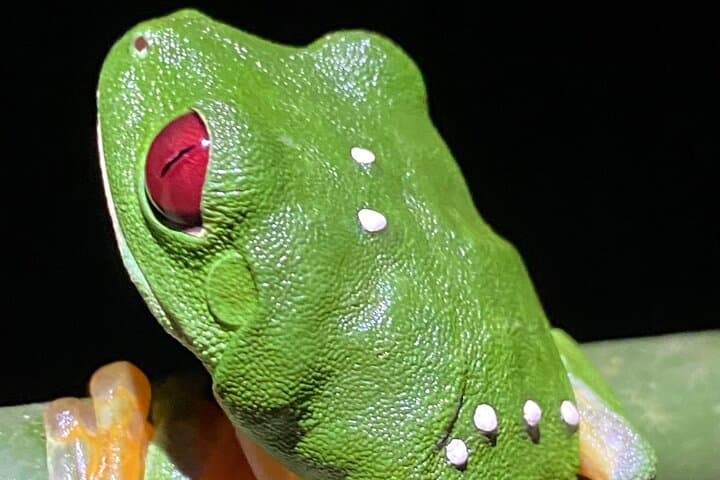
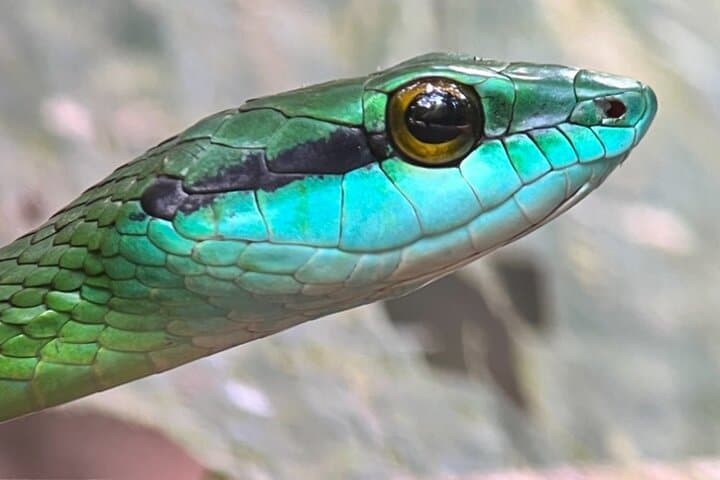
Expect to see tree frogs clinging to leaves, nocturnal insects tracing the air, and small mammals like kinkajous or coatis moving high in the canopy. The forest behaves like a patient animal at night: sounds creep forward, branches whisper, and creatures test the darkness.
Practical guidance: dress in quick-dry layers and closed-toe shoes; bring a headlamp with red-light mode and insect repellent. Walks are slow-paced over mostly flat but uneven ground; the guide enforces quiet and respectful distances to minimize disturbance. Photography is possible but low light demands steady hands or compact tripods and patience. Tours run about 1.5–2 hours and are best early in the night when wildlife is active. Leave no trace, avoid flash on animals, and be prepared for sudden showers during the wet months. This night walk is a compact, accessible way to experience Costa Rica’s nocturnal rainforest with expert local guidance.
easy.
1.5–2 hours.
Suitable for people who can walk gently for up to two hours on uneven, low-light trails; minimal exertion required.
Yes for older children who can walk quietly and follow guide instructions; operators typically recommend ages 6–8+ depending on group dynamics.
Monkeys are mostly diurnal and less likely at night; sloths can be spotted but are less active — tree frogs, insects, and small nocturnal mammals are more common.
Yes — cameras and phones are allowed, but low light means long exposures or high ISO; a small tripod or image-stabilized lens helps, and avoid flash on wildlife.
Guides monitor conditions; light rain usually won’t cancel, but extreme weather may prompt rescheduling or cancellation for safety.
Manuel Antonio National Park was created in the early 1970s to protect coastal rainforest and beach habitat near Quepos as tourism grew in the region.
Stay on marked paths, avoid flash photos, and follow the guide’s instructions to reduce disturbance to nocturnal species and protect fragile understory plants.
Nature Tribe Costa Rica operates guided outdoor trips and adventures with an emphasis on safety, stewardship, and memorable experiences.
Dusk slides over the Pacific and the forest exhales — a chorus of insects, distant surf, and the thin, curious calls of frogs. On the Manuel Antonio Night Walk Expedition, a certified local guide leads small groups along lowland rainforest trails lit by moon and headlamp, pausing to point out eyeshine, listen for rustling in the understory, and frame low-light photos.
Dusk slides over the Pacific and the forest exhales — a chorus of insects, distant surf, and the thin, curious calls of frogs. On the Manuel Antonio Night Walk Expedition, a certified local guide leads small groups along lowland rainforest trails lit by moon and headlamp, pausing to point out eyeshine, listen for rustling in the understory, and frame low-light photos.
The park, established in the early 1970s, protects coastal rainforest carved from volcanic soils and marine terraces; limestone is rare here, but the terrain’s roots-and-rock mix still betrays the tectonic energy of Costa Rica’s Pacific edge. Local culture leans on fishing and small-scale tourism — guides often share notes on traditional uses of medicinal plants and the park’s role in regional conservation.
Expect to see tree frogs clinging to leaves, nocturnal insects tracing the air, and small mammals like kinkajous or coatis moving high in the canopy. The forest behaves like a patient animal at night: sounds creep forward, branches whisper, and creatures test the darkness.
Practical guidance: dress in quick-dry layers and closed-toe shoes; bring a headlamp with red-light mode and insect repellent. Walks are slow-paced over mostly flat but uneven ground; the guide enforces quiet and respectful distances to minimize disturbance. Photography is possible but low light demands steady hands or compact tripods and patience. Tours run about 1.5–2 hours and are best early in the night when wildlife is active. Leave no trace, avoid flash on animals, and be prepared for sudden showers during the wet months. This night walk is a compact, accessible way to experience Costa Rica’s nocturnal rainforest with expert local guidance.