THE ADVENTURE COLLECTIVE® · Independent discovery and booking for outdoor travel

Walk the rainforest after dark with a naturalist guide and discover nocturnal frogs, owls and mammals around Manuel Antonio. This small‑group, two‑hour tour focuses on education, close observation and low‑impact exploration.
Walk the rainforest after dark with a naturalist guide and discover nocturnal frogs, owls and mammals around Manuel Antonio. This small‑group, two‑hour tour focuses on education, close observation and low‑impact exploration.
The forest breathes differently after sunset — humidity hangs in the air, leaf litter squeaks underfoot and distant waves punctuate the darkness. On this two‑hour guided night walk near Manuel Antonio National Park, a naturalist leads a small group along shaded trails, sweeping a flashlight beam and coaxing hidden life into view.
Verified experiences and guided adventures in the surrounding area.
Operated by Travel and Birding · Manuel Antonio, Puntarenas
The forest breathes differently after sunset — humidity hangs in the air, leaf litter squeaks underfoot and distant waves punctuate the darkness. On this two‑hour guided night walk near Manuel Antonio National Park, a naturalist leads a small group along shaded trails, sweeping a flashlight beam and coaxing hidden life into view.
Manuel Antonio sits on Costa Rica’s central Pacific coast, a strip of low volcanic ridges, tropical rainforest and coastal terraces formed by uplift and erosion. The area was set aside as a national park in the 1970s to protect its shoreline forest and marine fringe. Locals here still read the tide and the seasons; for guides, the night is another map of species and behavior.
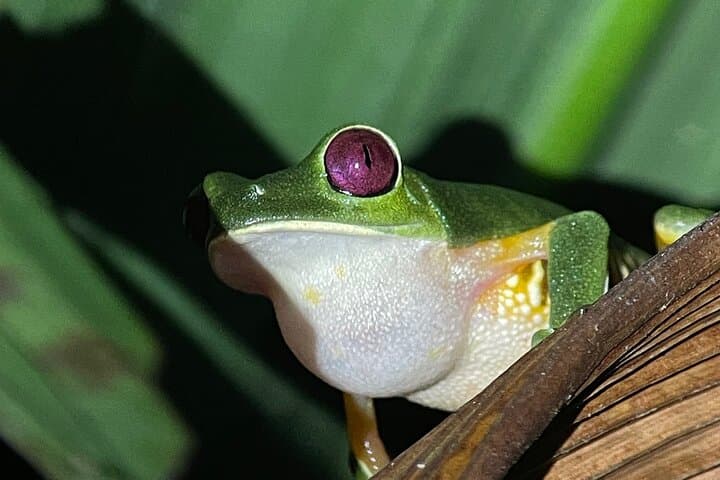
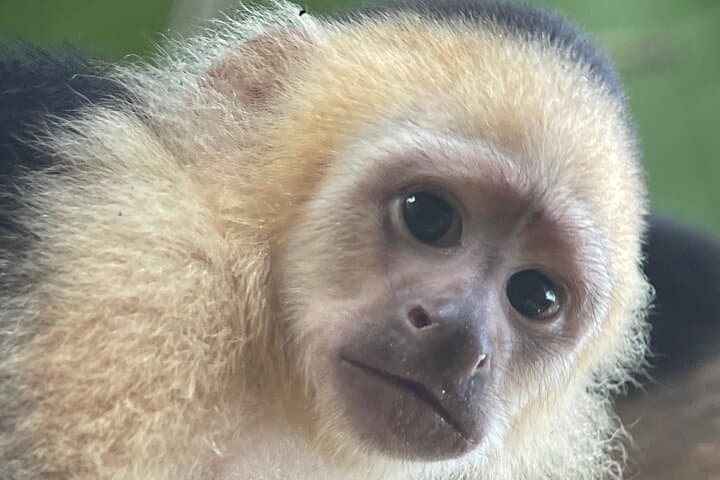
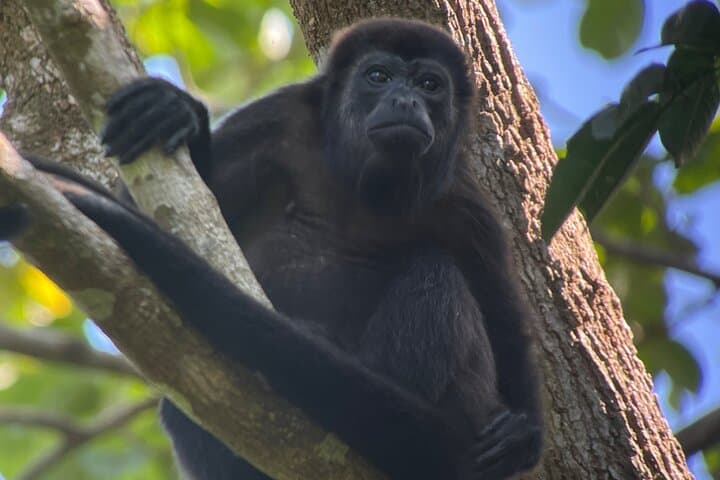
Expect close-up encounters with frogs, insects, owls and nocturnal mammals as the guide points out reflective eyes and subtle calls. Trails are narrow, roots exposed and the understory dense — the forest becomes an active partner, rustling and revealing. The experience is educational: guides discuss species roles, predator–prey cues and how light affects animal behavior.
Practicalities: meet at the parking lot in Manuel Antonio or Quepos; groups are capped at eight. Flashlights or headlamps are useful even though guides provide lighting. Wear sturdy closed‑toe shoes, bring insect repellent and a light rain layer — showers are common. Walk steadily, keep voices low and follow the guide’s safety briefings to minimize disturbance.
This tour suits people comfortable moving on uneven ground at night and those eager to see a rainforest that only shows itself after dark.
easy.
2 hours.
Light walking ability; able to manage uneven terrain and brief uphill/downhill sections
Yes — the tour is family‑friendly, but young children should be able to walk for two hours and follow safety instructions; confirm age policies with the operator.
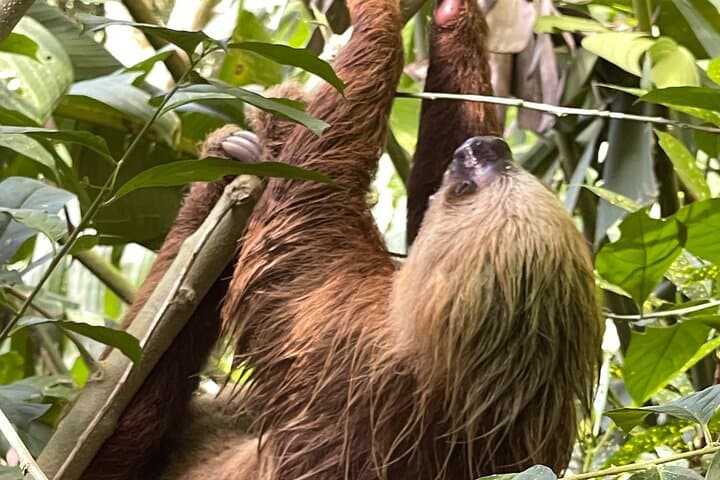
Sloths can be spotted occasionally, but nocturnal sightings focus more on frogs, insects, owls, bats and small mammals; sightings are never guaranteed.
No — flash photography and loud noises disturb wildlife; guides request low voices and no flash to protect animals and improve viewing.
This activity involves uneven, dimly lit trails and is not suitable for people with significant mobility limitations; contact the operator for specifics.
Manuel Antonio area became a protected national park in the 1970s to conserve coastal rainforest and shoreline habitat amid growing development.
Tours operate under park and local guidelines to minimize disturbance; stay on trails, avoid flash photography and follow guide instructions to protect sensitive nocturnal species.
Travel and Birding operates guided outdoor trips and adventures with an emphasis on safety, stewardship, and memorable experiences.
The forest breathes differently after sunset — humidity hangs in the air, leaf litter squeaks underfoot and distant waves punctuate the darkness. On this two‑hour guided night walk near Manuel Antonio National Park, a naturalist leads a small group along shaded trails, sweeping a flashlight beam and coaxing hidden life into view.
The forest breathes differently after sunset — humidity hangs in the air, leaf litter squeaks underfoot and distant waves punctuate the darkness. On this two‑hour guided night walk near Manuel Antonio National Park, a naturalist leads a small group along shaded trails, sweeping a flashlight beam and coaxing hidden life into view.
Manuel Antonio sits on Costa Rica’s central Pacific coast, a strip of low volcanic ridges, tropical rainforest and coastal terraces formed by uplift and erosion. The area was set aside as a national park in the 1970s to protect its shoreline forest and marine fringe. Locals here still read the tide and the seasons; for guides, the night is another map of species and behavior.
Expect close-up encounters with frogs, insects, owls and nocturnal mammals as the guide points out reflective eyes and subtle calls. Trails are narrow, roots exposed and the understory dense — the forest becomes an active partner, rustling and revealing. The experience is educational: guides discuss species roles, predator–prey cues and how light affects animal behavior.
Practicalities: meet at the parking lot in Manuel Antonio or Quepos; groups are capped at eight. Flashlights or headlamps are useful even though guides provide lighting. Wear sturdy closed‑toe shoes, bring insect repellent and a light rain layer — showers are common. Walk steadily, keep voices low and follow the guide’s safety briefings to minimize disturbance.
This tour suits people comfortable moving on uneven ground at night and those eager to see a rainforest that only shows itself after dark.