THE ADVENTURE COLLECTIVE® · Independent discovery and booking for outdoor travel

Spend two hours with a certified naturalist exploring Manuel Antonio National Park’s rainforest trails and ending on one of Costa Rica’s most-loved beaches. Learn how local history, geology, and conservation shape the wildlife you’ll see.
Spend two hours with a certified naturalist exploring Manuel Antonio National Park’s rainforest trails and ending on one of Costa Rica’s most-loved beaches. Learn how local history, geology, and conservation shape the wildlife you’ll see.
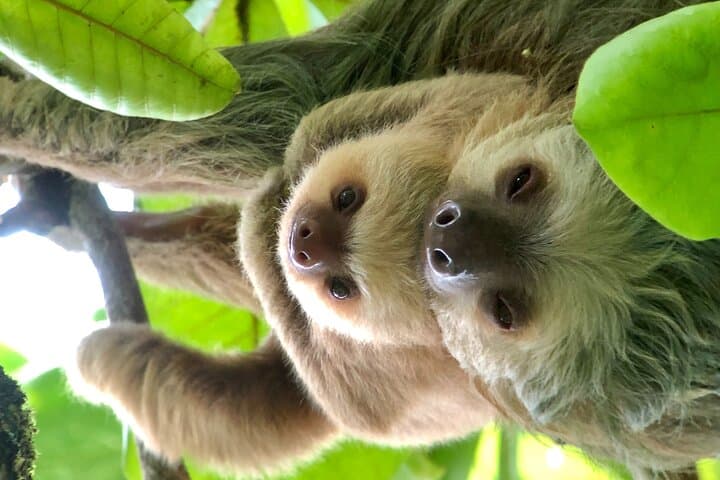
You step from the humid trail into a slice of Pacific biodiversity—mossy roots underfoot, a chorus of insect calls above, and a guide scanning the canopy with a high-definition scope that brings a sloth’s slow blink into crisp view.
Verified experiences and guided adventures in the surrounding area.
Operated by Nature Tribe Costa Rica · Quepos, Puntarenas
You step from the humid trail into a slice of Pacific biodiversity—mossy roots underfoot, a chorus of insect calls above, and a guide scanning the canopy with a high-definition scope that brings a sloth’s slow blink into crisp view.
Manuel Antonio National Park, set on Costa Rica’s central Pacific coast, was created in the early 1970s to protect a compact but ecologically rich stretch of rainforest and reef-front beaches. The park’s steep coastal knobs are volcanic in origin; erosion and uplift have carved short, sharp ridgelines that drop quickly to the sea, producing sheltered coves and rocky points that concentrate marine life.
Local culture colors the experience: Quepos supplies fresh seafood to beachfront sodas and local guides often weave indigenous and Afro-Caribbean stories into natural-history observations. Expect to hear about conservation battles that secured the park and current efforts to manage visitor numbers.
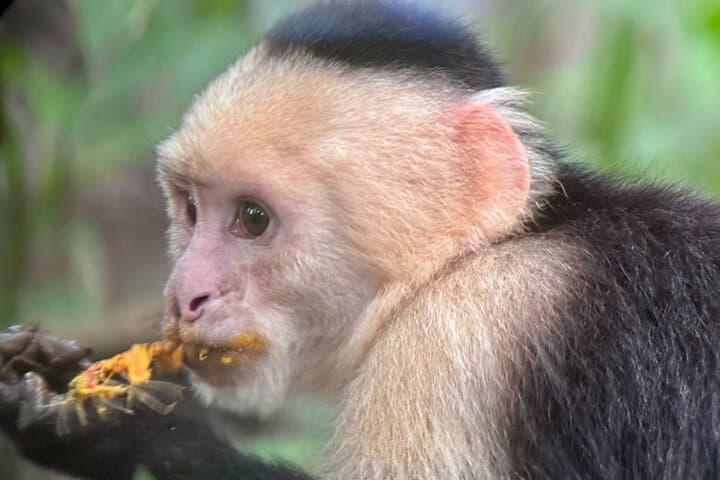
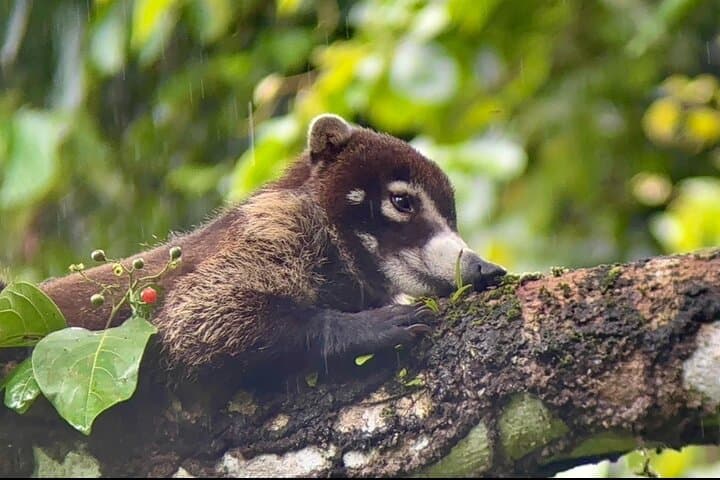
On the trail you’ll encounter iguanas sunning on roots, loud white-faced capuchins, and the slow-paced sloth tucked into bromeliads; migratory shorebirds congregate on the sandy crescent of Manuel Antonio Beach at low tide. The guide’s scope magnifies tiny darting frogs and distant toucan calls into visible, photographable moments.
Practical guidance: bring reef-safe sunscreen, closed-toe shoes for uneven, sometimes muddy paths, and enough water for a two-hour outing. Park entrance tickets must be purchased separately through the official SINAC website; tours do not include admission. Morning walks are cooler and wildlife-active; afternoons offer calmer seas for a post-walk swim. Respect the posted distances from animals—stay quiet, follow your guide, and leave no trace to support ongoing conservation.
easy.
2 hours.
Suitable for most fitness levels; requires walking on uneven ground and short stair sections
No. Entrance tickets must be purchased separately through the official SINAC website before visiting.
The guide meets guests at Chalo Parking Joseth, next to the Joseth supermarket just before the national park entrance.
The activity is described as accessible for strollers and wheelchair users for certain areas, but some trails have stairs and uneven terrain—contact the operator to discuss specific accessibility needs.
While sightings aren’t guaranteed, guides maximize opportunities using local knowledge and spotting scopes; mornings increase the likelihood of active wildlife.
Manuel Antonio was designated a national park in the early 1970s to protect coastal rainforest and marine habitats amid growing development pressures.
The park limits daily visitors and enforces trail rules to reduce disturbance; stick to paths, keep distance from animals, and use reef-safe sunscreen to support ongoing protection efforts.
Nature Tribe Costa Rica operates guided outdoor trips and adventures with an emphasis on safety, stewardship, and memorable experiences.

You step from the humid trail into a slice of Pacific biodiversity—mossy roots underfoot, a chorus of insect calls above, and a guide scanning the canopy with a high-definition scope that brings a sloth’s slow blink into crisp view.
You step from the humid trail into a slice of Pacific biodiversity—mossy roots underfoot, a chorus of insect calls above, and a guide scanning the canopy with a high-definition scope that brings a sloth’s slow blink into crisp view.
Manuel Antonio National Park, set on Costa Rica’s central Pacific coast, was created in the early 1970s to protect a compact but ecologically rich stretch of rainforest and reef-front beaches. The park’s steep coastal knobs are volcanic in origin; erosion and uplift have carved short, sharp ridgelines that drop quickly to the sea, producing sheltered coves and rocky points that concentrate marine life.
Local culture colors the experience: Quepos supplies fresh seafood to beachfront sodas and local guides often weave indigenous and Afro-Caribbean stories into natural-history observations. Expect to hear about conservation battles that secured the park and current efforts to manage visitor numbers.
On the trail you’ll encounter iguanas sunning on roots, loud white-faced capuchins, and the slow-paced sloth tucked into bromeliads; migratory shorebirds congregate on the sandy crescent of Manuel Antonio Beach at low tide. The guide’s scope magnifies tiny darting frogs and distant toucan calls into visible, photographable moments.
Practical guidance: bring reef-safe sunscreen, closed-toe shoes for uneven, sometimes muddy paths, and enough water for a two-hour outing. Park entrance tickets must be purchased separately through the official SINAC website; tours do not include admission. Morning walks are cooler and wildlife-active; afternoons offer calmer seas for a post-walk swim. Respect the posted distances from animals—stay quiet, follow your guide, and leave no trace to support ongoing conservation.