THE ADVENTURE COLLECTIVE® · Independent discovery and booking for outdoor travel

Explore Manuel Antonio’s rainforests, beaches, and abundant wildlife on a guided nature walk. This accessible 2–4 hour tour pairs close animal encounters with practical local knowledge for a responsible outdoor experience.
Explore Manuel Antonio’s rainforests, beaches, and abundant wildlife on a guided nature walk. This accessible 2–4 hour tour pairs close animal encounters with practical local knowledge for a responsible outdoor experience.
Stepping onto the shaded trail of Manuel Antonio, the forest closes around you like a living room — humid air, the chatter of monkeys, and a chorus of birds demanding attention. Sunlight breaks through in bright ribs, and the Pacific pushes warm surf onto white sand just beyond the canopy.
Verified experiences and guided adventures in the surrounding area.
Operated by Costa Rica Groups Travel Company · Manuel Antonio, Puntarenas
Stepping onto the shaded trail of Manuel Antonio, the forest closes around you like a living room — humid air, the chatter of monkeys, and a chorus of birds demanding attention. Sunlight breaks through in bright ribs, and the Pacific pushes warm surf onto white sand just beyond the canopy.
Designated as a national park in 1972 and protected for decades, Manuel Antonio occupies a narrow coastal shelf carved from volcanic rock and marine terraces. Its soils and cliffs owe their shape to uplift and erosion; the mix of lowland rainforest and palm-lined beaches supports over 180 recorded bird species and a suite of mammals adapted to a human-touched landscape. Local communities in Quepos and the surrounding Puntarenas region have long balanced fishing and tourism, and today guided walks reflect both Costa Rica’s conservation ethic and its ecotourism economy.
On a guided nature walk expect close-up encounters with three monkey species, sloths draped like ornaments, basilisk lizards sprinting across streams, and coatis investigating foot traffic. Trails are well-marked but can be uneven and muddy after rain; beach access offers a cool payoff and swimming when conditions allow.
Practical guidance: bring water, reef-safe sunscreen, and insect repellent; wear sturdy, closed-toe shoes and a lightweight rain layer. Park entry requires a fee and can be busy in dry season mornings—early or late walks find quieter wildlife viewing. Follow your guide’s instructions to minimize disturbance and leave the habitat intact for the next visitor.
easy.
2–4 hours.
Suitable for most fitness levels; includes short uphill sections and uneven footing so basic mobility and balance are helpful.
Guides usually include national park fees as part of the tour inclusions; confirm at booking and carry small cash just in case.
Yes — several beaches are suitable for swimming when conditions are calm, but always heed guide advice and posted warnings about currents and tides.
Some park paths are uneven; while some areas are wheelchair or stroller accessible, many sections include steps and narrow boardwalks — contact the operator for specifics and pick-up options.
Expect to see white-faced capuchins, howler or squirrel monkeys, two- and three-toed sloths, green iguanas, coatis, and numerous coastal and rainforest bird species.
The park was established in the early 1970s to protect coastal rainforest and beach habitat; it has since become a model for small-park conservation in Costa Rica.
Stick to trails, avoid single-use plastics, and use reef-safe sunscreen to reduce pollution; guided visits support local conservation fees and community livelihoods.
Costa Rica Groups Travel Company operates guided outdoor trips and adventures with an emphasis on safety, stewardship, and memorable experiences.
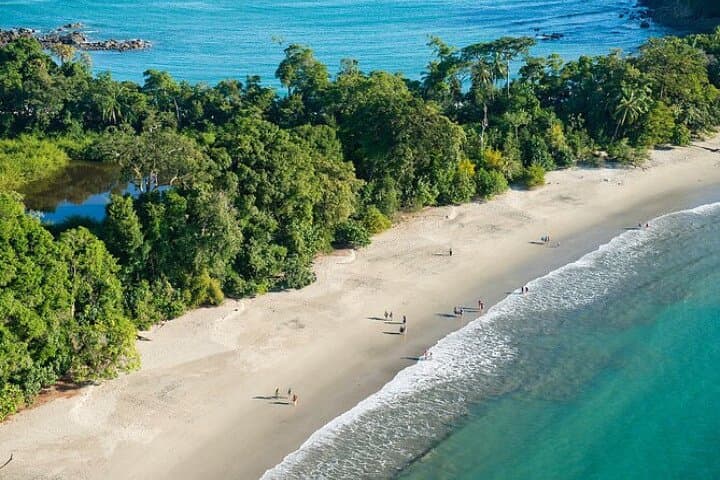
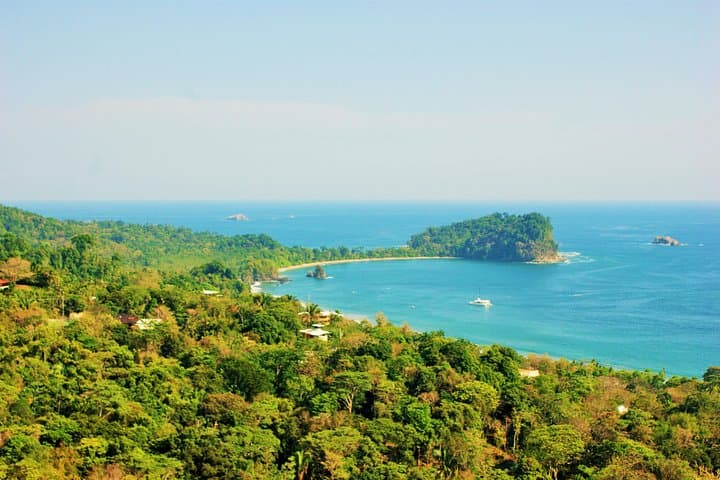
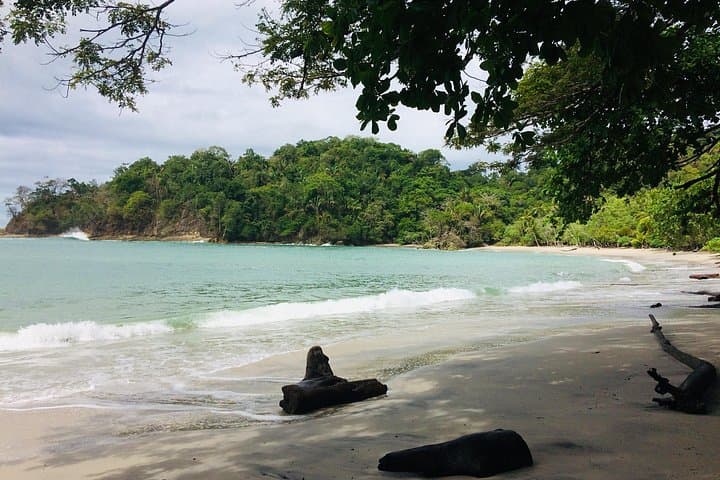
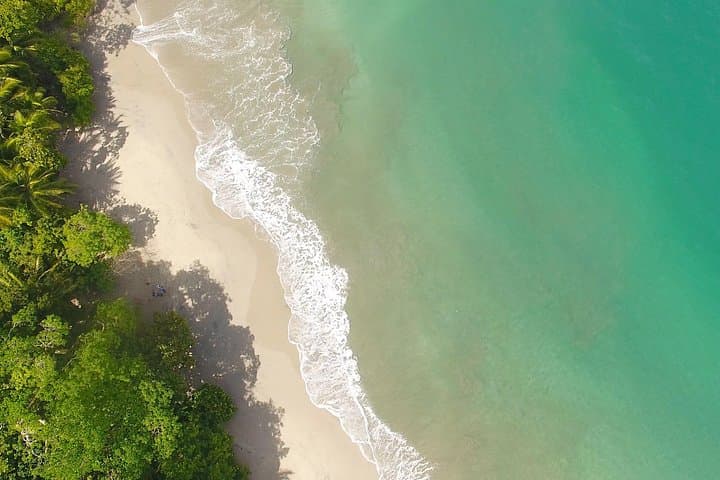
Stepping onto the shaded trail of Manuel Antonio, the forest closes around you like a living room — humid air, the chatter of monkeys, and a chorus of birds demanding attention. Sunlight breaks through in bright ribs, and the Pacific pushes warm surf onto white sand just beyond the canopy.
Stepping onto the shaded trail of Manuel Antonio, the forest closes around you like a living room — humid air, the chatter of monkeys, and a chorus of birds demanding attention. Sunlight breaks through in bright ribs, and the Pacific pushes warm surf onto white sand just beyond the canopy.
Designated as a national park in 1972 and protected for decades, Manuel Antonio occupies a narrow coastal shelf carved from volcanic rock and marine terraces. Its soils and cliffs owe their shape to uplift and erosion; the mix of lowland rainforest and palm-lined beaches supports over 180 recorded bird species and a suite of mammals adapted to a human-touched landscape. Local communities in Quepos and the surrounding Puntarenas region have long balanced fishing and tourism, and today guided walks reflect both Costa Rica’s conservation ethic and its ecotourism economy.
On a guided nature walk expect close-up encounters with three monkey species, sloths draped like ornaments, basilisk lizards sprinting across streams, and coatis investigating foot traffic. Trails are well-marked but can be uneven and muddy after rain; beach access offers a cool payoff and swimming when conditions allow.
Practical guidance: bring water, reef-safe sunscreen, and insect repellent; wear sturdy, closed-toe shoes and a lightweight rain layer. Park entry requires a fee and can be busy in dry season mornings—early or late walks find quieter wildlife viewing. Follow your guide’s instructions to minimize disturbance and leave the habitat intact for the next visitor.