THE ADVENTURE COLLECTIVE® · Independent discovery and booking for outdoor travel

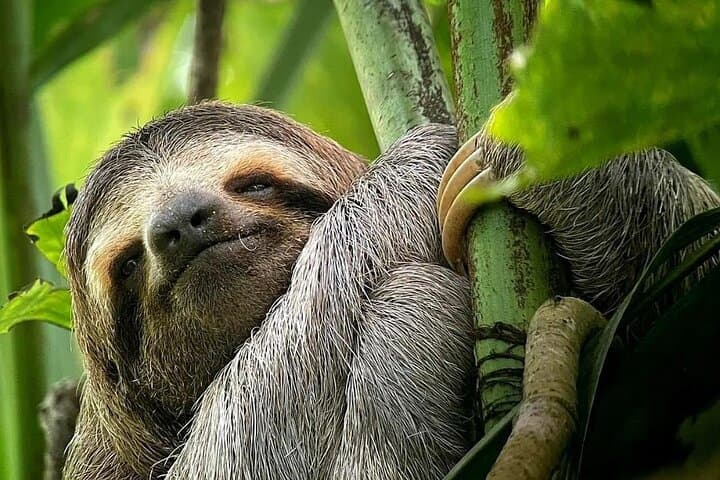
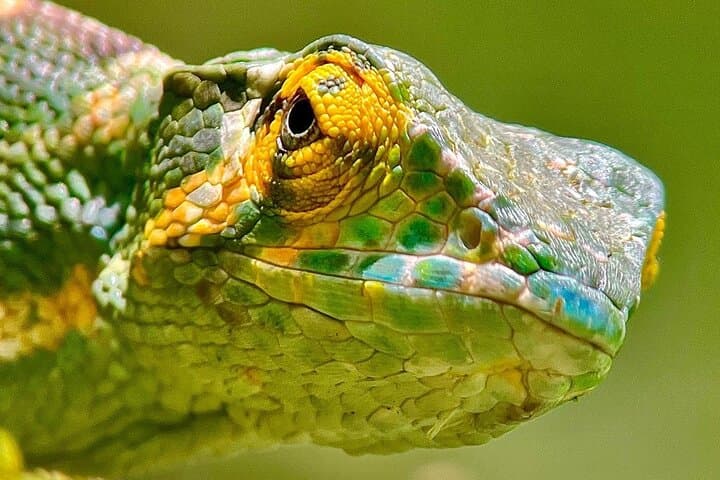
Spend 2–3 hours with a certified guide spotting sloths, capuchin monkeys, toucans and iguanas in Manuel Antonio National Park, then finish the walk at a Pacific beach. Park entrance tickets are not included; trails are largely flat and wheelchair accessible.
Spend 2–3 hours with a certified guide spotting sloths, capuchin monkeys, toucans and iguanas in Manuel Antonio National Park, then finish the walk at a Pacific beach. Park entrance tickets are not included; trails are largely flat and wheelchair accessible.
A humid breath of Pacific air moves through low-canopy trees as a certified guide raises a Swarovski telescope and points toward a slow-moving silhouette: a three-toed sloth draped like a curtain in a fig tree. The group follows with quiet feet along mellow trails, the forest at once close and commanding — insects chitter, toucans call, and capuchin monkeys vault between branches as if rehearsing for attention.
Verified experiences and guided adventures in the surrounding area.
Operated by Caminas en la naturaleza de Costa Rica · Manuel Antonio, Puntarenas
A humid breath of Pacific air moves through low-canopy trees as a certified guide raises a Swarovski telescope and points toward a slow-moving silhouette: a three-toed sloth draped like a curtain in a fig tree. The group follows with quiet feet along mellow trails, the forest at once close and commanding — insects chitter, toucans call, and capuchin monkeys vault between branches as if rehearsing for attention.
Manuel Antonio, created in the early 1970s, is one of Costa Rica’s smallest national parks but among the most biodiverse on the central Pacific coast. Geology here is coastal lowland rainforest layered over volcanic soils and rocky headlands; tidal pools give way to white-sand bays. Local culture is anchored by Quepos, a fishing town whose guides and outfitters connect visitors to shorelines and wildlife with a long-running tradition of respectful observation.
On this shared, 2–3 hour guided walk (meeting 100 m before the park entrance at the Nature Walks Costa Rica office), expect flat, accessible trails with minimal elevation gain — suitable for wheelchairs and strollers — and HD photography gear provided to capture distant subjects. The route finishes at one of the park’s beaches, where participants may stay to swim or return with the guide; note the park closes at 3:00 PM.
Practical notes: park entrance tickets are not included and should be purchased separately; keep a respectful distance from animals, carry water, sun protection and insect repellent, and arrive early to avoid midday crowds and maximize sightings.
moderate.
2–3 hours.
Moderate fitness—short walks on mostly flat terrain; some standing and light hiking required
No — the tour price does not include Manuel Antonio National Park entrance fees; buy tickets at the park entrance or through the park's official site before arrival.
Yes — the described tour uses mostly flat, accessible trails suitable for wheelchairs and strollers, though some surfacing can be uneven.
Guides use high-definition optics and a Swarovski telescope to view animals closely without approaching them; actual physical distance is maintained for safety.
Yes — the tour ends at a beach and participants may choose to stay; note the park gates close at 3:00 PM, so plan your exit accordingly.
Established in the early 1970s, Manuel Antonio became protected to conserve a compact but varied coastal rainforest and marine environment beloved by local communities and fishermen.
Visitors are asked to stay on trails, avoid feeding wildlife, and use reef-safe sunscreen to reduce human impact on fragile coastal and forest ecosystems.
Caminas en la naturaleza de Costa Rica operates guided outdoor trips and adventures with an emphasis on safety, stewardship, and memorable experiences.
A humid breath of Pacific air moves through low-canopy trees as a certified guide raises a Swarovski telescope and points toward a slow-moving silhouette: a three-toed sloth draped like a curtain in a fig tree. The group follows with quiet feet along mellow trails, the forest at once close and commanding — insects chitter, toucans call, and capuchin monkeys vault between branches as if rehearsing for attention.
A humid breath of Pacific air moves through low-canopy trees as a certified guide raises a Swarovski telescope and points toward a slow-moving silhouette: a three-toed sloth draped like a curtain in a fig tree. The group follows with quiet feet along mellow trails, the forest at once close and commanding — insects chitter, toucans call, and capuchin monkeys vault between branches as if rehearsing for attention.
Manuel Antonio, created in the early 1970s, is one of Costa Rica’s smallest national parks but among the most biodiverse on the central Pacific coast. Geology here is coastal lowland rainforest layered over volcanic soils and rocky headlands; tidal pools give way to white-sand bays. Local culture is anchored by Quepos, a fishing town whose guides and outfitters connect visitors to shorelines and wildlife with a long-running tradition of respectful observation.
On this shared, 2–3 hour guided walk (meeting 100 m before the park entrance at the Nature Walks Costa Rica office), expect flat, accessible trails with minimal elevation gain — suitable for wheelchairs and strollers — and HD photography gear provided to capture distant subjects. The route finishes at one of the park’s beaches, where participants may stay to swim or return with the guide; note the park closes at 3:00 PM.
Practical notes: park entrance tickets are not included and should be purchased separately; keep a respectful distance from animals, carry water, sun protection and insect repellent, and arrive early to avoid midday crowds and maximize sightings.