THE ADVENTURE COLLECTIVE® · Independent discovery and booking for outdoor travel

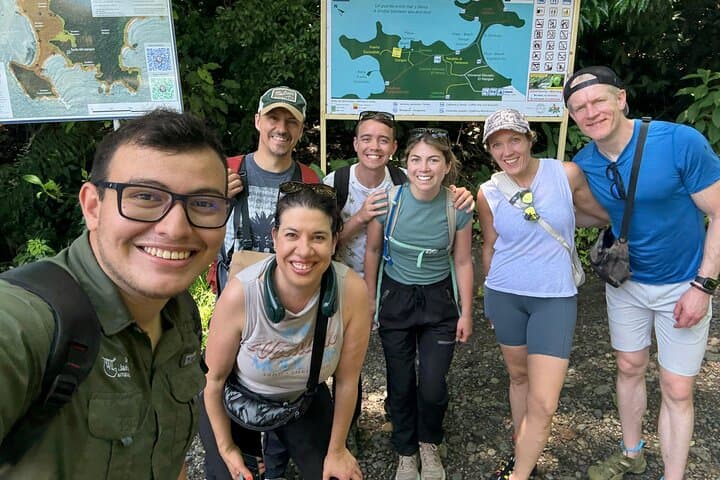
Join a bilingual naturalist for a two-hour guided loop through Manuel Antonio’s rainforest trails to spot sloths, monkeys and tropical birds, finishing at a beach you can explore until park close. Ideal for families and first-time wildlife observers, the tour pairs accessible trails with professional optics and local knowledge.
Join a bilingual naturalist for a two-hour guided loop through Manuel Antonio’s rainforest trails to spot sloths, monkeys and tropical birds, finishing at a beach you can explore until park close. Ideal for families and first-time wildlife observers, the tour pairs accessible trails with professional optics and local knowledge.
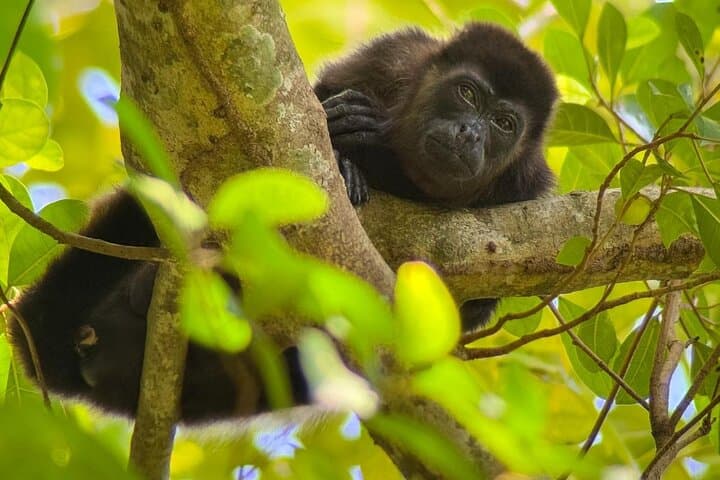
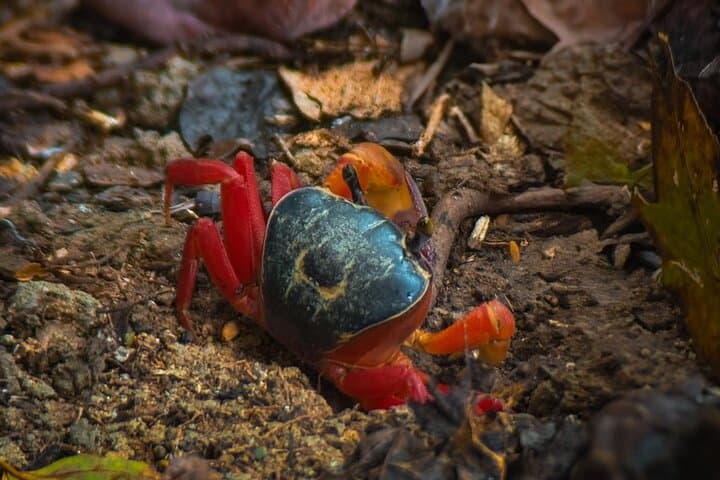
You step off a shaded trail and the rainforest exhales — humid air carrying the calls of howler monkeys and the rustle of iguanas through leaf litter.
Verified experiences and guided adventures in the surrounding area.
Operated by Go Manuel Antonio CR · Quepos, Puntarenas
You step off a shaded trail and the rainforest exhales — humid air carrying the calls of howler monkeys and the rustle of iguanas through leaf litter.
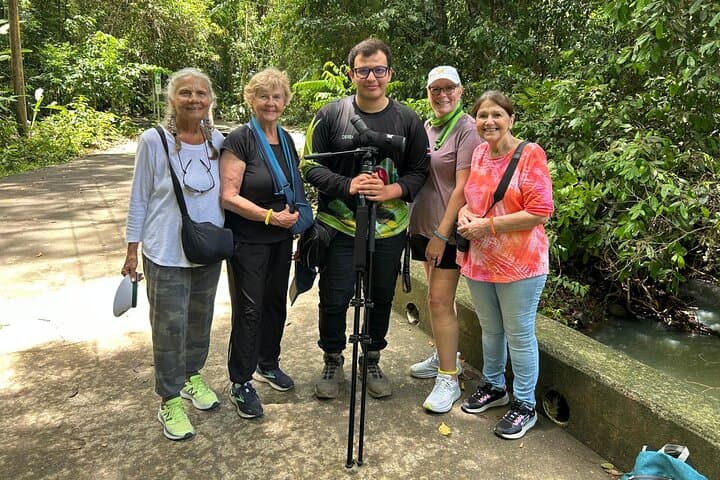
A bilingual naturalist moves ahead with a spotting scope, pointing out a sloth curled like a slow knot in a cecropia tree. Trails here thread between ancient volcanic ridges and the Pacific, where the forest seems to lean toward the ocean as if listening for waves.
Manuel Antonio sits on Costa Rica’s central Pacific coast, its cliffs and sandy coves shaped by uplifted marine terraces over millennia. The park’s human story runs from indigenous use through small-scale agriculture to protected-area status in 1972, created to conserve one of the country’s most biodiverse coastal forests.
Culturally, local guides are steeped in generational knowledge of plants, medicinal uses and animal behavior; their stewardship helps balance visitation and habitat protection.
Practically, expect a guided walk of about two hours on compact dirt and boardwalks with some short, steeper sections. Guides bring a spotting scope and know where to find sloths, squirrel monkeys, capuchins and colorful birds; the guided loop typically ends at a beach and you can stay until park closing at 4 p.m.
Bring water, reef-safe sunscreen and comfortable closed-toe shoes; rain showers are frequent outside the dry season, and bugs are active at dawn and dusk. Photography rewards patience — wildlife appears in bursts, often just off the trail.
This experience is family-friendly and accessible to most fitness levels, offering an efficient, educational way to see Costa Rica’s coastal rainforest and its charismatic inhabitants.
easy.
2–4 hours.
Suitable for most adults and children in average health; expect short steep steps and uneven surfaces.
The guided hike typically lasts about two hours and ends at one of the park’s beaches; participants may remain in the park until closing (around 4:00 p.m.).
Yes — trails used on guided tours are generally short and well-maintained, though there are some steps and uneven ground; the tour is described as suitable for all fitness levels.
Common sightings include three-toed sloths, white-faced capuchin monkeys, iguanas, and a variety of tropical birds; sightings are never guaranteed but are frequent on guided walks.
Bring small cash for tips and purchases; carry ID and any required booking confirmation, and follow guide instructions about valuables as animals may attract attention on beaches.
Protected in 1972, Manuel Antonio was established to conserve coastal rainforest and beach habitats amid growing tourism; local communities shifted from agriculture to guiding and services.
Park regulations limit numbers in sensitive zones and enforce trail boundaries; visitors should follow leave-no-trace practices and use reef-safe products to reduce impact.
Go Manuel Antonio CR operates guided outdoor trips and adventures with an emphasis on safety, stewardship, and memorable experiences.
You step off a shaded trail and the rainforest exhales — humid air carrying the calls of howler monkeys and the rustle of iguanas through leaf litter.
You step off a shaded trail and the rainforest exhales — humid air carrying the calls of howler monkeys and the rustle of iguanas through leaf litter.
A bilingual naturalist moves ahead with a spotting scope, pointing out a sloth curled like a slow knot in a cecropia tree. Trails here thread between ancient volcanic ridges and the Pacific, where the forest seems to lean toward the ocean as if listening for waves.
Manuel Antonio sits on Costa Rica’s central Pacific coast, its cliffs and sandy coves shaped by uplifted marine terraces over millennia. The park’s human story runs from indigenous use through small-scale agriculture to protected-area status in 1972, created to conserve one of the country’s most biodiverse coastal forests.
Culturally, local guides are steeped in generational knowledge of plants, medicinal uses and animal behavior; their stewardship helps balance visitation and habitat protection.
Practically, expect a guided walk of about two hours on compact dirt and boardwalks with some short, steeper sections. Guides bring a spotting scope and know where to find sloths, squirrel monkeys, capuchins and colorful birds; the guided loop typically ends at a beach and you can stay until park closing at 4 p.m.
Bring water, reef-safe sunscreen and comfortable closed-toe shoes; rain showers are frequent outside the dry season, and bugs are active at dawn and dusk. Photography rewards patience — wildlife appears in bursts, often just off the trail.
This experience is family-friendly and accessible to most fitness levels, offering an efficient, educational way to see Costa Rica’s coastal rainforest and its charismatic inhabitants.