THE ADVENTURE COLLECTIVE® · Independent discovery and booking for outdoor travel

Walk tropical forest trails and finish on a warm Pacific beach—Manuel Antonio offers close-up wildlife viewing, coastal overlooks and sheltered mangroves. This private guided hike includes a certified guide, HD spotting scope for photos, and flexible end points at the beach or park entrance.
Walk tropical forest trails and finish on a warm Pacific beach—Manuel Antonio offers close-up wildlife viewing, coastal overlooks and sheltered mangroves. This private guided hike includes a certified guide, HD spotting scope for photos, and flexible end points at the beach or park entrance.
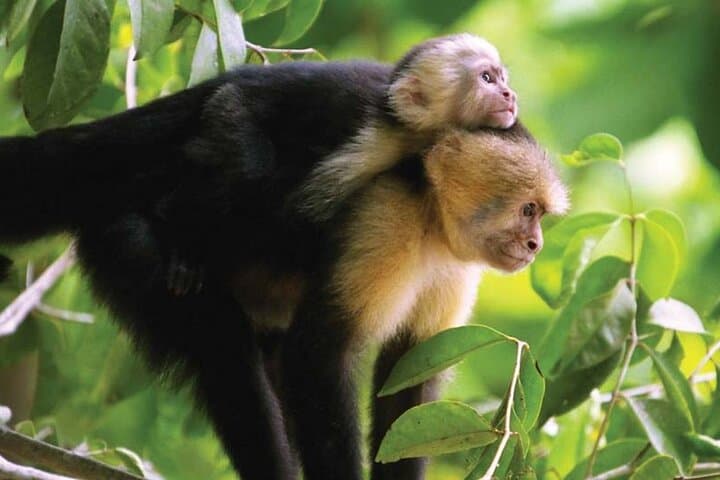
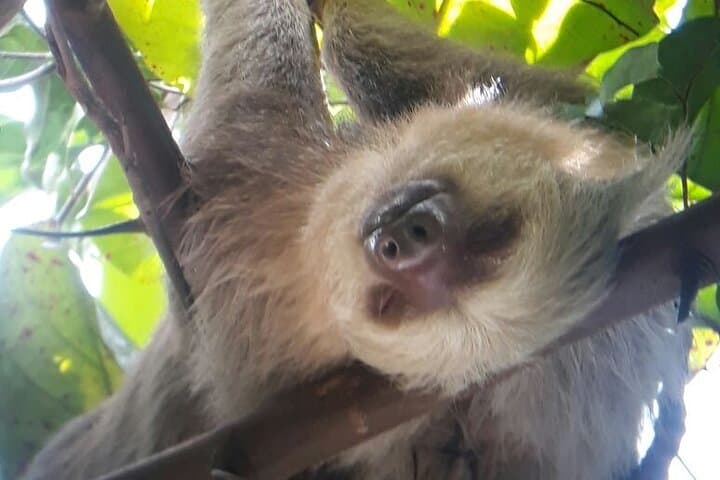
A morning in Manuel Antonio opens with humid air that smells of salt and wet leaves. You step onto a shaded trail beneath lowland tropical canopy, palms brushing the path while the Pacific glints beyond rocky outcrops. Capuchin monkeys chatter overhead; a sloth slows its deliberate arc through the branches while the guide lifts an HD telescope to bring the scene close.
Verified experiences and guided adventures in the surrounding area.
Operated by Quepos Info Center · Quepos, Puntarenas
A morning in Manuel Antonio opens with humid air that smells of salt and wet leaves. You step onto a shaded trail beneath lowland tropical canopy, palms brushing the path while the Pacific glints beyond rocky outcrops. Capuchin monkeys chatter overhead; a sloth slows its deliberate arc through the branches while the guide lifts an HD telescope to bring the scene close.
Established in 1972 to protect a patch of Pacific lowland rainforest and coastal habitat, Manuel Antonio combines steep rocky headlands, sandy coves and mangrove edges on Costa Rica’s central Pacific coast. The park’s geology is coastal bedrock and sediment with offshore islets that punctuate sunset views. Local culture around Quepos is fishing- and tourism-centered; guides here are skilled at reading animal behavior and tide lines.
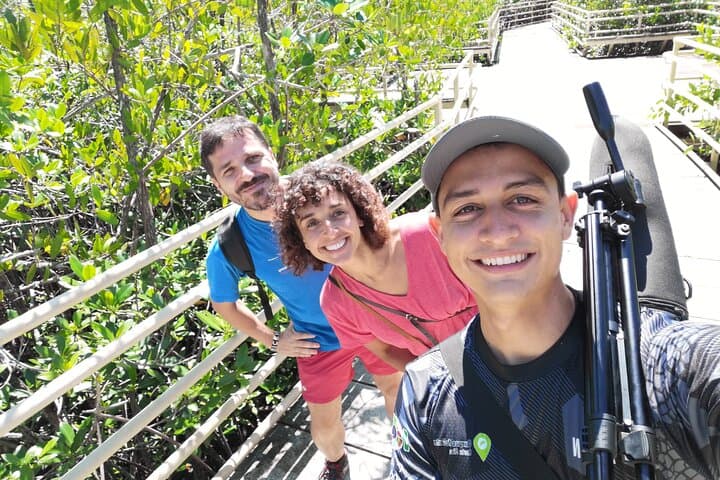
On a guided hike expect 3–4 hours of mostly well-maintained trails with short, sometimes steep sections and boardwalks through mangrove and forest. Wildlife viewing is the goal—white-faced capuchins, two- and three-toed sloths, iguanas and a wide variety of tropical birds are commonly seen. Tours often include entrance fee, a certified naturalist guide, use of a spotting scope for photos, and the option to finish at Manuel Antonio’s main beach. Practical notes: go early for cooler temps and best wildlife activity, wear sturdy shoes for muddy stretches, bring reef-safe sunscreen and insect repellent, and carry at least 1–2 liters of water. If you want a quieter experience, ask about lesser-used trails the guide can include; private tours and concierge assistance can streamline logistics for the day.
moderate.
3–4 hours.
Moderate fitness recommended: comfortable walking on uneven ground, short steep sections and some standing during wildlife stops.
The private guided hike is typically 3–4 hours with mostly well-marked trails; expect moderate effort with short steep or uneven sections—suitable for participants with average fitness.
Entrance fee is included in this tour; the guide meets guests at the parking area in front of the El Avión Restaurant near the main park entrance.
Yes — the tour can end at Manuel Antonio’s main beach where swimming is common; be aware of local currents and follow beach signage and your guide’s advice.
Children and strollers are accommodated on accessible sections and some guides can provide infant seats for transport; however, some trails have steps and uneven ground—check with the operator for specific accessibility needs.
Manuel Antonio National Park was established in 1972 to preserve a remnant of Pacific lowland rainforest and coastal habitat near Quepos, becoming one of Costa Rica’s earliest national parks.
The park enforces strict rules—no feeding wildlife, stay on trails, and limited development—to protect sensitive species and reduce human-wildlife conflict; visitors should follow guide instructions to minimize impact.
Quepos Info Center operates guided outdoor trips and adventures with an emphasis on safety, stewardship, and memorable experiences.

A morning in Manuel Antonio opens with humid air that smells of salt and wet leaves. You step onto a shaded trail beneath lowland tropical canopy, palms brushing the path while the Pacific glints beyond rocky outcrops. Capuchin monkeys chatter overhead; a sloth slows its deliberate arc through the branches while the guide lifts an HD telescope to bring the scene close.
A morning in Manuel Antonio opens with humid air that smells of salt and wet leaves. You step onto a shaded trail beneath lowland tropical canopy, palms brushing the path while the Pacific glints beyond rocky outcrops. Capuchin monkeys chatter overhead; a sloth slows its deliberate arc through the branches while the guide lifts an HD telescope to bring the scene close.
Established in 1972 to protect a patch of Pacific lowland rainforest and coastal habitat, Manuel Antonio combines steep rocky headlands, sandy coves and mangrove edges on Costa Rica’s central Pacific coast. The park’s geology is coastal bedrock and sediment with offshore islets that punctuate sunset views. Local culture around Quepos is fishing- and tourism-centered; guides here are skilled at reading animal behavior and tide lines.
On a guided hike expect 3–4 hours of mostly well-maintained trails with short, sometimes steep sections and boardwalks through mangrove and forest. Wildlife viewing is the goal—white-faced capuchins, two- and three-toed sloths, iguanas and a wide variety of tropical birds are commonly seen. Tours often include entrance fee, a certified naturalist guide, use of a spotting scope for photos, and the option to finish at Manuel Antonio’s main beach. Practical notes: go early for cooler temps and best wildlife activity, wear sturdy shoes for muddy stretches, bring reef-safe sunscreen and insect repellent, and carry at least 1–2 liters of water. If you want a quieter experience, ask about lesser-used trails the guide can include; private tours and concierge assistance can streamline logistics for the day.