THE ADVENTURE COLLECTIVE® · Independent discovery and booking for outdoor travel

Walk a compact Pacific rainforest where sloths, toucans and playful monkeys share narrow trails and sheltered beaches. This guided 2–3 hour wildlife tour from Quepos blends naturalist insight with easy hiking—ideal for travelers who want concentrated wildlife viewing without strenuous effort.
Walk a compact Pacific rainforest where sloths, toucans and playful monkeys share narrow trails and sheltered beaches. This guided 2–3 hour wildlife tour from Quepos blends naturalist insight with easy hiking—ideal for travelers who want concentrated wildlife viewing without strenuous effort.
The trail opens under a humid canopy; damp leaves whisper as sunlight slices through tall ceiba and almond trees. In minutes the air fills with the rattle of insects and the high calls of toucans, and the path alternates between packed earth, exposed roots and occasional boardwalks that hug the slope toward white-sand coves. A naturalist guide slows the group, points, and the jungle rearranges itself — a sloth stares down with deliberate curiosity, a troop of capuchins tests the branch above.
Verified experiences and guided adventures in the surrounding area.
Operated by Travel and Birding · Manuel Antonio, Puntarenas
The trail opens under a humid canopy; damp leaves whisper as sunlight slices through tall ceiba and almond trees. In minutes the air fills with the rattle of insects and the high calls of toucans, and the path alternates between packed earth, exposed roots and occasional boardwalks that hug the slope toward white-sand coves. A naturalist guide slows the group, points, and the jungle rearranges itself — a sloth stares down with deliberate curiosity, a troop of capuchins tests the branch above.
Manuel Antonio is one of Costa Rica’s most visited coastal parks, created in 1972 to protect a compact mix of rainforest, rocky coastline and reef. Geologically the park sits on uplifted coastal terraces carved by waves and streams, producing narrow headlands and pocket beaches. The local culture in Quepos and nearby Manuel Antonio village remains tied to fishing and tourism; small businesses provide guides, boats and locally run transport. Guides here combine natural history with practical fieldcraft, explaining everything from leaf-cutting ant engineering to how tidal rhythms shape intertidal life.
Expect a 2–3 hour guided loop with moderate footing, short stair sections and beach access. Practical notes: wear grippy shoes for muddy roots, carry a refillable water bottle, and protect yourself from sun and bugs. The operator often supplies optics and photos, but bring your own binoculars for patience-rewarding viewing. Arrive early for cooler air and quieter wildlife, and always follow park rules — stay on trails, keep distance from animals and pack out trash to protect this small, intense slice of Pacific rainforest.
easy.
2–3 hours.
Suitable for most fitness levels; able to walk uneven trails and short stair sections without difficulty.
Yes—this tour lists the park entrance fee as included in the provided inclusions.
Yes—guides are naturalist-oriented and the operator notes provision of quality optics and photos during the tour.
The operator indicates some accessibility options, but trails include uneven surfaces and stairs—contact the provider to confirm specific needs.
Early morning and late afternoon are best for bird and mammal activity; mid-day can be quieter but still productive at shaded coastal points.
Designated a national park in 1972, Manuel Antonio protects a small, biodiverse coastal zone that contrasts with surrounding developed areas like Quepos.
Heavy visitation puts pressure on trails and wildlife—stick to paths, avoid feeding animals and choose reef-safe products to reduce local impact.
Travel and Birding operates guided outdoor trips and adventures with an emphasis on safety, stewardship, and memorable experiences.
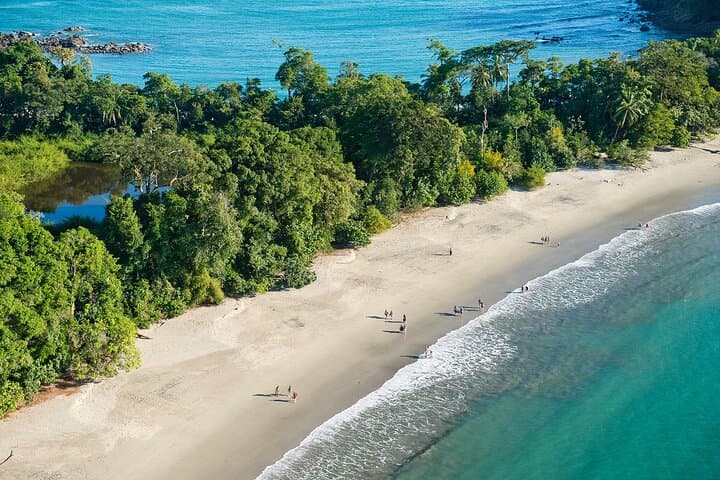


The trail opens under a humid canopy; damp leaves whisper as sunlight slices through tall ceiba and almond trees. In minutes the air fills with the rattle of insects and the high calls of toucans, and the path alternates between packed earth, exposed roots and occasional boardwalks that hug the slope toward white-sand coves. A naturalist guide slows the group, points, and the jungle rearranges itself — a sloth stares down with deliberate curiosity, a troop of capuchins tests the branch above.
The trail opens under a humid canopy; damp leaves whisper as sunlight slices through tall ceiba and almond trees. In minutes the air fills with the rattle of insects and the high calls of toucans, and the path alternates between packed earth, exposed roots and occasional boardwalks that hug the slope toward white-sand coves. A naturalist guide slows the group, points, and the jungle rearranges itself — a sloth stares down with deliberate curiosity, a troop of capuchins tests the branch above.
Manuel Antonio is one of Costa Rica’s most visited coastal parks, created in 1972 to protect a compact mix of rainforest, rocky coastline and reef. Geologically the park sits on uplifted coastal terraces carved by waves and streams, producing narrow headlands and pocket beaches. The local culture in Quepos and nearby Manuel Antonio village remains tied to fishing and tourism; small businesses provide guides, boats and locally run transport. Guides here combine natural history with practical fieldcraft, explaining everything from leaf-cutting ant engineering to how tidal rhythms shape intertidal life.
Expect a 2–3 hour guided loop with moderate footing, short stair sections and beach access. Practical notes: wear grippy shoes for muddy roots, carry a refillable water bottle, and protect yourself from sun and bugs. The operator often supplies optics and photos, but bring your own binoculars for patience-rewarding viewing. Arrive early for cooler air and quieter wildlife, and always follow park rules — stay on trails, keep distance from animals and pack out trash to protect this small, intense slice of Pacific rainforest.