THE ADVENTURE COLLECTIVE® · Independent discovery and booking for outdoor travel

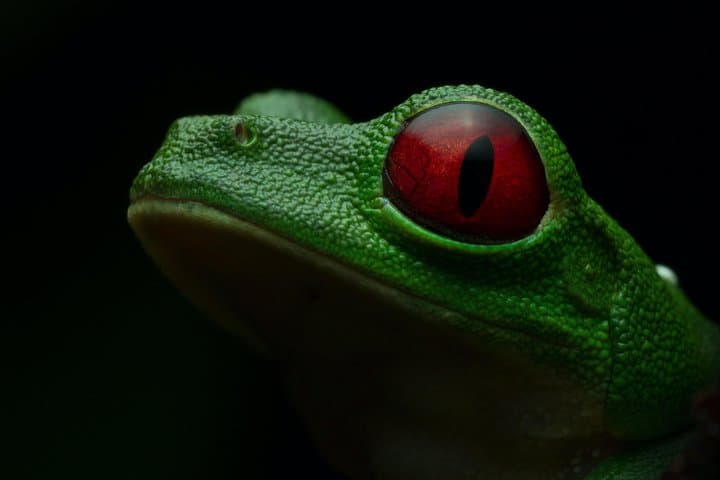
Search for red-eyed tree frogs, eyelash vipers, and other nocturnal herpetofauna on a small-group night herping tour adjacent to Manuel Antonio National Park. Guides provide lights, a spotting scope, and focused interpretation for up to six guests.
Search for red-eyed tree frogs, eyelash vipers, and other nocturnal herpetofauna on a small-group night herping tour adjacent to Manuel Antonio National Park. Guides provide lights, a spotting scope, and focused interpretation for up to six guests.
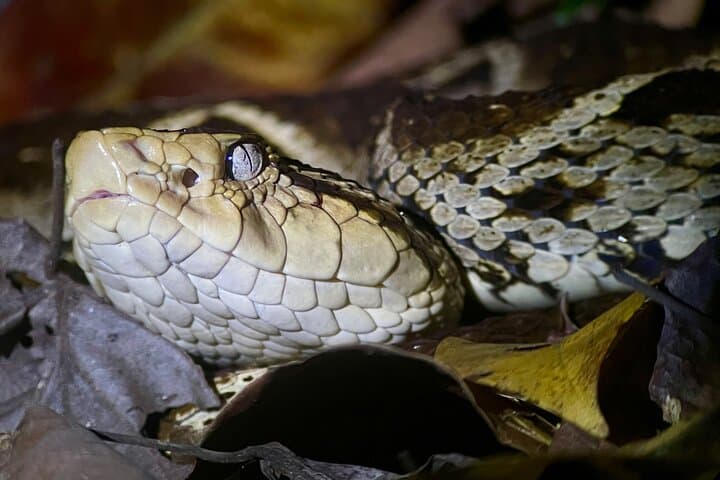
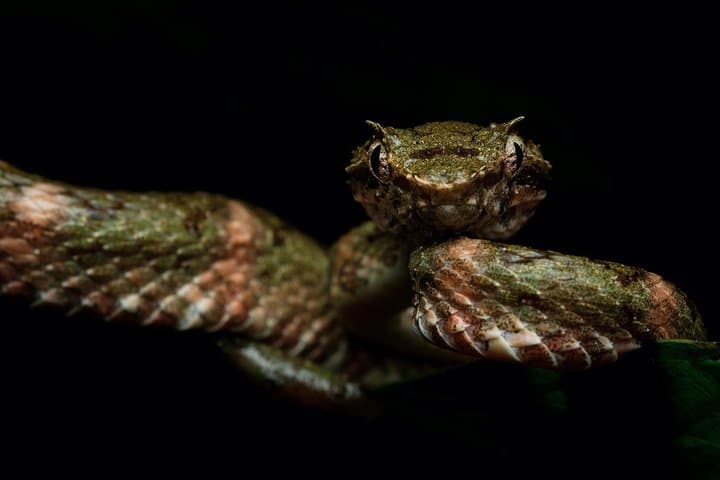
A warm coastal night settles over the edge of Manuel Antonio where the forest meets a seasonal creek and the first beam of a guide’s flashlight cuts through humid air. On a guided herping walk, the leaf litter, low branches and the creek’s margins become stages: a red-eyed tree frog clings to a palm frond, an eyelash viper hangs motionless in the understory, and a basilisk freezes mid-step before the light reveals its iridescent scales.
Verified experiences and guided adventures in the surrounding area.
Operated by Manuel's Tours, Costa Rica. · Manuel Antonio, Puntarenas
A warm coastal night settles over the edge of Manuel Antonio where the forest meets a seasonal creek and the first beam of a guide’s flashlight cuts through humid air. On a guided herping walk, the leaf litter, low branches and the creek’s margins become stages: a red-eyed tree frog clings to a palm frond, an eyelash viper hangs motionless in the understory, and a basilisk freezes mid-step before the light reveals its iridescent scales.
Manuel Antonio National Park and the private gardens next door sit on volcanic soils worn smooth by rivers and tides; this complex of coastal rainforest and mangrove fringe has made the area one of Costa Rica’s most accessible biodiversity hotspots since the park’s creation in 1972. Local guides draw on decades of natural-history knowledge and Costa Rica’s strong ecotourism culture to interpret behavior, calls, and microhabitats.
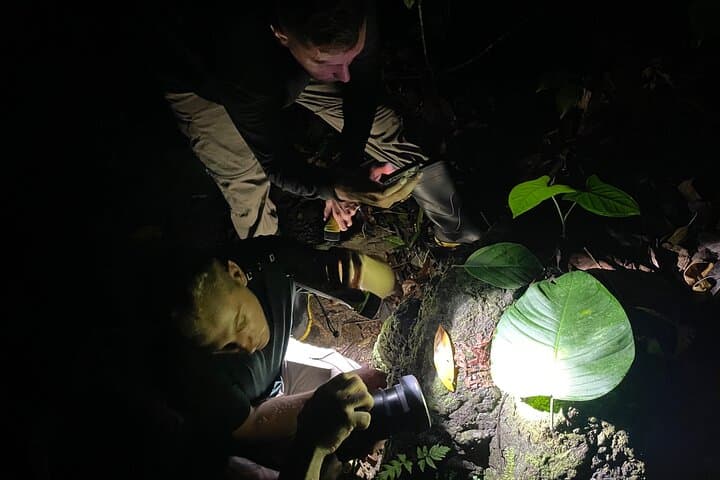
Expect a focused, small-group search (maximum six) of roughly 2–3 hours led by certified bilingual guides. The operator supplies high-output rechargeable flashlights and a Swarovski spotting scope for macro viewing, but participants should bring a headlamp, closed-toe shoes, and a camera with a macro lens if photographing. Nights are humid and sometimes rainy; amphibian activity often peaks in wet weather while snakes can be more visible on warm, still nights.
Practical tips: wear long trousers, keep movements slow near animals, and follow the guide’s distance and handling rules—especially with venomous species like Fer-de-lance. The tour balances close encounters with strict safety and conservation practices, making it a concentrated, educational experience for photographers and wildlife enthusiasts alike.
moderate.
2–3 hours.
Moderate fitness—able to walk uneven, sometimes slippery trails and stand or crouch for short periods.
Yes—guides are trained and certified; they maintain safe distances, control the group, and will never encourage handling venomous species.
Not recommended for children under 6; older children should be supervised and able to follow safety instructions.
Rain increases amphibian activity and may improve sightings, but extreme weather can prompt rescheduling for safety—check with the operator.
Yes—guides will advise on safe distances and flash use; they provide a spotting scope for close observation without stressing animals.
Manuel Antonio National Park, established in 1972, helped catalyze Costa Rica’s ecotourism industry and protects coastal rainforest communities on volcanic terrain.
Tours operate with strict wildlife protocols to minimize disturbance; visitors are asked to avoid handling animals, use no flash photography, and stay on designated paths.
Manuel's Tours, Costa Rica. operates guided outdoor trips and adventures with an emphasis on safety, stewardship, and memorable experiences.
A warm coastal night settles over the edge of Manuel Antonio where the forest meets a seasonal creek and the first beam of a guide’s flashlight cuts through humid air. On a guided herping walk, the leaf litter, low branches and the creek’s margins become stages: a red-eyed tree frog clings to a palm frond, an eyelash viper hangs motionless in the understory, and a basilisk freezes mid-step before the light reveals its iridescent scales.
A warm coastal night settles over the edge of Manuel Antonio where the forest meets a seasonal creek and the first beam of a guide’s flashlight cuts through humid air. On a guided herping walk, the leaf litter, low branches and the creek’s margins become stages: a red-eyed tree frog clings to a palm frond, an eyelash viper hangs motionless in the understory, and a basilisk freezes mid-step before the light reveals its iridescent scales.
Manuel Antonio National Park and the private gardens next door sit on volcanic soils worn smooth by rivers and tides; this complex of coastal rainforest and mangrove fringe has made the area one of Costa Rica’s most accessible biodiversity hotspots since the park’s creation in 1972. Local guides draw on decades of natural-history knowledge and Costa Rica’s strong ecotourism culture to interpret behavior, calls, and microhabitats.
Expect a focused, small-group search (maximum six) of roughly 2–3 hours led by certified bilingual guides. The operator supplies high-output rechargeable flashlights and a Swarovski spotting scope for macro viewing, but participants should bring a headlamp, closed-toe shoes, and a camera with a macro lens if photographing. Nights are humid and sometimes rainy; amphibian activity often peaks in wet weather while snakes can be more visible on warm, still nights.
Practical tips: wear long trousers, keep movements slow near animals, and follow the guide’s distance and handling rules—especially with venomous species like Fer-de-lance. The tour balances close encounters with strict safety and conservation practices, making it a concentrated, educational experience for photographers and wildlife enthusiasts alike.