THE ADVENTURE COLLECTIVE® · Independent discovery and booking for outdoor travel

Explore Manuel Antonio with a trained naturalist: compact coastal rainforest trails, close wildlife viewing with a spotting scope, and an option to linger at the park beach. Expect easy walking, rooted paths, and high wildlife density—bring a refillable bottle and morning timing for best sightings.
Explore Manuel Antonio with a trained naturalist: compact coastal rainforest trails, close wildlife viewing with a spotting scope, and an option to linger at the park beach. Expect easy walking, rooted paths, and high wildlife density—bring a refillable bottle and morning timing for best sightings.
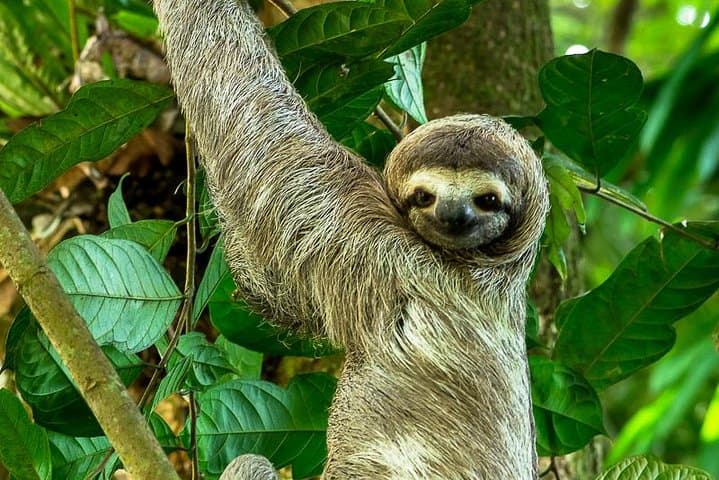
You step through the park gate and the rainforest seems to lean in close: leaves rustle like an audience and branches part to reveal a flash of toucan bill or a slow-moving sloth. The trail is humid, rich with the smell of damp earth and the distant surf; your guide’s voice threads through the canopy, pointing out a camouflaged lizard or calling attention to a troop of capuchin monkeys above.
Verified experiences and guided adventures in the surrounding area.
Operated by Costa Rica Jade Tours · Quepos, Puntarenas
You step through the park gate and the rainforest seems to lean in close: leaves rustle like an audience and branches part to reveal a flash of toucan bill or a slow-moving sloth. The trail is humid, rich with the smell of damp earth and the distant surf; your guide’s voice threads through the canopy, pointing out a camouflaged lizard or calling attention to a troop of capuchin monkeys above.
Manuel Antonio National Park — created in the early 1970s to protect one of Costa Rica’s most concentrated biodiversity hotspots — sits on a band of coastal rainforest and volcanic rock. The soils and small headlands are volcanic in origin, and the shoreline alternates between soft sand and rocky tide pools that cradle crabs and anemones. Local communities in Quepos and nearby coastal villages have long relied on fishing and small-scale tourism; guided naturalist walks are part of a culture of interpretation and conservation here.
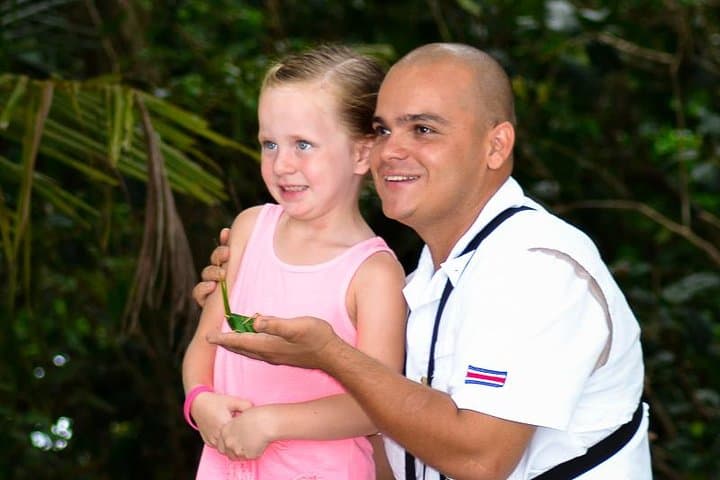
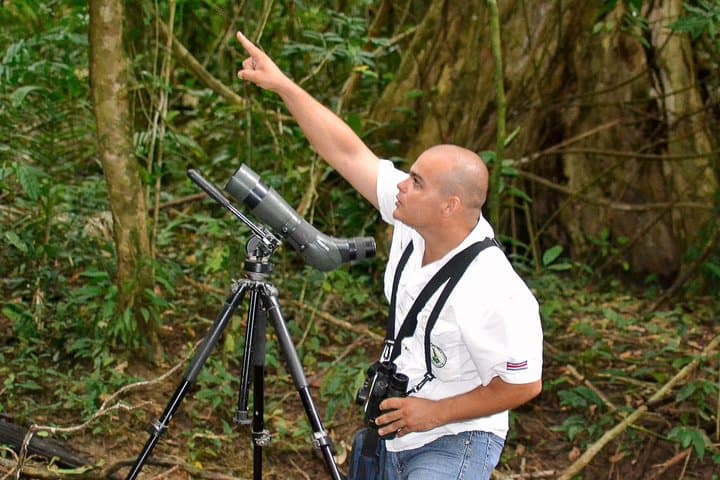
On this small-group tour you’ll move at an observant pace. Guides bring a spotting scope for close photographic moments and tailor the route toward wildlife sightings or a beach stretch if you prefer. Trails are mostly flat but rooted and occasionally steep; expect wet patches and uneven steps.
Practical guidance: bring a refillable water bottle (single-use plastics are banned), lightweight closed-toe shoes, sun protection and a rain layer. Morning visits increase wildlife activity and avoid the midday heat. Respect marked trails, keep distance from animals, and plan 3–4 hours to include transit, the guided walk, and optional beach time.
easy.
3–4 hours.
Suitable for most fitness levels; requires light walking on uneven terrain and occasional steps.
Yes; entrance to Manuel Antonio National Park is not included in the tour price and must be purchased on-site or in advance where available.
The park is stroller accessible in parts and the tour accommodates families, but some paths have steps and uneven surfaces—bring a sturdy stroller or carrier.
Yes; the tour concludes at the park entrance and you may remain inside on your own if you wish to spend more time on the beach or trails.
Expect white-faced capuchin monkeys, two- and three-toed sloths, a variety of toucans and hummingbirds, plus lizards and crabs along the shore.
The park was established in the early 1970s to protect one of Costa Rica’s most species-rich coastal rainforests and has since balanced strict protections with controlled tourism.
Visitors must follow strict rules—no single-use plastics and no feeding wildlife—to reduce human impact; sticking to trails helps protect fragile understory plants and nesting birds.
Costa Rica Jade Tours operates guided outdoor trips and adventures with an emphasis on safety, stewardship, and memorable experiences.

You step through the park gate and the rainforest seems to lean in close: leaves rustle like an audience and branches part to reveal a flash of toucan bill or a slow-moving sloth. The trail is humid, rich with the smell of damp earth and the distant surf; your guide’s voice threads through the canopy, pointing out a camouflaged lizard or calling attention to a troop of capuchin monkeys above.
You step through the park gate and the rainforest seems to lean in close: leaves rustle like an audience and branches part to reveal a flash of toucan bill or a slow-moving sloth. The trail is humid, rich with the smell of damp earth and the distant surf; your guide’s voice threads through the canopy, pointing out a camouflaged lizard or calling attention to a troop of capuchin monkeys above.
Manuel Antonio National Park — created in the early 1970s to protect one of Costa Rica’s most concentrated biodiversity hotspots — sits on a band of coastal rainforest and volcanic rock. The soils and small headlands are volcanic in origin, and the shoreline alternates between soft sand and rocky tide pools that cradle crabs and anemones. Local communities in Quepos and nearby coastal villages have long relied on fishing and small-scale tourism; guided naturalist walks are part of a culture of interpretation and conservation here.
On this small-group tour you’ll move at an observant pace. Guides bring a spotting scope for close photographic moments and tailor the route toward wildlife sightings or a beach stretch if you prefer. Trails are mostly flat but rooted and occasionally steep; expect wet patches and uneven steps.
Practical guidance: bring a refillable water bottle (single-use plastics are banned), lightweight closed-toe shoes, sun protection and a rain layer. Morning visits increase wildlife activity and avoid the midday heat. Respect marked trails, keep distance from animals, and plan 3–4 hours to include transit, the guided walk, and optional beach time.