THE ADVENTURE COLLECTIVE® · Independent discovery and booking for outdoor travel

Explore Manuel Antonio’s coastal rainforest with a bilingual guide who points out sloths, monkeys and secret viewpoints on a flat 2-mile loop. Finish with beach time at one of Costa Rica’s most dramatic shorelines.
Explore Manuel Antonio’s coastal rainforest with a bilingual guide who points out sloths, monkeys and secret viewpoints on a flat 2-mile loop. Finish with beach time at one of Costa Rica’s most dramatic shorelines.
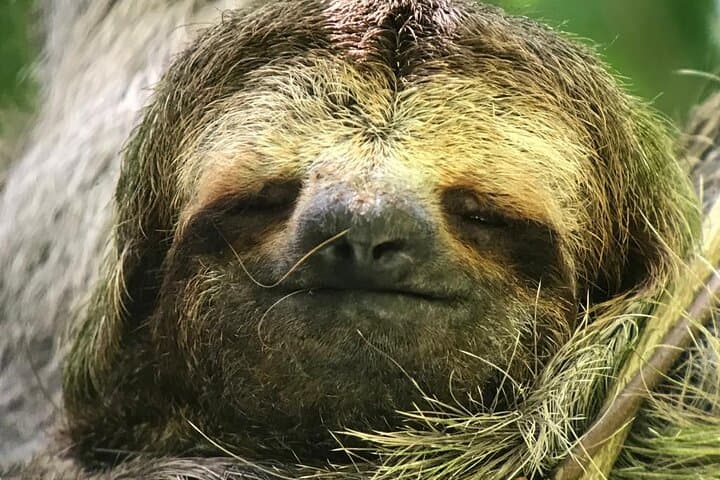
You step off a shaded trail and the forest answers — birds call from the canopy, palms sway like slow hands, and the ocean keeps time on a distant rim of blue. The guide points quietly; a two-toed sloth hangs motionless, indifferent to the small band of visitors peering through a telescope. The air is warm, heavy with salt and the scent of damp leaves.
Verified experiences and guided adventures in the surrounding area.
Operated by Mulguri Adventure · Quepos, Puntarenas
You step off a shaded trail and the forest answers — birds call from the canopy, palms sway like slow hands, and the ocean keeps time on a distant rim of blue. The guide points quietly; a two-toed sloth hangs motionless, indifferent to the small band of visitors peering through a telescope. The air is warm, heavy with salt and the scent of damp leaves.
Manuel Antonio was protected in 1972 to conserve one of Costa Rica’s most accessible patches of coastal rainforest and marine shoreline. Geologically the park occupies low coastal terraces where volcanic soils meet Pacific sands; the result is steep, short ridges feeding small coves and reef-fringed beaches. Local Quepos culture — a mix of fishing, tourism, and Afro-Caribbean influences — is visible in roadside fish shacks and the small artisan stands that supply afternoon snacks.
Practical guidance: the main loop is about 2 miles (3.2 km), mostly flat with short stair sections and minimal elevation gain; expect 3–4 hours including beach time. Trails are well-marked but narrow — keep to the path, move quietly, and let wildlife choose how close to come. Bring 1–2 liters of water, reef-safe sunscreen, comfortable walking shoes, and a light rain shell in the wet season. Guides use spotting scopes for far-off birds and sloths; still, a compact pair of binoculars improves your window into the canopy. You’ll finish where the forest meets sand: Manuel Antonio’s beaches are gorgeous but can have strong currents — swim only in lifeguarded sections and avoid feeding animals. Leave nothing behind; this small park absorbs pressure quickly, and responsible behavior helps preserve the wildlife that brought you here.
easy.
3–4 hours.
Suitable for most fitness levels; requires short periods of standing and walking on uneven surfaces.
No — visitors can enter independently, but guided tours enhance wildlife spotting and interpretation and make the most of a short visit.
The main loop is roughly 2 miles (3.2 km) with gentle grades and short stairs; it’s considered easy and suitable for most abilities.
Yes, an entrance fee is required at the park entrance and payment methods may include local currency and cards; fees are set by the park and subject to change.
Yes — Manuel Antonio Beach and nearby beaches are popular for swimming, but currents can be strong; swim in lifeguarded areas and avoid rough surf.
Manuel Antonio National Park was established in 1972 to protect coastal rainforest and marine habitats near the Quepos fishing community; it remains one of Costa Rica’s smallest but most biodiverse parks.
The park manages visitor flow and relies on responsible behavior—stay on trails, don’t feed wildlife, and use reef-safe products to minimize human impact.
Mulguri Adventure operates guided outdoor trips and adventures with an emphasis on safety, stewardship, and memorable experiences.
You step off a shaded trail and the forest answers — birds call from the canopy, palms sway like slow hands, and the ocean keeps time on a distant rim of blue. The guide points quietly; a two-toed sloth hangs motionless, indifferent to the small band of visitors peering through a telescope. The air is warm, heavy with salt and the scent of damp leaves.
You step off a shaded trail and the forest answers — birds call from the canopy, palms sway like slow hands, and the ocean keeps time on a distant rim of blue. The guide points quietly; a two-toed sloth hangs motionless, indifferent to the small band of visitors peering through a telescope. The air is warm, heavy with salt and the scent of damp leaves.
Manuel Antonio was protected in 1972 to conserve one of Costa Rica’s most accessible patches of coastal rainforest and marine shoreline. Geologically the park occupies low coastal terraces where volcanic soils meet Pacific sands; the result is steep, short ridges feeding small coves and reef-fringed beaches. Local Quepos culture — a mix of fishing, tourism, and Afro-Caribbean influences — is visible in roadside fish shacks and the small artisan stands that supply afternoon snacks.
Practical guidance: the main loop is about 2 miles (3.2 km), mostly flat with short stair sections and minimal elevation gain; expect 3–4 hours including beach time. Trails are well-marked but narrow — keep to the path, move quietly, and let wildlife choose how close to come. Bring 1–2 liters of water, reef-safe sunscreen, comfortable walking shoes, and a light rain shell in the wet season. Guides use spotting scopes for far-off birds and sloths; still, a compact pair of binoculars improves your window into the canopy. You’ll finish where the forest meets sand: Manuel Antonio’s beaches are gorgeous but can have strong currents — swim only in lifeguarded sections and avoid feeding animals. Leave nothing behind; this small park absorbs pressure quickly, and responsible behavior helps preserve the wildlife that brought you here.