THE ADVENTURE COLLECTIVE® · Independent discovery and booking for outdoor travel

Walk the cacao orchard, watch fermentation and roasting, then make and taste chocolate by hand. This two-hour, easy walking tour near Manuel Antonio pairs agricultural insight with a homestyle lunch.
Walk the cacao orchard, watch fermentation and roasting, then make and taste chocolate by hand. This two-hour, easy walking tour near Manuel Antonio pairs agricultural insight with a homestyle lunch.
Morning sunlight sifts through tall almond and cacao leaves as you walk onto the plantation’s packed-earth path near Manuel Antonio. The pods hang like bright lanterns and the air carries a warm, fruity scent; the guide parts foliage to show you the white, pulpy beans—raw chocolate still sleeping in its shell.
Verified experiences and guided adventures in the surrounding area.
Operated by Chocolate Tour Manuel Antonio · Quepos, Puntarenas
Morning sunlight sifts through tall almond and cacao leaves as you walk onto the plantation’s packed-earth path near Manuel Antonio. The pods hang like bright lanterns and the air carries a warm, fruity scent; the guide parts foliage to show you the white, pulpy beans—raw chocolate still sleeping in its shell.
Cacao here is both crop and cultural object. Indigenous peoples in Costa Rica treated cacao as a ceremonial food; local farmers inherited fermentation and roasting methods shaped by the region’s volcanic soils and humid coastal climate. Geologically, the soil’s volcanic minerals give beans a distinctive, mineral-forward backbone that roasts into rich dark notes.
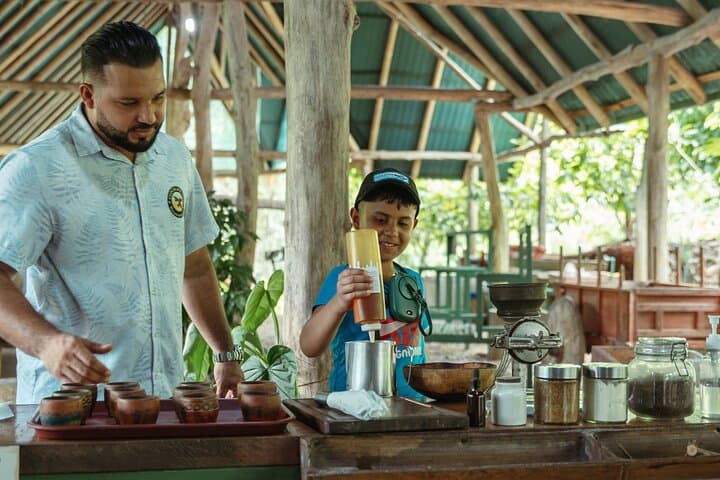
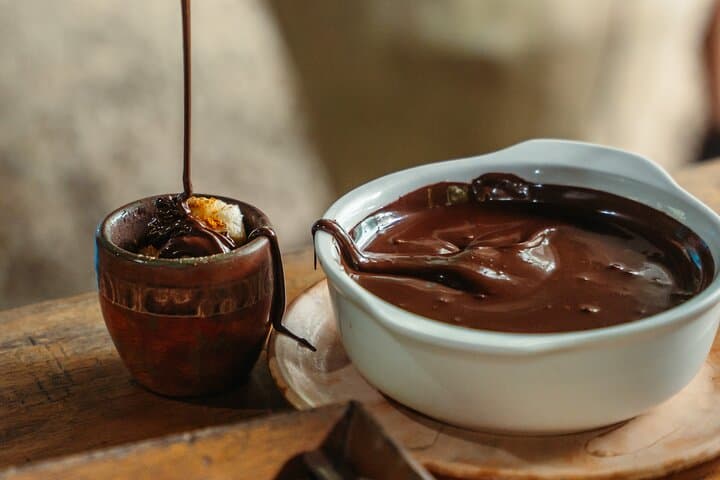
The two-hour tour moves deliberately: a walk through the orchard, a close look at pod anatomy, a demonstration of fermentation and roasting, then hands-on grinding and chocolate-making, finished with guided tastings and a homestyle lunch. Guides explain post-harvest steps and sustainable practices while pointing out companion plants and pollinators.
Practically, expect light walking on uneven ground, shade and sun, and an educational, sensory-focused experience rather than a strenuous hike. Wear closed-toe shoes, bring sun protection and insect repellent, and let the guide know about allergies—the samples may contain milk or traces of nuts. Photography is allowed but avoid stepping off paths. The visit is small-group friendly and offers a direct look at how tree-to-bar chocolate is made—one of the most approachable agricultural experiences near Manuel Antonio for food-minded travelers.
easy.
2 hours.
Suitable for most fitness levels; involves light walking and standing during demonstrations
No—this listing does not include transport; tours begin at the plantation meeting point in the Manuel Antonio/Quepos area.
Yes; the tour is family-friendly and stroller-accessible, but young children should be supervised around tools and roasting equipment.
Yes; the tour includes chocolate sampling and a simple lunch prepared on-site or nearby—notify the operator of dietary restrictions in advance.
Most tours offer on-site chocolate or local artisan bars for sale—bring small cash or card, depending on vendor facilities.
Cacao was used as currency and ceremonial food by pre-Columbian peoples in Central America; local farming traditions preserve ancestral post-harvest techniques.
Many small farms in the area practice agroforestry to shade cacao and protect biodiversity—visitors should stay on paths, avoid litter, and support direct-to-farm purchases.
Chocolate Tour Manuel Antonio operates guided outdoor trips and adventures with an emphasis on safety, stewardship, and memorable experiences.
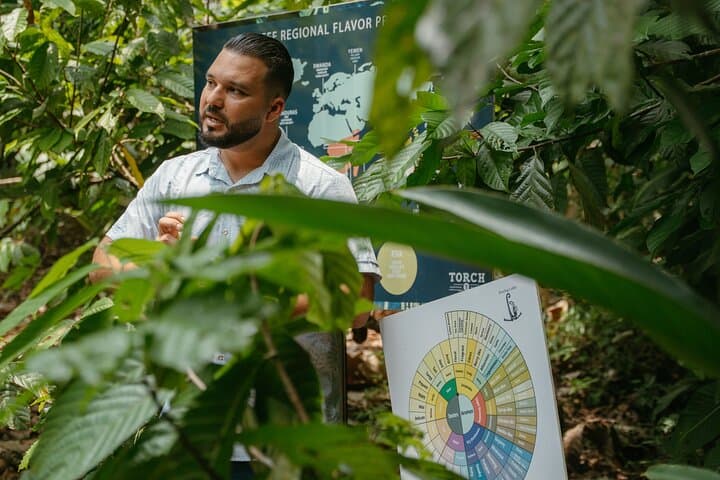
Morning sunlight sifts through tall almond and cacao leaves as you walk onto the plantation’s packed-earth path near Manuel Antonio. The pods hang like bright lanterns and the air carries a warm, fruity scent; the guide parts foliage to show you the white, pulpy beans—raw chocolate still sleeping in its shell.
Morning sunlight sifts through tall almond and cacao leaves as you walk onto the plantation’s packed-earth path near Manuel Antonio. The pods hang like bright lanterns and the air carries a warm, fruity scent; the guide parts foliage to show you the white, pulpy beans—raw chocolate still sleeping in its shell.
Cacao here is both crop and cultural object. Indigenous peoples in Costa Rica treated cacao as a ceremonial food; local farmers inherited fermentation and roasting methods shaped by the region’s volcanic soils and humid coastal climate. Geologically, the soil’s volcanic minerals give beans a distinctive, mineral-forward backbone that roasts into rich dark notes.
The two-hour tour moves deliberately: a walk through the orchard, a close look at pod anatomy, a demonstration of fermentation and roasting, then hands-on grinding and chocolate-making, finished with guided tastings and a homestyle lunch. Guides explain post-harvest steps and sustainable practices while pointing out companion plants and pollinators.
Practically, expect light walking on uneven ground, shade and sun, and an educational, sensory-focused experience rather than a strenuous hike. Wear closed-toe shoes, bring sun protection and insect repellent, and let the guide know about allergies—the samples may contain milk or traces of nuts. Photography is allowed but avoid stepping off paths. The visit is small-group friendly and offers a direct look at how tree-to-bar chocolate is made—one of the most approachable agricultural experiences near Manuel Antonio for food-minded travelers.