THE ADVENTURE COLLECTIVE® · Independent discovery and booking for outdoor travel

Head offshore from Toyapakeh for a small-group freediving and snorkeling trip that targets Manta Point, Toyapakeh Wall and SD Point. Expect freediving instruction, reef sights, and an emphasis on respectful manta interaction.
Head offshore from Toyapakeh for a small-group freediving and snorkeling trip that targets Manta Point, Toyapakeh Wall and SD Point. Expect freediving instruction, reef sights, and an emphasis on respectful manta interaction.
You step off the speedboat into blue that seems to push and pull like a living thing; the current nudges you forward as guides check fins and signal the plan. On a clear morning around Nusa Penida, the sea breathes—gentle near the reef, restless near the dropoffs where mantas patrol.
Verified experiences and guided adventures in the surrounding area.
Operated by Freedive Nusa · Toyapakeh, Bali
You step off the speedboat into blue that seems to push and pull like a living thing; the current nudges you forward as guides check fins and signal the plan. On a clear morning around Nusa Penida, the sea breathes—gentle near the reef, restless near the dropoffs where mantas patrol.
This trip focuses on Manta Point, a deeper cleaning station south of Toyapakeh where reef formations and upwelling create rich feeding grounds. Geologically, Nusa Penida is uplifted coral limestone with abrupt walls and terraces; underwater you’ll find sheer vertical faces, bommies and reef ledges shaped by currents. Culturally the island remains quieter than Bali’s west; fishing villages and Hindu shrines on the cliffs speak to a working maritime community that coexists with these waters.
Practical guidance is straightforward: meet at the freediving school in Toyapakeh for briefing and kit, then ride a comfortable speedboat to three stops—Manta Point, Toyapakeh Wall, and SD Point. Briefings cover manta biology and respectful-distance rules; instructors act as in-water guides for freediving and snorkeling. Expect variable conditions—choppy seas, strong currents and patchy visibility—so timing, fitness and boat handling matter. Bring a reef-safe sunscreen, a reliable mask, and plan for seasickness prevention. Sightings are common at Manta Point but never guaranteed; the crew will search nearby if needed.
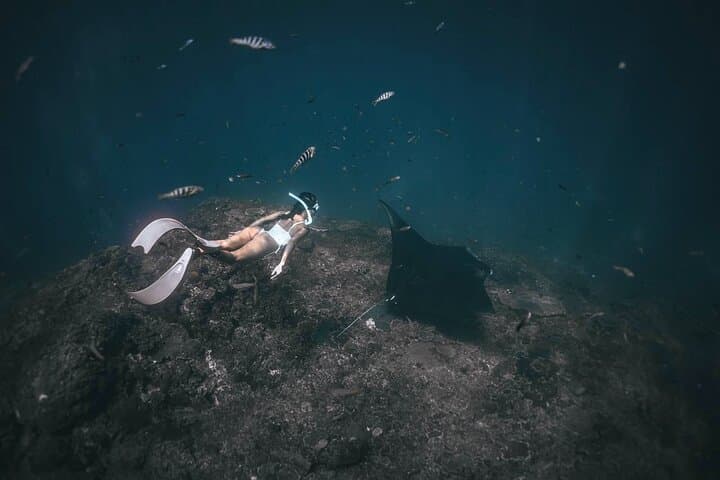
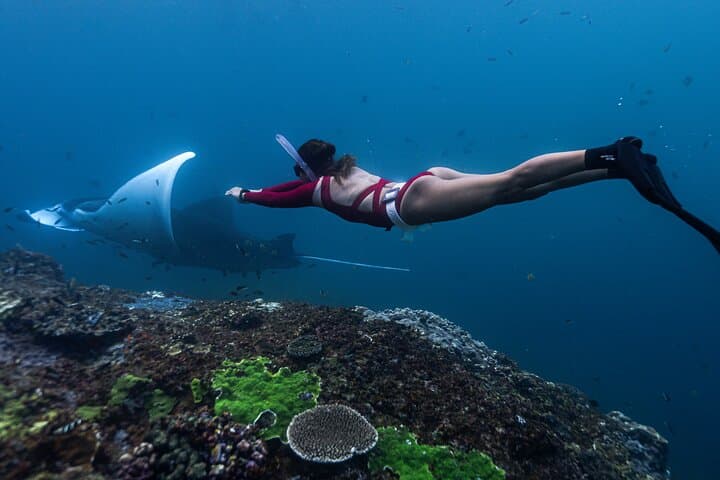
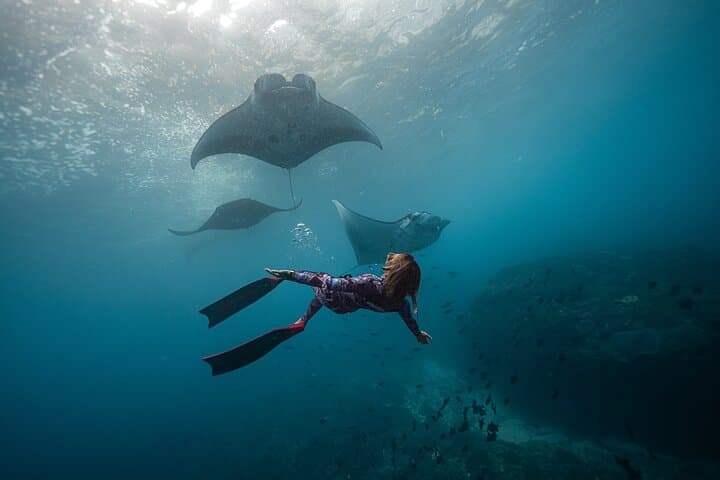
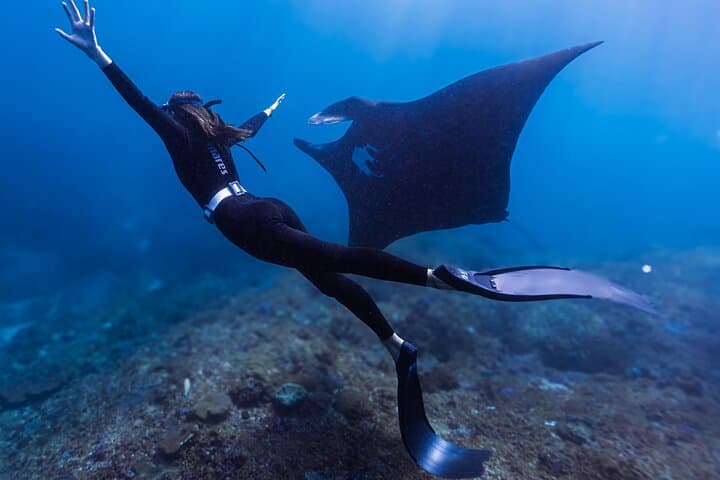
This is a day for attentive breathing and quiet observation: mantas often appear with slow, graceful turns, and turtles and schooling reef fish color the shallows. Be prepared, respect wildlife, and the ocean will reward patience.
moderate.
4 hours.
Moderate fitness—comfortable open-water swimming and breath-hold ability help; basic snorkeling competence required
No—mantas are wild animals and sightings cannot be guaranteed; Manta Point has high probability, and guides will search nearby if needed.
No prior freediving certification is required; instructors provide guidance, but you should be a confident swimmer comfortable with breath-hold practices.
Children who are competent swimmers may join, but check age restrictions with the operator and ensure close supervision and flotation if necessary.
Crossings can be bumpy—take preventive medication, choose calmer-weather departures, and sit low on the boat if you’re prone to nausea.
Nusa Penida’s limestone islands were formed by uplifted coral and have long supported fishing communities with Hindu temples perched on cliffs; maritime life is central to local culture.
Operators emphasize no-touch interaction and reef-safe sunscreen; support operators who brief on rules, carry no-touch policies, and limit group size to reduce disturbance.
Freedive Nusa operates guided outdoor trips and adventures with an emphasis on safety, stewardship, and memorable experiences.
You step off the speedboat into blue that seems to push and pull like a living thing; the current nudges you forward as guides check fins and signal the plan. On a clear morning around Nusa Penida, the sea breathes—gentle near the reef, restless near the dropoffs where mantas patrol.
You step off the speedboat into blue that seems to push and pull like a living thing; the current nudges you forward as guides check fins and signal the plan. On a clear morning around Nusa Penida, the sea breathes—gentle near the reef, restless near the dropoffs where mantas patrol.
This trip focuses on Manta Point, a deeper cleaning station south of Toyapakeh where reef formations and upwelling create rich feeding grounds. Geologically, Nusa Penida is uplifted coral limestone with abrupt walls and terraces; underwater you’ll find sheer vertical faces, bommies and reef ledges shaped by currents. Culturally the island remains quieter than Bali’s west; fishing villages and Hindu shrines on the cliffs speak to a working maritime community that coexists with these waters.
Practical guidance is straightforward: meet at the freediving school in Toyapakeh for briefing and kit, then ride a comfortable speedboat to three stops—Manta Point, Toyapakeh Wall, and SD Point. Briefings cover manta biology and respectful-distance rules; instructors act as in-water guides for freediving and snorkeling. Expect variable conditions—choppy seas, strong currents and patchy visibility—so timing, fitness and boat handling matter. Bring a reef-safe sunscreen, a reliable mask, and plan for seasickness prevention. Sightings are common at Manta Point but never guaranteed; the crew will search nearby if needed.
This is a day for attentive breathing and quiet observation: mantas often appear with slow, graceful turns, and turtles and schooling reef fish color the shallows. Be prepared, respect wildlife, and the ocean will reward patience.