THE ADVENTURE COLLECTIVE® · Independent discovery and booking for outdoor travel

Head west from Chania for a gentle drive into Vatolakkos and a guided tasting at Manousakis Winery. This semi-private shuttle pairs five wines with traditional Cretan bites while giving a short, behind-the-scenes look at modern island winemaking.
Head west from Chania for a gentle drive into Vatolakkos and a guided tasting at Manousakis Winery. This semi-private shuttle pairs five wines with traditional Cretan bites while giving a short, behind-the-scenes look at modern island winemaking.
The minivan eases out of Chania at mid-morning and the coastline slides past in a wash of blue and olive green. Hills fold into one another and the road climbs toward Vatolakkos, where the stone-and-glass profile of Manousakis Winery sits with a terrace that looks over vines and the distant sea.
Verified experiences and guided adventures in the surrounding area.
Operated by "Uncharted Escapes" · Vatolakkos, Crete
The minivan eases out of Chania at mid-morning and the coastline slides past in a wash of blue and olive green. Hills fold into one another and the road climbs toward Vatolakkos, where the stone-and-glass profile of Manousakis Winery sits with a terrace that looks over vines and the distant sea.
The estate is one of Crete’s newer family-run operations but rests on winemaking traditions that trace back through Venetian and Ottoman eras, when island agriculture shifted from grain to olive and vine. Geologically, the winery occupies limestone slopes that warm quickly; that sun-capture helps ripen indigenous grapes such as Vidiano and Kotsifali. Culturally, tastings here pair wines with Cretan rusk and the island’s robust olive oil — a clear reminder that food and wine remain inseparable on Crete.
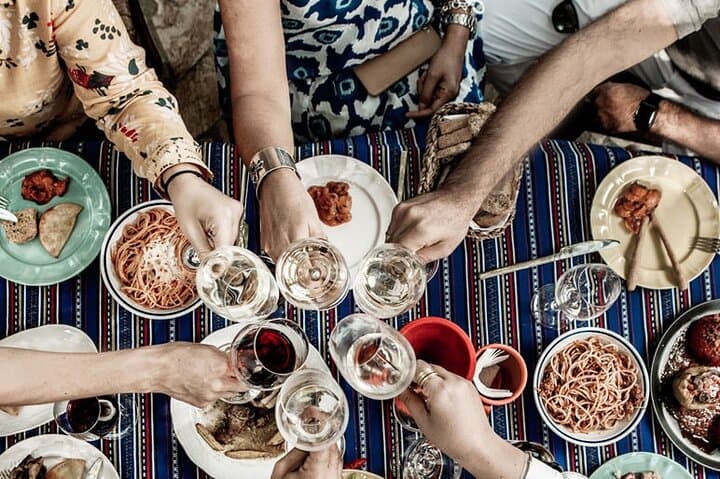
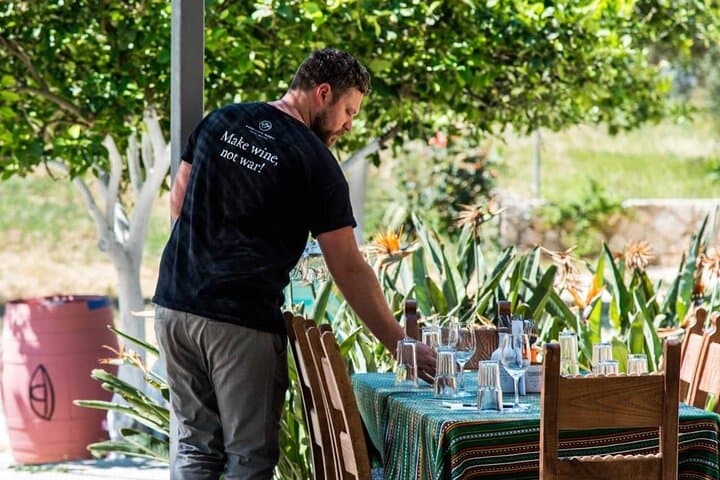
Expect a concise, guided cellar walk and a seated tasting of five wines on the terrace, often accompanied by short chef-selected bites. Conversation is multilingual; the pace is relaxed but timed to fit a 3-hour shuttle window, including pick-up and return to Chania.
Practical guidance: wear comfortable shoes for uneven stone surfaces, bring sun protection for the terrace, and carry a small water bottle. If you’re driving yourself, note narrow rural roads; if you use the included shuttle, confirm pickup details and any dietary restrictions in advance. Visit in late summer or early fall for harvest energy, or shoulder seasons for cooler visits and thinner crowds.
easy.
3 hours.
Suitable for most fitness levels—short walks on uneven winery surfaces may be required
The shuttle typically takes about 25–35 minutes each way, depending on traffic and exact pickup location.
Yes—children can join the shuttle, but under-18s will not be served alcohol and should be noted at booking.
Yes; mention allergies or special diets when you book so the winery can adjust paired bites where possible.
Free pickup is provided within a roughly 5 km radius of Chania center and along the coastal stretch to Kolymvari—confirm your pickup point when booking.
Crete’s winemaking regained momentum in the late 20th century as families like the Manousakis clan modernized production while keeping local grape varieties in focus.
Many Cretan wineries favor low-intervention practices and dry-farming on limestone slopes to conserve water; visitors are encouraged to respect property boundaries and avoid plastic waste.
"Uncharted Escapes" operates guided outdoor trips and adventures with an emphasis on safety, stewardship, and memorable experiences.
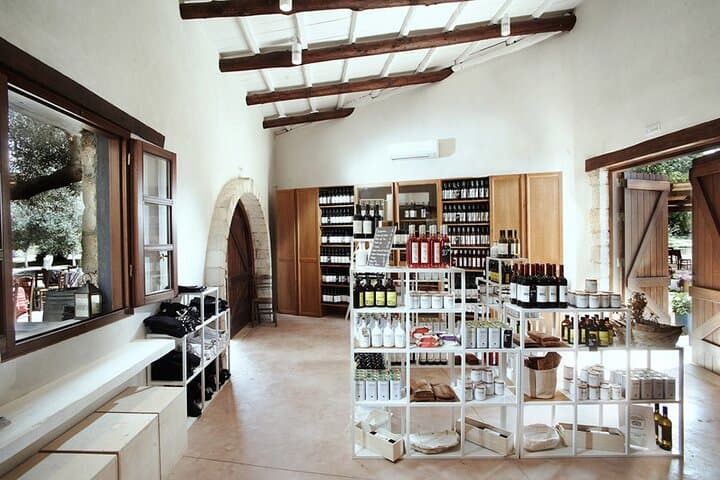
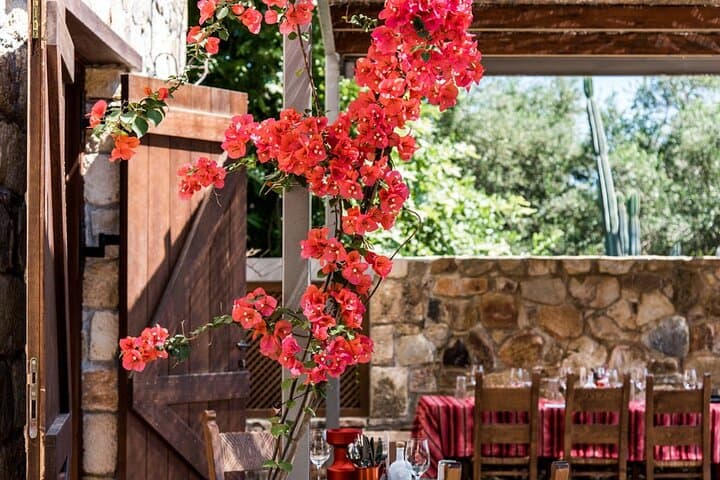
The minivan eases out of Chania at mid-morning and the coastline slides past in a wash of blue and olive green. Hills fold into one another and the road climbs toward Vatolakkos, where the stone-and-glass profile of Manousakis Winery sits with a terrace that looks over vines and the distant sea.
The minivan eases out of Chania at mid-morning and the coastline slides past in a wash of blue and olive green. Hills fold into one another and the road climbs toward Vatolakkos, where the stone-and-glass profile of Manousakis Winery sits with a terrace that looks over vines and the distant sea.
The estate is one of Crete’s newer family-run operations but rests on winemaking traditions that trace back through Venetian and Ottoman eras, when island agriculture shifted from grain to olive and vine. Geologically, the winery occupies limestone slopes that warm quickly; that sun-capture helps ripen indigenous grapes such as Vidiano and Kotsifali. Culturally, tastings here pair wines with Cretan rusk and the island’s robust olive oil — a clear reminder that food and wine remain inseparable on Crete.
Expect a concise, guided cellar walk and a seated tasting of five wines on the terrace, often accompanied by short chef-selected bites. Conversation is multilingual; the pace is relaxed but timed to fit a 3-hour shuttle window, including pick-up and return to Chania.
Practical guidance: wear comfortable shoes for uneven stone surfaces, bring sun protection for the terrace, and carry a small water bottle. If you’re driving yourself, note narrow rural roads; if you use the included shuttle, confirm pickup details and any dietary restrictions in advance. Visit in late summer or early fall for harvest energy, or shoulder seasons for cooler visits and thinner crowds.