THE ADVENTURE COLLECTIVE® · Independent discovery and booking for outdoor travel

A guided 2.5-mile rainforest hike through private Manoa Valley that moves from moss-draped understory to coastal panoramas. Expect muddy trails, endemic plants, and sweeping views of Diamond Head and Honolulu.
A guided 2.5-mile rainforest hike through private Manoa Valley that moves from moss-draped understory to coastal panoramas. Expect muddy trails, endemic plants, and sweeping views of Diamond Head and Honolulu.
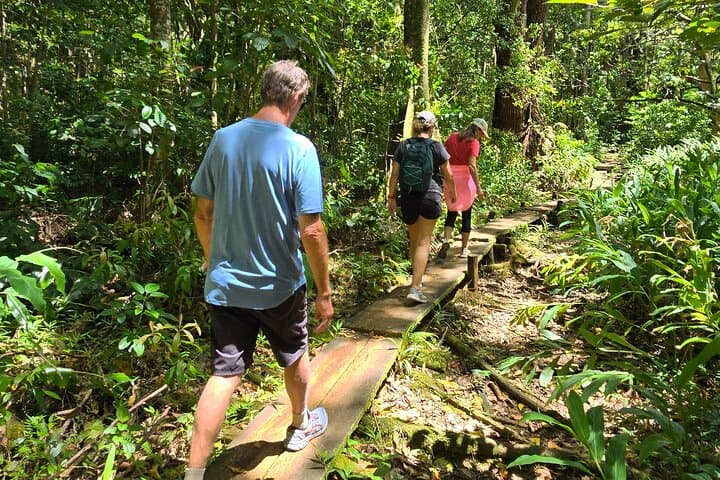
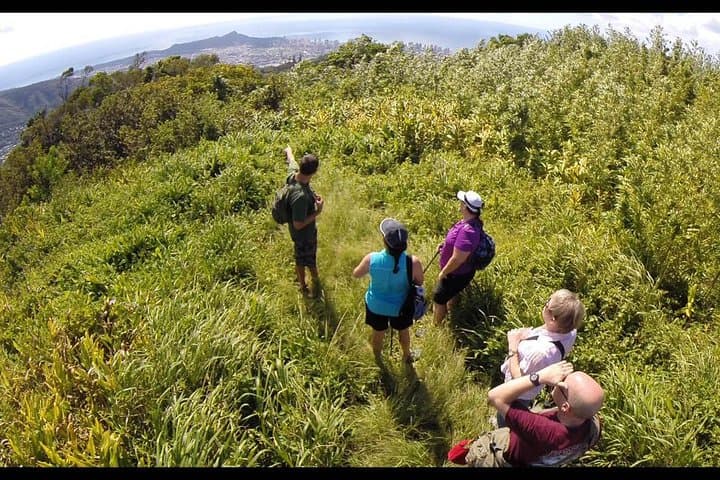
You step off the van and humidity wraps around you like a wet wool sweater — not oppressive, but immediate. The rainforest breathes: slow exhalations of damp earth and green. A narrow dirt track cuts under towering ʻōhiʻa and uluhe ferns; sunlight peels through the canopy in mottled stripes. The guide points to a slit in the ridge and, beyond it, Waikiki and Diamond Head sit like a distant ship on a bright blue horizon. This is Manoa Valley, a pocket of private rainforest on Oʻahu where volcanic ridgelines still shape the skyline and the island's past sits plain on the trail.
Verified experiences and guided adventures in the surrounding area.
Operated by Bike Hawaii · Honolulu, Hawaii
You step off the van and humidity wraps around you like a wet wool sweater — not oppressive, but immediate. The rainforest breathes: slow exhalations of damp earth and green. A narrow dirt track cuts under towering ʻōhiʻa and uluhe ferns; sunlight peels through the canopy in mottled stripes. The guide points to a slit in the ridge and, beyond it, Waikiki and Diamond Head sit like a distant ship on a bright blue horizon. This is Manoa Valley, a pocket of private rainforest on Oʻahu where volcanic ridgelines still shape the skyline and the island's past sits plain on the trail.
Geology here is quiet and old. Lava flows from ancient Koʻolau eruptions uplifted and eroded over millions of years, leaving jagged spines and steep valleys that trap moisture. That moisture creates the rainforest microclimate: moss-draped trunks, a chorus of insect life, and endemic plants that survived only in these sheltered hollows. Culturally, Manoa Valley was a taro-growing and place-of-refuge area for Native Hawaiians; local guides often weave oral histories into the walk, pointing out plants used for medicine, kapa, and canoe rigging.
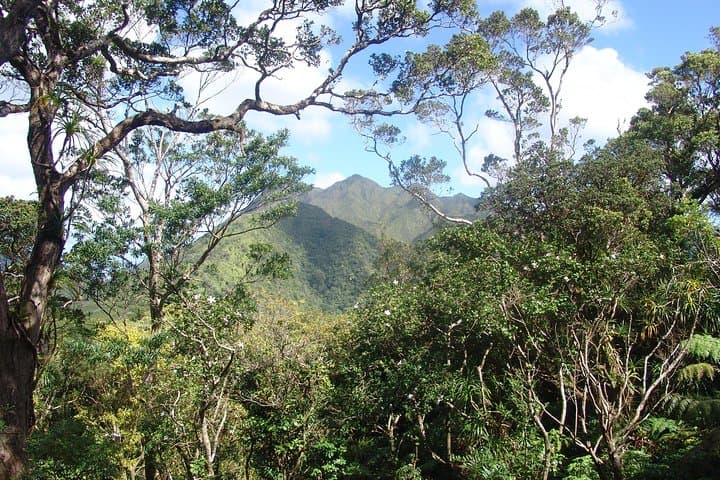
The hike offered on this 75-acre private property is roughly 2.5 miles one-way and rated moderate. Expect about 3–4 hours total with stops; terrain is dirt and rainforest mud with intermittent roots and short, steep pitches. The route rewards effort with panoramas of Koʻolau peaks (including Konahuanui) and sneaking views toward Mt. Kaʻala on a clear day, plus intimate moments among plant life found nowhere else on Earth. Rain showers are frequent and brief, so the rainforest can flip from misty and still to drenching and loud in minutes — the stems and leaves will seem to be alive with intention.
Practicalities are straightforward: shuttles pick up from central Waikiki hotels; groups are capped at modest sizes for a quieter experience. The operator provides bottled water, a hip pack, mosquito repellent, and a rain poncho — but don’t treat that as a substitute for solid footwear and your own hydration. Trails get slick quickly; shoes with aggressive tread matter. Guides emphasize Leave No Trace: stay on the track to protect fragile understory plants and avoid carrying seeds or mud that can spread invasive species.
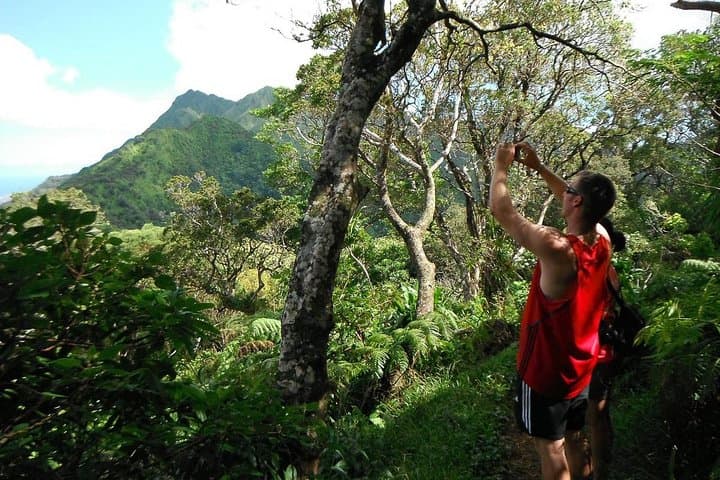
For photographers, morning light through mist and the ridge lookout toward Diamond Head are highlights. Bring a lightweight, waterproof cover and a lens hood; macro shots of endemic ferns often outshine wide vistas here. If you want a quieter day, choose Monday departures to avoid weekend crowds. Above all, let the forest set the pace — the path asks you to slow down, look down at the root systems, up at the cloud-scraped ridgeline, and listen. This is a hike that asks for attention and returns it with rare botanical spectacles and broad coastal views that remind you Oʻahu’s volcanic bones are never far from the surface.
moderate.
3–4 hours.
Above-average fitness recommended — comfortable with sustained uphill sections, uneven footing, and slippery mud.
The guided route covers about 2.5 miles one-way and takes roughly 3–4 hours round-trip with stops; it’s rated moderate with some short steep sections and muddy terrain.
Yes — complimentary round-trip shuttle service is included from central Waikiki, Kahala, and Aloha Tower pickup points.
Wear sturdy, closed-toe hiking shoes with good tread, quick-dry clothing, and bring a light rain jacket — ponchos are also provided by the operator.
The operator notes it’s not recommended for children aged 5 and under; families with older kids can participate if everyone is comfortable on uneven, muddy trails.
Yes — guides point out endemic plants and native forest birds; wildlife sightings vary, but you may see wild chickens and native songbirds like apapane or ʻamakihi.
This tour runs rain or shine; rescheduling or cancellation policies follow the operator’s terms — cancel at least 24 hours before departure for a full refund.
Manoa Valley has long been a cultivated and cultural landscape for Native Hawaiians, historically used for taro terraces and as a place of refuge; many local guides share those traditions on the hike.
Private land stewardship helps protect rare plants here; visitors are asked to stay on trails, clean footwear to prevent seed transfer, and follow Leave No Trace principles.
Bike Hawaii operates guided outdoor trips and adventures with an emphasis on safety, stewardship, and memorable experiences.
You step off the van and humidity wraps around you like a wet wool sweater — not oppressive, but immediate. The rainforest breathes: slow exhalations of damp earth and green. A narrow dirt track cuts under towering ʻōhiʻa and uluhe ferns; sunlight peels through the canopy in mottled stripes. The guide points to a slit in the ridge and, beyond it, Waikiki and Diamond Head sit like a distant ship on a bright blue horizon. This is Manoa Valley, a pocket of private rainforest on Oʻahu where volcanic ridgelines still shape the skyline and the island's past sits plain on the trail.
You step off the van and humidity wraps around you like a wet wool sweater — not oppressive, but immediate. The rainforest breathes: slow exhalations of damp earth and green. A narrow dirt track cuts under towering ʻōhiʻa and uluhe ferns; sunlight peels through the canopy in mottled stripes. The guide points to a slit in the ridge and, beyond it, Waikiki and Diamond Head sit like a distant ship on a bright blue horizon. This is Manoa Valley, a pocket of private rainforest on Oʻahu where volcanic ridgelines still shape the skyline and the island's past sits plain on the trail.
Geology here is quiet and old. Lava flows from ancient Koʻolau eruptions uplifted and eroded over millions of years, leaving jagged spines and steep valleys that trap moisture. That moisture creates the rainforest microclimate: moss-draped trunks, a chorus of insect life, and endemic plants that survived only in these sheltered hollows. Culturally, Manoa Valley was a taro-growing and place-of-refuge area for Native Hawaiians; local guides often weave oral histories into the walk, pointing out plants used for medicine, kapa, and canoe rigging.
The hike offered on this 75-acre private property is roughly 2.5 miles one-way and rated moderate. Expect about 3–4 hours total with stops; terrain is dirt and rainforest mud with intermittent roots and short, steep pitches. The route rewards effort with panoramas of Koʻolau peaks (including Konahuanui) and sneaking views toward Mt. Kaʻala on a clear day, plus intimate moments among plant life found nowhere else on Earth. Rain showers are frequent and brief, so the rainforest can flip from misty and still to drenching and loud in minutes — the stems and leaves will seem to be alive with intention.
Practicalities are straightforward: shuttles pick up from central Waikiki hotels; groups are capped at modest sizes for a quieter experience. The operator provides bottled water, a hip pack, mosquito repellent, and a rain poncho — but don’t treat that as a substitute for solid footwear and your own hydration. Trails get slick quickly; shoes with aggressive tread matter. Guides emphasize Leave No Trace: stay on the track to protect fragile understory plants and avoid carrying seeds or mud that can spread invasive species.
For photographers, morning light through mist and the ridge lookout toward Diamond Head are highlights. Bring a lightweight, waterproof cover and a lens hood; macro shots of endemic ferns often outshine wide vistas here. If you want a quieter day, choose Monday departures to avoid weekend crowds. Above all, let the forest set the pace — the path asks you to slow down, look down at the root systems, up at the cloud-scraped ridgeline, and listen. This is a hike that asks for attention and returns it with rare botanical spectacles and broad coastal views that remind you Oʻahu’s volcanic bones are never far from the surface.