THE ADVENTURE COLLECTIVE® · Independent discovery and booking for outdoor travel

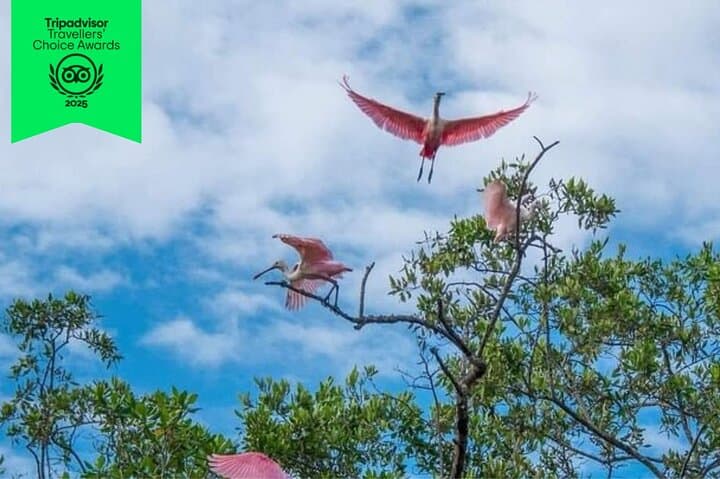
Board a panga at Puntarenas and follow dolphins into the Gulf of Nicoya, weave into mangrove channels to scan for roseate spoonbills, then circle Isla San Lucas to watch seabird colonies and enjoy a beach stop. This easy 4–5 hour outing pairs close wildlife encounters with local natural history.
Board a panga at Puntarenas and follow dolphins into the Gulf of Nicoya, weave into mangrove channels to scan for roseate spoonbills, then circle Isla San Lucas to watch seabird colonies and enjoy a beach stop. This easy 4–5 hour outing pairs close wildlife encounters with local natural history.
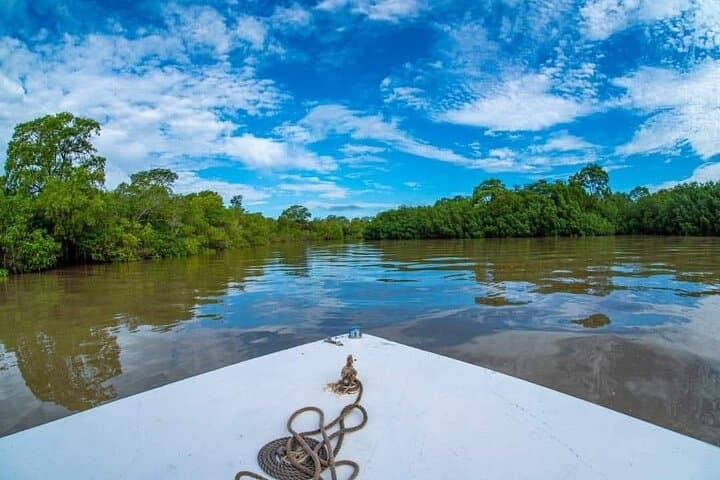
You step onto a low-profile panga at Puntarenas pier as the water breathes against the hull and distant mangrove roots pin a green skyline to the Gulf of Nicoya. The guide points to a dorsal fin cutting through sun-silvered water; dolphins arc and lead, daring you into the day.
Verified experiences and guided adventures in the surrounding area.
Operated by Coco's Tours Cr · Puntarenas, Puntarenas
You step onto a low-profile panga at Puntarenas pier as the water breathes against the hull and distant mangrove roots pin a green skyline to the Gulf of Nicoya. The guide points to a dorsal fin cutting through sun-silvered water; dolphins arc and lead, daring you into the day.
The trip threads coastal ecology and history: the Gulf of Nicoya’s shallow basin collects nutrients and supports dense mangrove forests—vital nursery habitat for fish and roosts for wading birds. Isla San Lucas, once a notorious penitentiary, now stages seabird colonies on volcanic rock and scrub, its cliffs pocked with nests where boobies and frigatebirds stake claims.
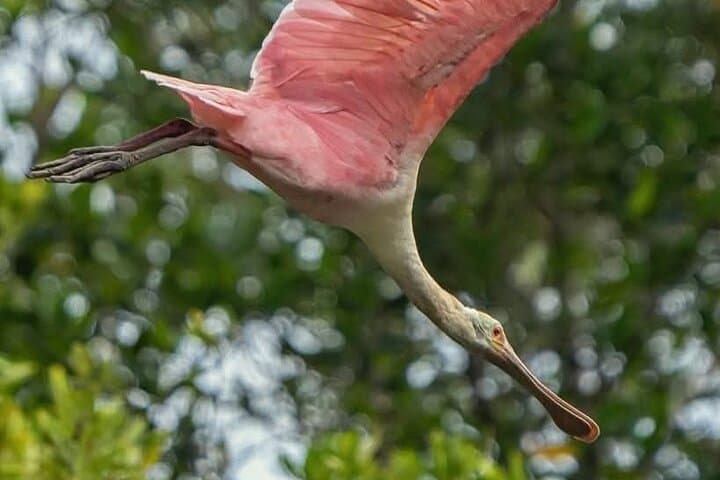
Local culture is tactile and direct—fishermen, fruit sellers and guides who read tides and bird calls the way others read maps. Guides explain mangrove root physiology and why the pink spatula (roseate spoonbill) favors the estuary’s mudflats.
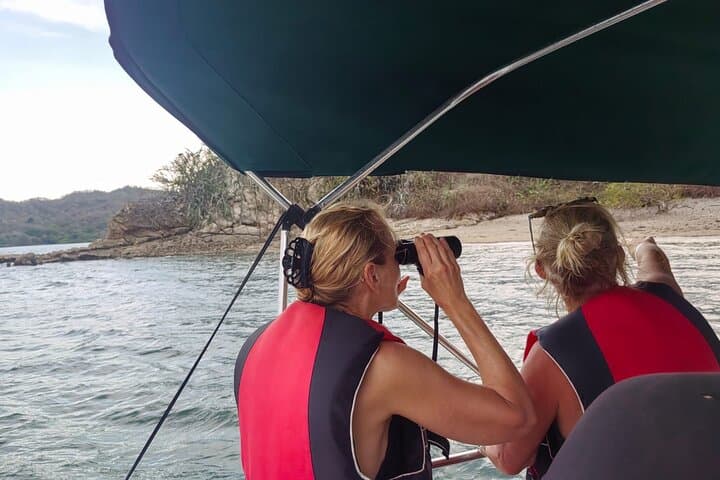
Practical guidance: this is an easy, mostly seated 4–5 hour boat outing with short shoreline time on Isla San Lucas. Bring polarized sunglasses, a wide-brim hat, and binoculars; put camera and phone in a dry bag. Morning departures offer the best light and calmer seas; take motion-sickness meds if you’re prone. Respect nesting areas—stay quiet, avoid sudden movements and follow the guide’s approach distances.
Photographers should use fast shutter speeds for seabirds in flight and a 200–400mm lens for distant nests. Expect tropical fruit snacks and bottled water on return—simple comforts after a morning watching birds, dolphins and a coastline that still feels resolutely alive.
easy.
4–5 hours.
Minimal fitness required; mostly seated on a boat with one short beach stop. Able-bodied mobility recommended for boarding.
The tour runs about 4–5 hours, typically including dolphin watching, a mangrove cruise, a circumnavigation of Isla San Lucas, and a short beach stop.
Yes—infants may ride on laps and the tour is physically easy, but children should be supervised on the beach and near the boat.
Dolphins are commonly sighted in the Gulf of Nicoya and typical birds include roseate spoonbills, herons, frigatebirds and tropicbirds, though sightings depend on season and conditions.
Boats usually have basic facilities for small needs; shore stops on Isla San Lucas are limited, so plan accordingly and use facilities before departure.
Isla San Lucas was a penal colony through much of the 20th century; its abandoned buildings now frame nesting cliffs and coastal habitat.
Mangroves are key carbon sinks and fish nurseries—stay on marked channels, avoid trampling roots, and follow guide instructions to minimize disturbance.
Coco's Tours Cr operates guided outdoor trips and adventures with an emphasis on safety, stewardship, and memorable experiences.
You step onto a low-profile panga at Puntarenas pier as the water breathes against the hull and distant mangrove roots pin a green skyline to the Gulf of Nicoya. The guide points to a dorsal fin cutting through sun-silvered water; dolphins arc and lead, daring you into the day.
You step onto a low-profile panga at Puntarenas pier as the water breathes against the hull and distant mangrove roots pin a green skyline to the Gulf of Nicoya. The guide points to a dorsal fin cutting through sun-silvered water; dolphins arc and lead, daring you into the day.
The trip threads coastal ecology and history: the Gulf of Nicoya’s shallow basin collects nutrients and supports dense mangrove forests—vital nursery habitat for fish and roosts for wading birds. Isla San Lucas, once a notorious penitentiary, now stages seabird colonies on volcanic rock and scrub, its cliffs pocked with nests where boobies and frigatebirds stake claims.
Local culture is tactile and direct—fishermen, fruit sellers and guides who read tides and bird calls the way others read maps. Guides explain mangrove root physiology and why the pink spatula (roseate spoonbill) favors the estuary’s mudflats.
Practical guidance: this is an easy, mostly seated 4–5 hour boat outing with short shoreline time on Isla San Lucas. Bring polarized sunglasses, a wide-brim hat, and binoculars; put camera and phone in a dry bag. Morning departures offer the best light and calmer seas; take motion-sickness meds if you’re prone. Respect nesting areas—stay quiet, avoid sudden movements and follow the guide’s approach distances.
Photographers should use fast shutter speeds for seabirds in flight and a 200–400mm lens for distant nests. Expect tropical fruit snacks and bottled water on return—simple comforts after a morning watching birds, dolphins and a coastline that still feels resolutely alive.