THE ADVENTURE COLLECTIVE® · Independent discovery and booking for outdoor travel

Cruise Mandurah’s calm estuary and canals on a 75-minute tour that combines dolphin watching, heritage commentary and scenic canal passages. If dolphins aren’t seen, the operator lets you cruise again for free.
Cruise Mandurah’s calm estuary and canals on a 75-minute tour that combines dolphin watching, heritage commentary and scenic canal passages. If dolphins aren’t seen, the operator lets you cruise again for free.
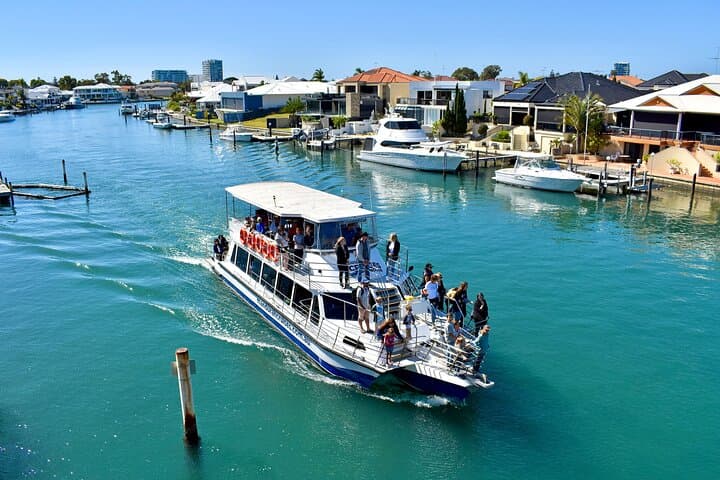
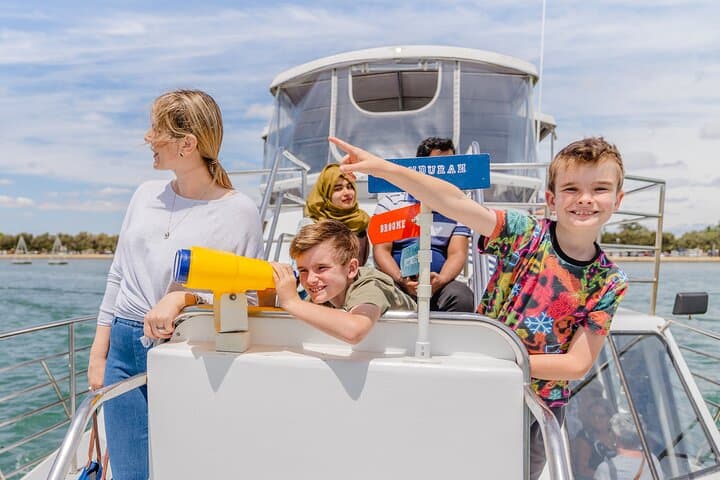
A low-slung vessel cuts a glassy path through Mandjar Bay as salt air and distant gull calls set the rhythm. On deck, children press to the rail for a better look; the guide points to a scatter of dorsal fins arcing through sunlit water. The boat threads between luxury canal homes, slips under the graceful curve of Mandurah Bridge and eases into the wide Peel–Harvey Estuary where dolphins often ride the wake.
Verified experiences and guided adventures in the surrounding area.
Operated by Mandurah Cruises · Mandurah, Western Australia
A low-slung vessel cuts a glassy path through Mandjar Bay as salt air and distant gull calls set the rhythm. On deck, children press to the rail for a better look; the guide points to a scatter of dorsal fins arcing through sunlit water. The boat threads between luxury canal homes, slips under the graceful curve of Mandurah Bridge and eases into the wide Peel–Harvey Estuary where dolphins often ride the wake.
This one-hour cruise moves through landscapes shaped by the Indian Ocean and ancient river systems: the RAMSAR-listed Creery Wetlands, shallow estuarine flats and the engineered Venetian-style canals of Port Mandurah. Mandurah began as a fishing town prized for blue swimmer crabs and rock lobster; today its waterways balance commercial fisheries, tourism and strong Noongar connections to Country—guides often include local history in commentary.
Practical details matter here. Cruises run daily and last about 75 minutes; all passengers must be able to board and move about the vessel independently. The operator offers a dolphin-sighting guarantee—see none and you can rebook for free. Mornings and late afternoons typically increase wildlife sightings and soften glare for photography.
Bring a windproof layer, sun protection and motion-sickness remedies if you’re prone to seasickness—the estuary can be calm but transitions at the river mouth bring chop. Binoculars and a camera with a fast shutter help capture breaching dolphins and wading birds. Respect wildlife by listening to the crew, avoid loud noise near pods, and remember that these are wild animals, not trained performers.
easy.
1–1.25 hours.
Suitable for most fitness levels; must be able to step aboard and move around the vessel without assistance
The tour lasts approximately 75 minutes and follows a set route through the ocean marina, canals and Peel–Harvey Estuary.
If dolphins aren’t seen on your cruise the operator offers a free rebooking; sightings are of wild Indo‑Pacific bottlenose dolphins and cannot be guaranteed on a specific date.
Yes—children enjoy the interactive features on deck and strollers are permitted; all passengers must be able to board and move independently.
Full refunds are available if you cancel at least 24 hours before departure; the operator may also cancel for weather or insufficient travelers.
Mandurah grew from one of Western Australia’s oldest fishing settlements; its canals and ocean marina evolved later as tourism and waterfront living expanded.
The Peel–Harvey system is sensitive to nutrient runoff and boat traffic; operators follow guidelines to minimize disturbance and support local habitat protection efforts.
Mandurah Cruises operates guided outdoor trips and adventures with an emphasis on safety, stewardship, and memorable experiences.


A low-slung vessel cuts a glassy path through Mandjar Bay as salt air and distant gull calls set the rhythm. On deck, children press to the rail for a better look; the guide points to a scatter of dorsal fins arcing through sunlit water. The boat threads between luxury canal homes, slips under the graceful curve of Mandurah Bridge and eases into the wide Peel–Harvey Estuary where dolphins often ride the wake.
A low-slung vessel cuts a glassy path through Mandjar Bay as salt air and distant gull calls set the rhythm. On deck, children press to the rail for a better look; the guide points to a scatter of dorsal fins arcing through sunlit water. The boat threads between luxury canal homes, slips under the graceful curve of Mandurah Bridge and eases into the wide Peel–Harvey Estuary where dolphins often ride the wake.
This one-hour cruise moves through landscapes shaped by the Indian Ocean and ancient river systems: the RAMSAR-listed Creery Wetlands, shallow estuarine flats and the engineered Venetian-style canals of Port Mandurah. Mandurah began as a fishing town prized for blue swimmer crabs and rock lobster; today its waterways balance commercial fisheries, tourism and strong Noongar connections to Country—guides often include local history in commentary.
Practical details matter here. Cruises run daily and last about 75 minutes; all passengers must be able to board and move about the vessel independently. The operator offers a dolphin-sighting guarantee—see none and you can rebook for free. Mornings and late afternoons typically increase wildlife sightings and soften glare for photography.
Bring a windproof layer, sun protection and motion-sickness remedies if you’re prone to seasickness—the estuary can be calm but transitions at the river mouth bring chop. Binoculars and a camera with a fast shutter help capture breaching dolphins and wading birds. Respect wildlife by listening to the crew, avoid loud noise near pods, and remember that these are wild animals, not trained performers.