THE ADVENTURE COLLECTIVE® · Independent discovery and booking for outdoor travel

A half-day trek on Kilimanjaro’s Marangu route delivers rainforest, monkeys and lunch at Mandara Hut (2,700 m), plus clear viewpoint climbs to Maundi Crater. Ideal for travelers who want the mountain’s ecology and views without an overnight expedition.
A half-day trek on Kilimanjaro’s Marangu route delivers rainforest, monkeys and lunch at Mandara Hut (2,700 m), plus clear viewpoint climbs to Maundi Crater. Ideal for travelers who want the mountain’s ecology and views without an overnight expedition.
You step out of the minivan as the mountain’s lower slopes fold into a green wall; humid air and the chatter of colobus monkeys greet you. The trail climbs through moss-draped forest, sunlight slicing through high branches and occasional clearings that tease the shape of Kibo far above.
Verified experiences and guided adventures in the surrounding area.
Operated by Gracepatt Ecotours Kenya · Moshi, Kilimanjaro Region
You step out of the minivan as the mountain’s lower slopes fold into a green wall; humid air and the chatter of colobus monkeys greet you. The trail climbs through moss-draped forest, sunlight slicing through high branches and occasional clearings that tease the shape of Kibo far above.
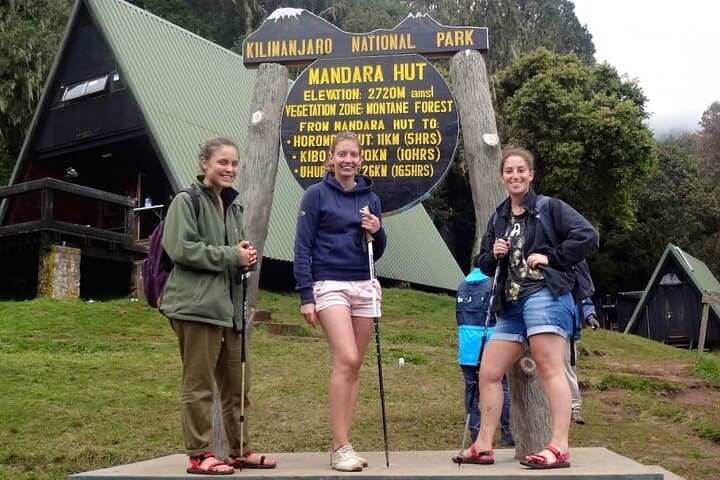
This day trip follows the Marangu route to Mandara Hut at about 2,700 meters, a historic waypoint first built to support early climbers and park patrols. Kilimanjaro’s geology is volcanic—layers of lava and ash built the cone—and the forest belt you cross is the mountain’s living skin, home to birds, primates and a surprising range of plant life shaped by elevation and moisture.
Local Chagga communities have farmed the foothills for generations; guides often share stories of coffee plots and the traditional accounts of the mountain. The itinerary pairs a steady uphill trek of three to four hours with a lunch stop at Mandara Hut, then a short detour to Maundi Crater for expansive views of Moshi, the plains of northern Tanzania and, on clear days, into Kenya.
Practical guidance: expect roughly 4–6 hours total, moderate elevation gain and muddy, rooty terrain in places. Wear broken-in hiking boots, bring 1–2 liters of water, layered clothing for rapid temperature shifts and sun protection for exposed viewpoints. Altitude comes on quickly above 2,000 m—move at a steady pace, hydrate, and rely on your guide for pacing and wildlife spotting. Transport from Moshi or Arusha and park fees are typically included; the route offers a compact taste of Kilimanjaro’s ecology without committing to multi-day summit climbs.
moderate.
4–6 hours.
Moderate cardio and leg strength; comfortable walking on uneven terrain and short uphill sections for several hours.
The trek reaches Mandara Hut at about 2,700 meters above sea level for lunch and views; it does not summit Kibo.
Yes for reasonably fit beginners; you should be comfortable walking 3–4 hours uphill on uneven trails and able to manage mild altitude effects.
Most operators include entrance fees, guide services and transport from Moshi or Arusha—confirm at booking for your particular tour.
Expect forest birds, colobus and blue monkeys, and occasionally small mammals; wildlife sightings depend on season and noise level.
Mandara Hut sits on the historic Marangu route, long used by local porters, guides and early European climbers; the hut has served as a social and logistical hub on the mountain for decades.
Kilimanjaro National Park is protected to preserve unique montane ecosystems; stick to trails, avoid feeding wildlife and carry out all trash to limit impact.
Gracepatt Ecotours Kenya operates guided outdoor trips and adventures with an emphasis on safety, stewardship, and memorable experiences.

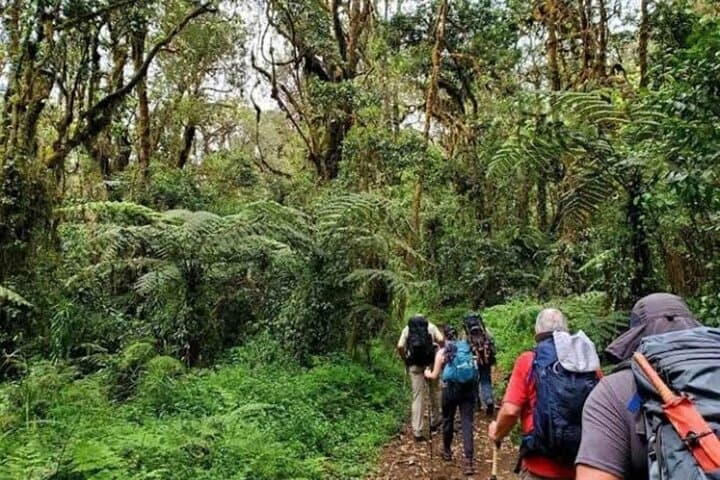

You step out of the minivan as the mountain’s lower slopes fold into a green wall; humid air and the chatter of colobus monkeys greet you. The trail climbs through moss-draped forest, sunlight slicing through high branches and occasional clearings that tease the shape of Kibo far above.
You step out of the minivan as the mountain’s lower slopes fold into a green wall; humid air and the chatter of colobus monkeys greet you. The trail climbs through moss-draped forest, sunlight slicing through high branches and occasional clearings that tease the shape of Kibo far above.
This day trip follows the Marangu route to Mandara Hut at about 2,700 meters, a historic waypoint first built to support early climbers and park patrols. Kilimanjaro’s geology is volcanic—layers of lava and ash built the cone—and the forest belt you cross is the mountain’s living skin, home to birds, primates and a surprising range of plant life shaped by elevation and moisture.
Local Chagga communities have farmed the foothills for generations; guides often share stories of coffee plots and the traditional accounts of the mountain. The itinerary pairs a steady uphill trek of three to four hours with a lunch stop at Mandara Hut, then a short detour to Maundi Crater for expansive views of Moshi, the plains of northern Tanzania and, on clear days, into Kenya.
Practical guidance: expect roughly 4–6 hours total, moderate elevation gain and muddy, rooty terrain in places. Wear broken-in hiking boots, bring 1–2 liters of water, layered clothing for rapid temperature shifts and sun protection for exposed viewpoints. Altitude comes on quickly above 2,000 m—move at a steady pace, hydrate, and rely on your guide for pacing and wildlife spotting. Transport from Moshi or Arusha and park fees are typically included; the route offers a compact taste of Kilimanjaro’s ecology without committing to multi-day summit climbs.