THE ADVENTURE COLLECTIVE® · Independent discovery and booking for outdoor travel

Walk Manchester with a local guide on this 90-minute tour from St Peter's Square. Explore industrial history, street art, Chinatown, the Gay Village, and hidden memorials while learning how the city transformed from mills to music and football.
Walk Manchester with a local guide on this 90-minute tour from St Peter's Square. Explore industrial history, street art, Chinatown, the Gay Village, and hidden memorials while learning how the city transformed from mills to music and football.
The tram rattles into St Peter's Square and the city exhales: brick facades, damp cobbles, and the low hum of conversation. Set off with a local who reads the stones — telling you where Roman grit gave way to Victorian mills — and you'll move through an urban landscape that still bears the handprints of industry, protest, and creativity.
Verified experiences and guided adventures in the surrounding area.
Operated by Walking Tours in England · Manchester, Greater Manchester
The tram rattles into St Peter's Square and the city exhales: brick facades, damp cobbles, and the low hum of conversation. Set off with a local who reads the stones — telling you where Roman grit gave way to Victorian mills — and you'll move through an urban landscape that still bears the handprints of industry, protest, and creativity.
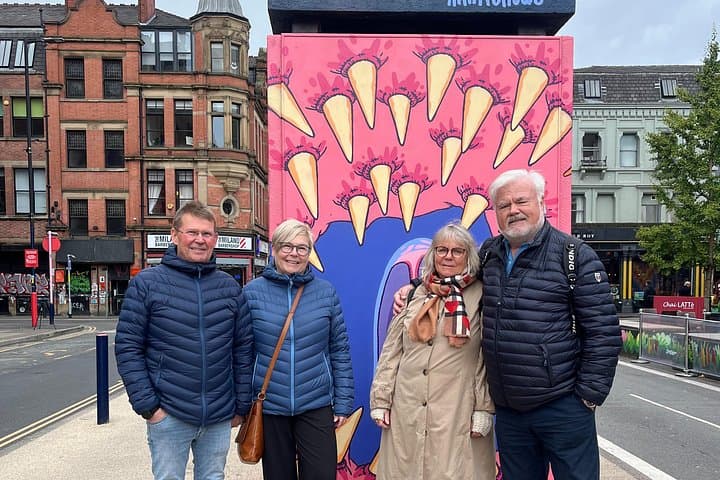
Manchester's story is physical: red sandstone and Carboniferous coal measures underlie streets carved by canals and rail. In the space of a ninety-minute loop you'll encounter the Royal Exchange, traces of the medieval quarter, the Printworks, and the vivid murals of the Northern Quarter. Hear about the suffragettes and the textile barons who reshaped labor, then feel the city pivot to music, football, and an outspoken LGBTQ+ culture centered on Canal Street.
Locals point to small, revealing details — the paifang marking one of Britain’s largest Chinatowns, a modest Gandhi statue, a quiet memorial garden — that convert landmarks into stories.
Practical notes: tours meet at St Peter's Square and run about 90 minutes with stops and photo opportunities; routes are flat and wheelchair accessible. Wear comfortable shoes for mixed paving, carry a light waterproof, and plan to use public transport to arrive and depart. Morning departures avoid peak foot traffic; summer evenings stretch light for photos. Guides tend to operate in small groups so questions are welcome. Bring a charged phone and an open mind: Manchester rewards curiosity with overlooked corners and sharp local knowledge.
easy.
1.5 hours.
Suitable for most fitness levels; requires standing and walking on flat urban surfaces for the tour duration
The tour meets and finishes at St Peter's Square, central and served by multiple tram lines and bus routes.
Yes — the route is described as wheelchair accessible with mostly flat surfaces and no steep climbs.
Shared tours cap at around 20 people, which keeps groups small enough for questions and interaction.
Yes — it is suitable for most ages and infants in strollers are accommodated; content covers history and contemporary culture.
Manchester grew from Roman roots into a global textile powerhouse in the 18th and 19th centuries; factory architecture and canal networks still shape the cityscape.
Visitors are encouraged to use public transit, respect memorial spaces, and support independent businesses; the city promotes sustainable transport and careful stewardship of historic sites.
Walking Tours in England operates guided outdoor trips and adventures with an emphasis on safety, stewardship, and memorable experiences.
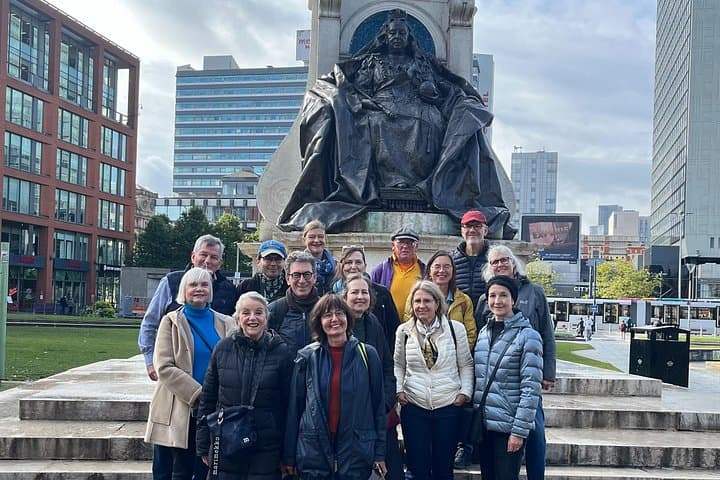
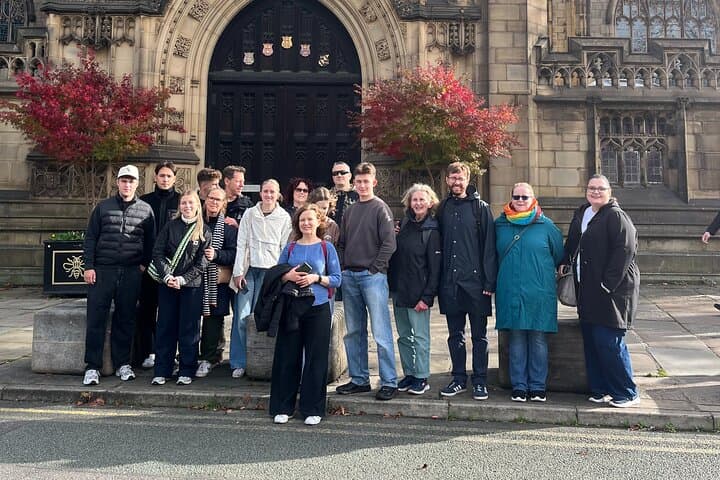
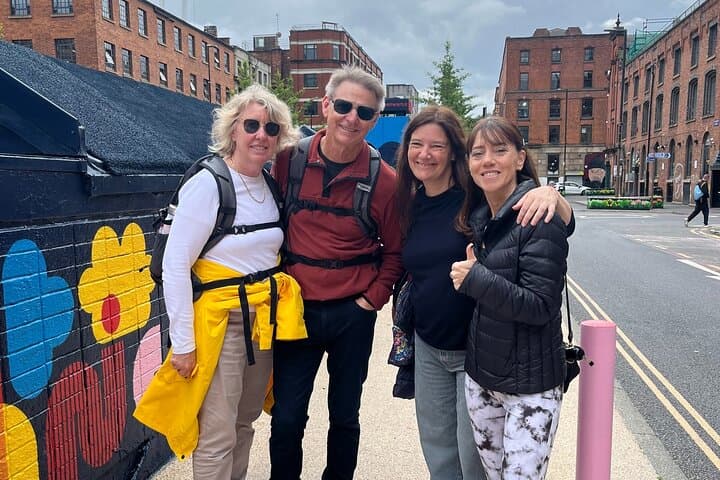
The tram rattles into St Peter's Square and the city exhales: brick facades, damp cobbles, and the low hum of conversation. Set off with a local who reads the stones — telling you where Roman grit gave way to Victorian mills — and you'll move through an urban landscape that still bears the handprints of industry, protest, and creativity.
The tram rattles into St Peter's Square and the city exhales: brick facades, damp cobbles, and the low hum of conversation. Set off with a local who reads the stones — telling you where Roman grit gave way to Victorian mills — and you'll move through an urban landscape that still bears the handprints of industry, protest, and creativity.
Manchester's story is physical: red sandstone and Carboniferous coal measures underlie streets carved by canals and rail. In the space of a ninety-minute loop you'll encounter the Royal Exchange, traces of the medieval quarter, the Printworks, and the vivid murals of the Northern Quarter. Hear about the suffragettes and the textile barons who reshaped labor, then feel the city pivot to music, football, and an outspoken LGBTQ+ culture centered on Canal Street.
Locals point to small, revealing details — the paifang marking one of Britain’s largest Chinatowns, a modest Gandhi statue, a quiet memorial garden — that convert landmarks into stories.
Practical notes: tours meet at St Peter's Square and run about 90 minutes with stops and photo opportunities; routes are flat and wheelchair accessible. Wear comfortable shoes for mixed paving, carry a light waterproof, and plan to use public transport to arrive and depart. Morning departures avoid peak foot traffic; summer evenings stretch light for photos. Guides tend to operate in small groups so questions are welcome. Bring a charged phone and an open mind: Manchester rewards curiosity with overlooked corners and sharp local knowledge.