THE ADVENTURE COLLECTIVE® · Independent discovery and booking for outdoor travel

A full-circuit trek around Manaslu climbs to Larkya La (5,135 m) through remote villages, alpine meadows and glacial passes. Expect 18–21 days of tea houses, mandatory permits, and a culturally rich route with fewer crowds than Everest or Annapurna tracks.
A full-circuit trek around Manaslu climbs to Larkya La (5,135 m) through remote villages, alpine meadows and glacial passes. Expect 18–21 days of tea houses, mandatory permits, and a culturally rich route with fewer crowds than Everest or Annapurna tracks.
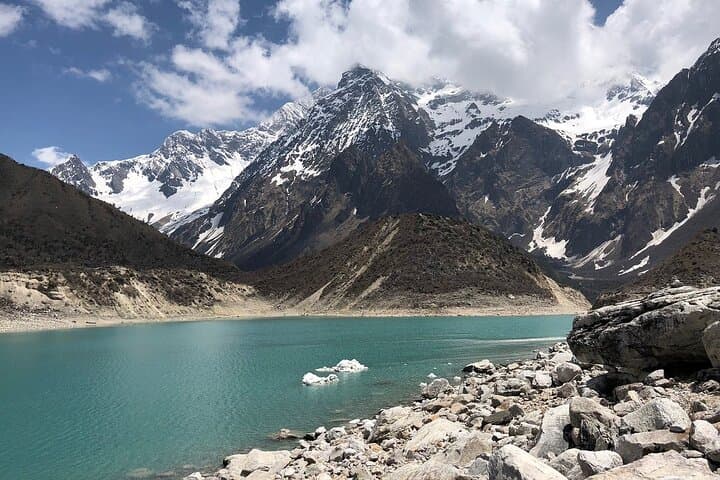
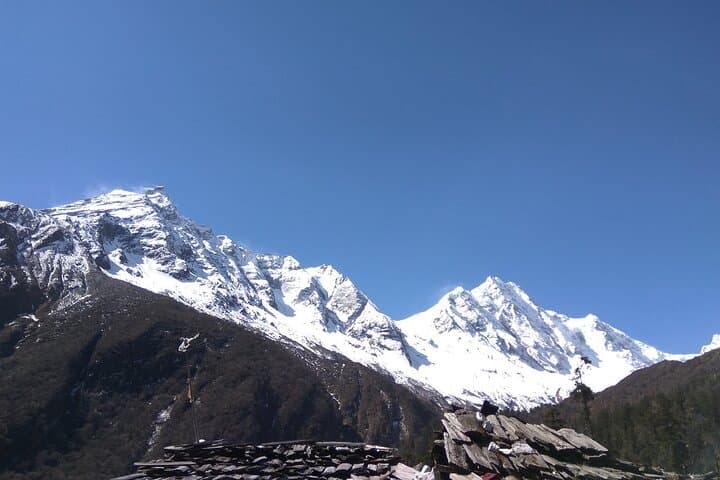
A thin morning light slides across glacial ridges as trekkers step out of a stone tea house into the chill — the Budi Gandaki valley yawns ahead, the trail folding upward toward the Larkya La pass. Manaslu, an 8,156 m crown, watches over narrow river canyons, terraced farmland, and villages where prayer flags catch every breeze.
Verified experiences and guided adventures in the surrounding area.
Operated by Nepal Guide Treks and Expedition P. Ltd. · Samagaon, Gandaki Province
A thin morning light slides across glacial ridges as trekkers step out of a stone tea house into the chill — the Budi Gandaki valley yawns ahead, the trail folding upward toward the Larkya La pass. Manaslu, an 8,156 m crown, watches over narrow river canyons, terraced farmland, and villages where prayer flags catch every breeze.
The Manaslu Circuit traces ancient trade and pilgrimage corridors between Nepali and Tibetan cultures. Geologically the route threads moraine-sculpted valleys and Pleistocene-born glaciers; Ganesh Himal and other granite peaks throw sharp profiles against the sky. Local communities are primarily Gurung and Tibetan-influenced, with stone monasteries, mani walls and seasonal yak grazing that reflect a highland way of life.
Trekkers should expect 18–21 days on trail with steady daily gains, a high point at Larkya La (5,135 m) and a mix of subtropical forest, alpine meadows and exposed glacial approaches. Tea houses provide basic beds and cooked meals; permits for the Manaslu Conservation Area and Annapurna Conservation Area are mandatory. Weather windows are clearest in spring (Mar–May) and autumn (Sep–Nov); winter brings deep snow and summertime monsoon muddles low-elevation trails.
Practical guidance: keep pace slow for acclimatization, carry layered insulation for summit-level winds, and plan for variable footing — snow, scree and wet trail. Guides and porters are recommended for navigation and local logistics. Bring cash for remote villages, respect local customs around monasteries, and prioritize leave-no-trace practices so this less-crowded Himalayan circuit stays wild for the next traveler.
challenging.
18–21 days.
Good cardiovascular fitness and prior multi-day trekking experience; able to hike 5–6 hours daily at altitude.
Yes — the Manaslu Conservation Area permit and an Annapurna Conservation Area (ACAP) permit are required and checked at entry points.
Larkya La at 5,135 m is the high point; no technical mountaineering skills are required but snow and ice can make sections challenging.
Yes, basic tea house lodges operate along the standard circuit, offering meals and simple dorm or twin rooms; remote nights are more rustic.
Ascend slowly, include acclimatization days, stay hydrated, and descend immediately if severe symptoms develop; travel insurance with evacuation coverage is recommended.
The Manaslu region has long been a corridor between Nepal and Tibetan highlands; recent conservation efforts formalized the Manaslu Conservation Area to protect landscape and culture.
Permits limit and monitor visitor numbers and fees support community conservation; avoid single-use plastics, pack out waste and use local lodges to benefit villages.
Nepal Guide Treks and Expedition P. Ltd. operates guided outdoor trips and adventures with an emphasis on safety, stewardship, and memorable experiences.


A thin morning light slides across glacial ridges as trekkers step out of a stone tea house into the chill — the Budi Gandaki valley yawns ahead, the trail folding upward toward the Larkya La pass. Manaslu, an 8,156 m crown, watches over narrow river canyons, terraced farmland, and villages where prayer flags catch every breeze.
A thin morning light slides across glacial ridges as trekkers step out of a stone tea house into the chill — the Budi Gandaki valley yawns ahead, the trail folding upward toward the Larkya La pass. Manaslu, an 8,156 m crown, watches over narrow river canyons, terraced farmland, and villages where prayer flags catch every breeze.
The Manaslu Circuit traces ancient trade and pilgrimage corridors between Nepali and Tibetan cultures. Geologically the route threads moraine-sculpted valleys and Pleistocene-born glaciers; Ganesh Himal and other granite peaks throw sharp profiles against the sky. Local communities are primarily Gurung and Tibetan-influenced, with stone monasteries, mani walls and seasonal yak grazing that reflect a highland way of life.
Trekkers should expect 18–21 days on trail with steady daily gains, a high point at Larkya La (5,135 m) and a mix of subtropical forest, alpine meadows and exposed glacial approaches. Tea houses provide basic beds and cooked meals; permits for the Manaslu Conservation Area and Annapurna Conservation Area are mandatory. Weather windows are clearest in spring (Mar–May) and autumn (Sep–Nov); winter brings deep snow and summertime monsoon muddles low-elevation trails.
Practical guidance: keep pace slow for acclimatization, carry layered insulation for summit-level winds, and plan for variable footing — snow, scree and wet trail. Guides and porters are recommended for navigation and local logistics. Bring cash for remote villages, respect local customs around monasteries, and prioritize leave-no-trace practices so this less-crowded Himalayan circuit stays wild for the next traveler.