THE ADVENTURE COLLECTIVE® · Independent discovery and booking for outdoor travel

A 16-day, private circuit around Mount Manaslu culminating at Larke La (≈5,125 m), this trek stitches Himalayan highlands, Tibetan-influenced villages and remote alpine views into one continuous challenge. Expect tea-house nights, gradual acclimatization and the demanding but rewarding Larkya La crossing.
A 16-day, private circuit around Mount Manaslu culminating at Larke La (≈5,125 m), this trek stitches Himalayan highlands, Tibetan-influenced villages and remote alpine views into one continuous challenge. Expect tea-house nights, gradual acclimatization and the demanding but rewarding Larkya La crossing.
You step out of Kathmandu’s humid air into a van that follows the Budi Gandaki river, the valley walls tightening as you drive toward Soti Khola. The river dares you forward; villages, prayer flags and terraced fields slide past like pages of a lived-in atlas. By the second day on trail, rhododendron forests and mani walls frame a route that steadily climbs into alpine sparsity.
Verified experiences and guided adventures in the surrounding area.
Operated by Himalayan Leisure, Inc. · Samagaon, Gandaki Province
You step out of Kathmandu’s humid air into a van that follows the Budi Gandaki river, the valley walls tightening as you drive toward Soti Khola. The river dares you forward; villages, prayer flags and terraced fields slide past like pages of a lived-in atlas. By the second day on trail, rhododendron forests and mani walls frame a route that steadily climbs into alpine sparsity.
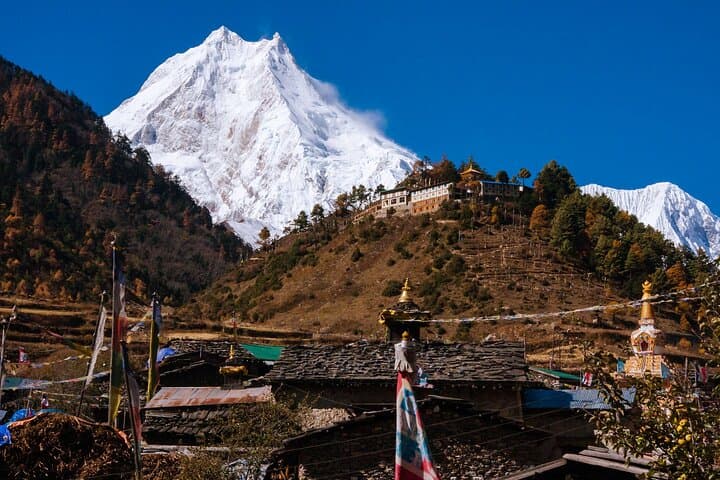
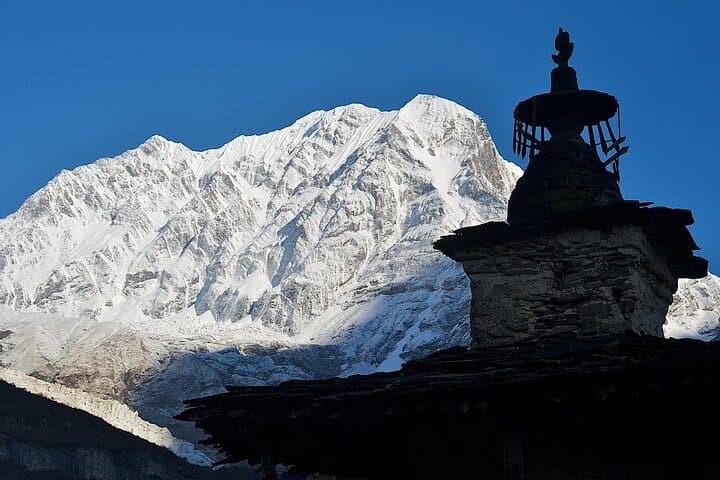
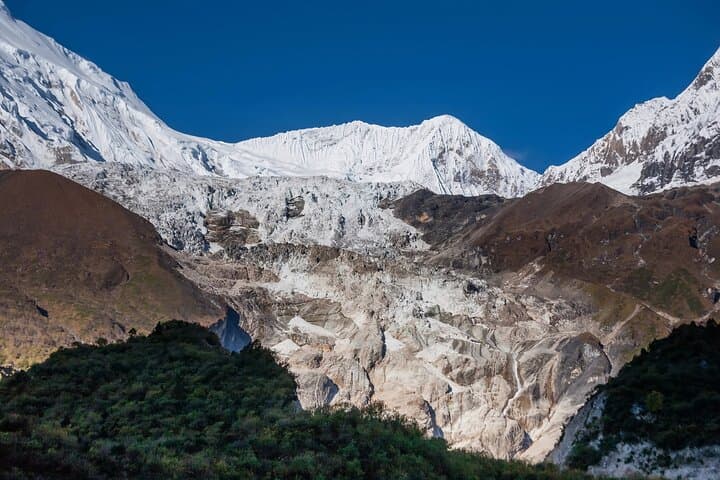
The Manaslu Circuit traces the flanks of Mount Manaslu (8,163 m), crossing lands once shaped by glacial sculpting and tectonic uplift. The region’s villages retain strong Tibetan cultural threads — prayer wheels, monasteries and barley fields reflect centuries of Himalayan trade and spiritual practice. Geologically, you’ll move from subtropical riverbanks through bamboo and oak to moraine-strewn high valleys and glacial tills near Larke La.
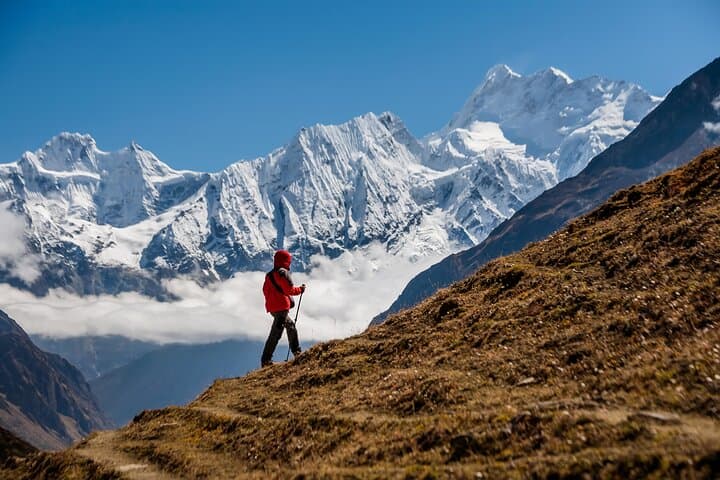
Expect tea-house lodging on most nights, simple meals of dal-bhat and yak butter tea, and an itinerary built for acclimatization: rest days in Samdo and gradual altitude gain toward Larke Phedi. The Larkya La (≈5,125 m) is the technical apex — a steep, rocky ascent with possible snow; weather can switch fast and thin air makes each step heavier.
Practical edge: pace conservatively, use a pulse oximeter if you carry one, and bring layered insulation for sub-zero nights. Hydrate before and during each day; lightweight crampons and trekking poles speed crossings when the pass holds snow. Guides handle permits and logistics, but responsible trekking — slow ascent, proper footwear, adequate sleep — is what gets you over the pass and back to Tilije with the mountain still in view.
challenging.
16 days.
Good aerobic fitness and experience with multi-day high-altitude hikes; able to walk 5–7 hours on uneven terrain for consecutive days.
Yes — the Manaslu Conservation Area permit and Restricted Area Permit are required and typically arranged by your operator before trekking.
Spring (April–May) and autumn (September–November) offer the most stable weather and clearer mountain views; shoulder seasons are colder and wetter.
Tea-house lodges on the trail provide basic private rooms and shared facilities; three nights in Kathmandu are typically hotel-based prior to the trek.
The Larke Pass reaches ~5,125 m — acute mountain sickness is a real risk; follow acclimatization days, monitor symptoms, and descend if symptoms worsen.
The Manaslu region sits on historic trade routes between Nepal and Tibet; local villages preserve Tibetan-Buddhist architecture and mani walls that mark centuries of mountain pilgrimage and commerce.
The Manaslu Conservation Area Project (MCAP) protects habitat and cultural sites; restricted permits and local fees fund conservation and community services — practice leave-no-trace and minimize single-use plastics.
Himalayan Leisure, Inc. operates guided outdoor trips and adventures with an emphasis on safety, stewardship, and memorable experiences.
You step out of Kathmandu’s humid air into a van that follows the Budi Gandaki river, the valley walls tightening as you drive toward Soti Khola. The river dares you forward; villages, prayer flags and terraced fields slide past like pages of a lived-in atlas. By the second day on trail, rhododendron forests and mani walls frame a route that steadily climbs into alpine sparsity.
You step out of Kathmandu’s humid air into a van that follows the Budi Gandaki river, the valley walls tightening as you drive toward Soti Khola. The river dares you forward; villages, prayer flags and terraced fields slide past like pages of a lived-in atlas. By the second day on trail, rhododendron forests and mani walls frame a route that steadily climbs into alpine sparsity.
The Manaslu Circuit traces the flanks of Mount Manaslu (8,163 m), crossing lands once shaped by glacial sculpting and tectonic uplift. The region’s villages retain strong Tibetan cultural threads — prayer wheels, monasteries and barley fields reflect centuries of Himalayan trade and spiritual practice. Geologically, you’ll move from subtropical riverbanks through bamboo and oak to moraine-strewn high valleys and glacial tills near Larke La.
Expect tea-house lodging on most nights, simple meals of dal-bhat and yak butter tea, and an itinerary built for acclimatization: rest days in Samdo and gradual altitude gain toward Larke Phedi. The Larkya La (≈5,125 m) is the technical apex — a steep, rocky ascent with possible snow; weather can switch fast and thin air makes each step heavier.
Practical edge: pace conservatively, use a pulse oximeter if you carry one, and bring layered insulation for sub-zero nights. Hydrate before and during each day; lightweight crampons and trekking poles speed crossings when the pass holds snow. Guides handle permits and logistics, but responsible trekking — slow ascent, proper footwear, adequate sleep — is what gets you over the pass and back to Tilije with the mountain still in view.