THE ADVENTURE COLLECTIVE® · Independent discovery and booking for outdoor travel

A 13-day private traverse of Nepal’s Manaslu Circuit moves from low river gorges to the Larkya La high pass, combining alpine panoramas, Tibetan-influenced villages and sustained high-altitude hiking. This guide outlines what to expect, how to prepare, and practical tips for a safe, rewarding crossing.
A 13-day private traverse of Nepal’s Manaslu Circuit moves from low river gorges to the Larkya La high pass, combining alpine panoramas, Tibetan-influenced villages and sustained high-altitude hiking. This guide outlines what to expect, how to prepare, and practical tips for a safe, rewarding crossing.
A cold sun slides over terraced fields and the Budi Gandaki runs like a dare through the valley as a small group leaves Kathmandu behind. On the first morning the highway unwinds through river gorges and pine-scented passes; by the week’s midpoint the trail narrows into rhododendron and fir, then opens to wide yak pastures with Manaslu’s north face dominating the skyline.
Verified experiences and guided adventures in the surrounding area.
Operated by Orbit Alpine Adventure · Sama Gaun, Gandaki Province
A cold sun slides over terraced fields and the Budi Gandaki runs like a dare through the valley as a small group leaves Kathmandu behind. On the first morning the highway unwinds through river gorges and pine-scented passes; by the week’s midpoint the trail narrows into rhododendron and fir, then opens to wide yak pastures with Manaslu’s north face dominating the skyline.
The route follows ancient salt and livestock tracks used for centuries by Gurung and Tibetan-influenced communities. Geologically, Manaslu sits on the collision margin of the Indian and Eurasian plates, producing steep glaciated cirques, high moraines and the glacier-fed lakes like Birendra Tal. Culturally, the trek crosses restricted zones where monasteries, mani walls and prayer flags mark local Buddhist practices and hospitality is a constant.
Expect long days with sustained elevation gain—Jagat to Namrung, then Lho to Sama Gaon—and a stiff high-point at Larkya La (5,160 m) that rewards early starts and steady pacing. Tea houses provide simple meals, a place to dry gear and a chance to chat with local guides; permits and an experienced porter/guide team are standard in this region.
Practical notes: acclimatize deliberately, carry water-purification and an oximeter, and layer for fast weather swings. Footwear should handle wet stone and scree; trekking poles reduce strain on steep ascents and descents. With careful planning and respect for altitude, the Manaslu Circuit is a remote, logistical challenge that delivers panoramic Himalayan exposure and authentic mountain life.
challenging.
13 days.
Requires strong cardiovascular fitness and prior multi-day trekking experience; able to hike 6–10 hours/day with load at altitude.
Yes — entry to the Manaslu restricted area requires a Manaslu Conservation Area permit and TIMS; these are normally arranged by your operator before trekking.
Spring (March–May) and autumn (September–November) offer the most stable weather and clear mountain views; shoulder seasons can be colder with more snow on Larkya La.
The Larkya La day is the hardest: very early start (pre-dawn), steep final snowfield, and high altitude (5,160 m); expect 8–10+ hours with slow, steady pacing.
AMS risk increases above 3,000 m; guides monitor symptoms, encourage hydration and rest, and have protocols to descend or evacuate if condition worsens.
The route follows old trade and mule paths linking Nepal and Tibetan regions; many villages show Tibetan cultural influence through gompas, mani stones and traditional dress.
The Manaslu area is a restricted conservation zone—permits limit overnight numbers, and responsible operators enforce waste management and leave-no-trace practices to protect fragile alpine ecosystems.
Orbit Alpine Adventure operates guided outdoor trips and adventures with an emphasis on safety, stewardship, and memorable experiences.
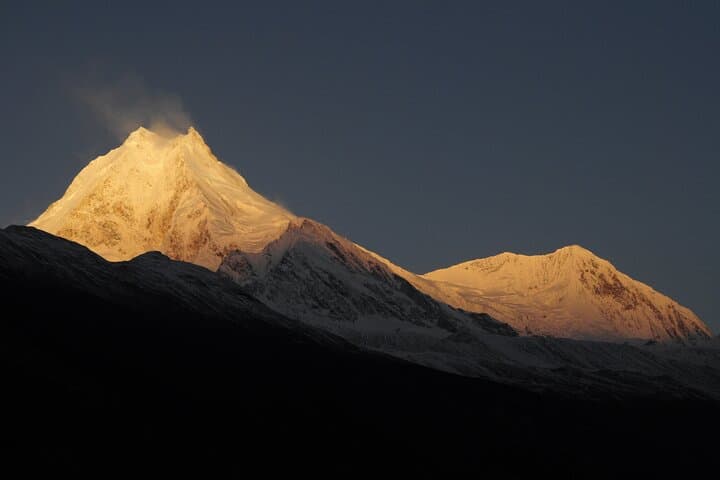


A cold sun slides over terraced fields and the Budi Gandaki runs like a dare through the valley as a small group leaves Kathmandu behind. On the first morning the highway unwinds through river gorges and pine-scented passes; by the week’s midpoint the trail narrows into rhododendron and fir, then opens to wide yak pastures with Manaslu’s north face dominating the skyline.
A cold sun slides over terraced fields and the Budi Gandaki runs like a dare through the valley as a small group leaves Kathmandu behind. On the first morning the highway unwinds through river gorges and pine-scented passes; by the week’s midpoint the trail narrows into rhododendron and fir, then opens to wide yak pastures with Manaslu’s north face dominating the skyline.
The route follows ancient salt and livestock tracks used for centuries by Gurung and Tibetan-influenced communities. Geologically, Manaslu sits on the collision margin of the Indian and Eurasian plates, producing steep glaciated cirques, high moraines and the glacier-fed lakes like Birendra Tal. Culturally, the trek crosses restricted zones where monasteries, mani walls and prayer flags mark local Buddhist practices and hospitality is a constant.
Expect long days with sustained elevation gain—Jagat to Namrung, then Lho to Sama Gaon—and a stiff high-point at Larkya La (5,160 m) that rewards early starts and steady pacing. Tea houses provide simple meals, a place to dry gear and a chance to chat with local guides; permits and an experienced porter/guide team are standard in this region.
Practical notes: acclimatize deliberately, carry water-purification and an oximeter, and layer for fast weather swings. Footwear should handle wet stone and scree; trekking poles reduce strain on steep ascents and descents. With careful planning and respect for altitude, the Manaslu Circuit is a remote, logistical challenge that delivers panoramic Himalayan exposure and authentic mountain life.