THE ADVENTURE COLLECTIVE® · Independent discovery and booking for outdoor travel

A 12-day loop that climbs from river valleys to the 5,105 m Larkya La, the Manaslu Circuit pairs remote high-mountain panoramas with authentic Tibetan-Nepalese villages. Expect long walking days, mandatory permits, and teahouse nights framed by prayer flags.
A 12-day loop that climbs from river valleys to the 5,105 m Larkya La, the Manaslu Circuit pairs remote high-mountain panoramas with authentic Tibetan-Nepalese villages. Expect long walking days, mandatory permits, and teahouse nights framed by prayer flags.
Morning light strips the valley bare and the first views of Manaslu appear like an answer to a hard-earned question: sharp ridgelines, broad glaciers and villages that refuse to rush. The Manaslu Circuit is a sustained highland passage — a route that moves from subtropical river canyons through pine and rhododendron forests up onto high alpine moraine and the 5,105 m Larkya La.
Verified experiences and guided adventures in the surrounding area.
Operated by Nepal Trek Ways Pvt. Ltd. · Samagaon, Gandaki Province
Morning light strips the valley bare and the first views of Manaslu appear like an answer to a hard-earned question: sharp ridgelines, broad glaciers and villages that refuse to rush. The Manaslu Circuit is a sustained highland passage — a route that moves from subtropical river canyons through pine and rhododendron forests up onto high alpine moraine and the 5,105 m Larkya La.
The region opened to trekkers only in 1991, which helped preserve Tibetan-influenced villages where mani walls, painted chortens and monasteries still organize daily life. Geologically the circuit traces uplifted Himalayan thrusts: steep valleys incised by glacial action expose moraines and glacier-fed rivers that continue to carve the Budhi Gandaki watershed.
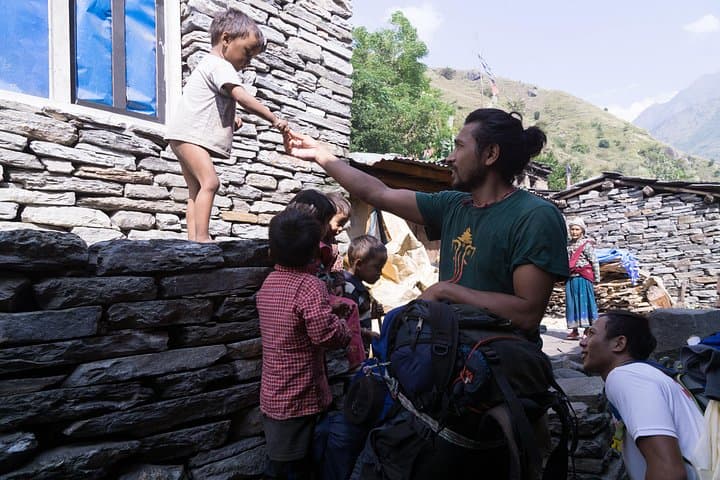
Culturally the trek sits on a seam between Nepalese and Tibetan traditions — Gurung and Tibetan communities offer teahouse hospitality, butter-lamp lit gompas and local barley terraces. Side-trips to Prok and Pung-gyen Gompa deepen that cultural picture and provide altitude-managed acclimatization.
Practically, expect long days of steady climbs, multiple river crossings and one technical high-pass day over Larkya La. Accommodation is mostly stone teahouses and guesthouses, with public bus and jeep access at the trailheads. Permits are required (Manaslu Restricted Area and conservation permits), and guides are mandatory inside the restricted zone. Hydration, layered clothing for wide temperature swings, careful pace for altitude, and a contingency day for weather around the pass are essential planning points.
The reward is panoramic high-Himalaya exposure and remote village interaction — a trek that pairs hard-earned alpine views with clear cultural encounters.
challenging.
11–13 days (approx. 12 days listed).
Good aerobic fitness and experience with multi-day altitude treks; ability to walk 5–8 hours daily on uneven terrain
Yes — Manaslu is a restricted area; permits are mandatory and entry is usually arranged through a licensed guide or agency.
Autumn (Sept–Nov) and spring (Mar–May) offer the most stable weather and clear mountain views; monsoon months bring heavy rain and winter brings deep snow on the pass.
Larkya La (5,105 m) is a long, high pass requiring an early start, good acclimatization, and walking on loose moraine; weather and snow increase difficulty.
Yes — the route is served by stone teahouses in most villages; services and comfort decrease at higher elevations, so carry small essentials.
The Manaslu region historically sits along trade and pilgrimage routes between Nepal and Tibet; monasteries and mani walls reflect long-standing Tibetan Buddhist influence.
The trek passes through Manaslu and Annapurna conservation areas; stick to trails, pack out waste, and minimize firewood use to protect fragile alpine scrub and forest.
Nepal Trek Ways Pvt. Ltd. operates guided outdoor trips and adventures with an emphasis on safety, stewardship, and memorable experiences.
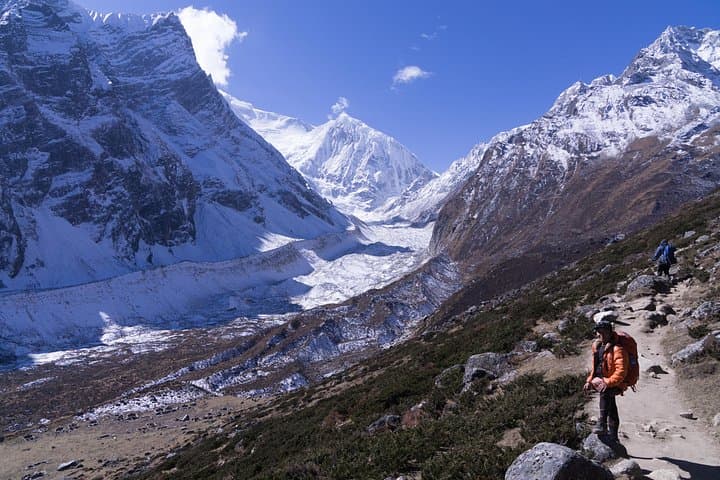
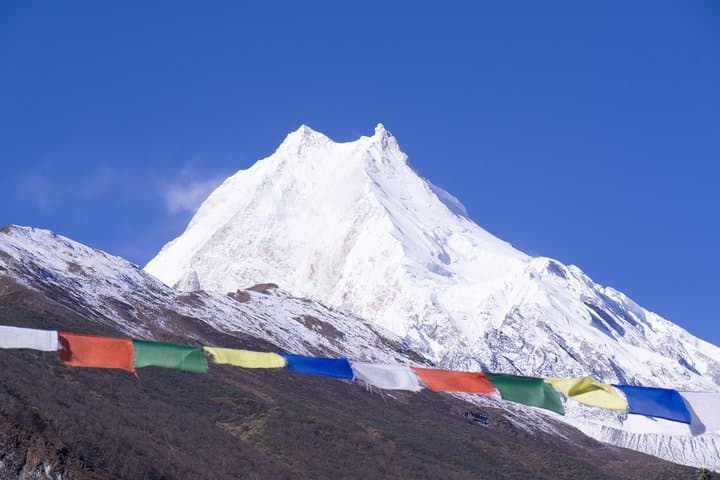
Morning light strips the valley bare and the first views of Manaslu appear like an answer to a hard-earned question: sharp ridgelines, broad glaciers and villages that refuse to rush. The Manaslu Circuit is a sustained highland passage — a route that moves from subtropical river canyons through pine and rhododendron forests up onto high alpine moraine and the 5,105 m Larkya La.
Morning light strips the valley bare and the first views of Manaslu appear like an answer to a hard-earned question: sharp ridgelines, broad glaciers and villages that refuse to rush. The Manaslu Circuit is a sustained highland passage — a route that moves from subtropical river canyons through pine and rhododendron forests up onto high alpine moraine and the 5,105 m Larkya La.
The region opened to trekkers only in 1991, which helped preserve Tibetan-influenced villages where mani walls, painted chortens and monasteries still organize daily life. Geologically the circuit traces uplifted Himalayan thrusts: steep valleys incised by glacial action expose moraines and glacier-fed rivers that continue to carve the Budhi Gandaki watershed.
Culturally the trek sits on a seam between Nepalese and Tibetan traditions — Gurung and Tibetan communities offer teahouse hospitality, butter-lamp lit gompas and local barley terraces. Side-trips to Prok and Pung-gyen Gompa deepen that cultural picture and provide altitude-managed acclimatization.
Practically, expect long days of steady climbs, multiple river crossings and one technical high-pass day over Larkya La. Accommodation is mostly stone teahouses and guesthouses, with public bus and jeep access at the trailheads. Permits are required (Manaslu Restricted Area and conservation permits), and guides are mandatory inside the restricted zone. Hydration, layered clothing for wide temperature swings, careful pace for altitude, and a contingency day for weather around the pass are essential planning points.
The reward is panoramic high-Himalaya exposure and remote village interaction — a trek that pairs hard-earned alpine views with clear cultural encounters.