THE ADVENTURE COLLECTIVE® · Independent discovery and booking for outdoor travel

A demanding 12-day loop through Nepal’s Manaslu region, the circuit crosses the Larkya La (5,106 m) and threads Tibetan-influenced villages, glaciers and alpine meadows. Expect long days, steep moraine, and big mountain views—pack for altitude and variable weather.
A demanding 12-day loop through Nepal’s Manaslu region, the circuit crosses the Larkya La (5,106 m) and threads Tibetan-influenced villages, glaciers and alpine meadows. Expect long days, steep moraine, and big mountain views—pack for altitude and variable weather.
A cold dawn over terraced rice paddies and Kathmandu’s distant hum gives way to a long jeep ride up narrow roads; by late morning the hills open and the Budhi Gandaki river begins to dare you upstream. On the Manaslu Circuit, villages step down the valley like pages in a Tibetan travelogue—stone mani walls, prayer flags, and the occasional chorten marking the trail.
Verified experiences and guided adventures in the surrounding area.
Operated by NEPAL LION TOURS AND TREKS PVT LTD · Kathmandu, Gandaki Province
A cold dawn over terraced rice paddies and Kathmandu’s distant hum gives way to a long jeep ride up narrow roads; by late morning the hills open and the Budhi Gandaki river begins to dare you upstream. On the Manaslu Circuit, villages step down the valley like pages in a Tibetan travelogue—stone mani walls, prayer flags, and the occasional chorten marking the trail.
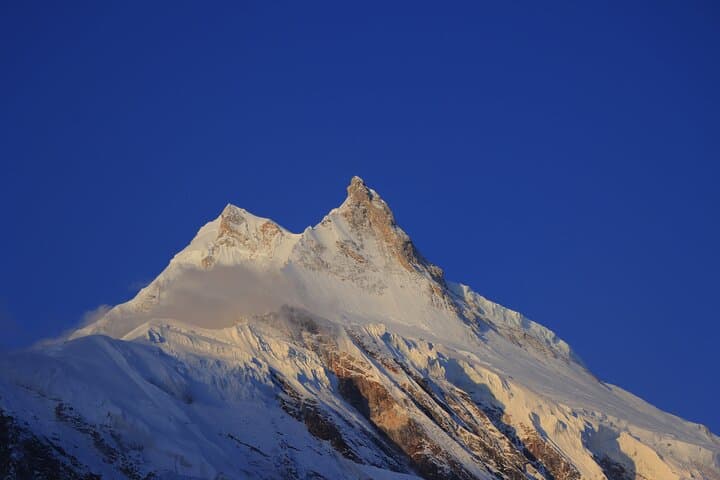
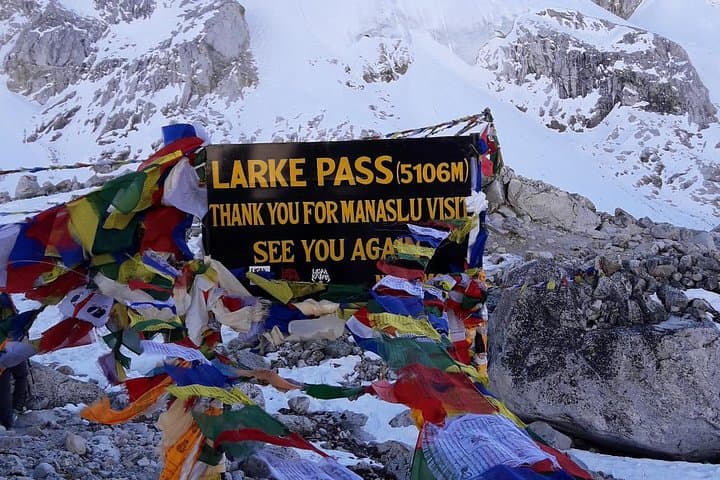
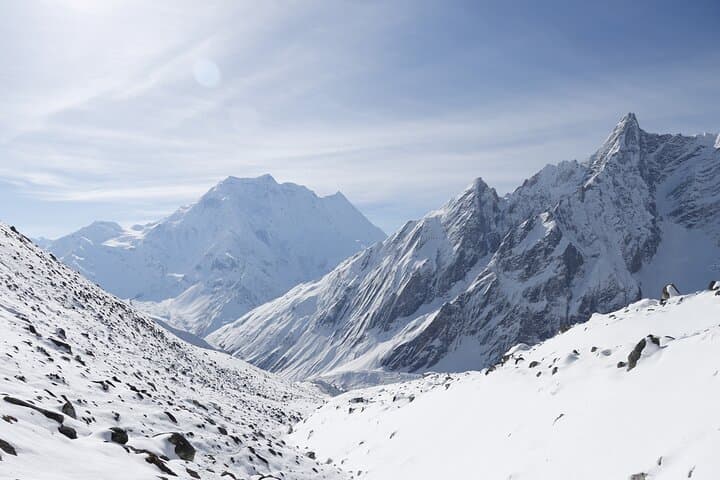
This route threads history and geology: the Manaslu massif (8th highest peak) rises from glacial moraines carved during the last ice age, while local Gurung and Tibetan-influenced communities trace centuries of trade between Nepal and Tibet. The Larkya La (5,106 m) sits as the high-stakes finale—an exposed saddle where wind carves new routes across moraine and scree.
Culturally the trek shifts from lowland subtropical forests to Rhododendron and fir, into alpine scree and grazing pastures. Samagaon and Samdo are living museums of Himalayan life—mani walls, gompas, and tea houses that offer simple meals and a warm place to dry layers.
Practical guidance: plan for 11 nights on trail with at least two full acclimatization days; expect long uphill days, rocky lateral moraines and a technically straightforward but high-altitude pass. Hydrate early, carry windproof layers, and use a trekking pole on loose descents.
Permit and guide requirements help protect this restricted region—book through an experienced agency, respect local customs, and be ready for rapid weather swings above 3,500 m.
challenging.
12 days.
Participants should have good cardiovascular fitness and prior multi-day trekking experience; be prepared for sustained uphill days and high-altitude exposure.
Yes—Manaslu is a restricted area. Trekkers require a Manaslu Restricted Area Permit and must be accompanied by a licensed guide; permits are arranged before or at the border checkpoint.
Larkya La is not technical climbing but is a high-altitude pass at 5,106 m; expect steep approach slopes, loose moraine, and thin air—good acclimatization is essential.
Fall (Sept–Nov) and spring (Mar–May) offer the most stable weather and best views; monsoon and winter present higher risks and limited visibility.
Yes—the standard route uses teahouses/guest houses for accommodation and meals, though facilities are basic and variable above 3,000 m.
The Manaslu valley has long-standing cultural links to Tibet—trade routes once moved salt and grain across high passes and local villages retain Tibetan-Buddhist traditions and mani walls.
This is a restricted area to limit traffic—respect permit rules, avoid single-use plastics, and follow leave-no-trace principles to protect fragile alpine ecosystems.
NEPAL LION TOURS AND TREKS PVT LTD operates guided outdoor trips and adventures with an emphasis on safety, stewardship, and memorable experiences.

A cold dawn over terraced rice paddies and Kathmandu’s distant hum gives way to a long jeep ride up narrow roads; by late morning the hills open and the Budhi Gandaki river begins to dare you upstream. On the Manaslu Circuit, villages step down the valley like pages in a Tibetan travelogue—stone mani walls, prayer flags, and the occasional chorten marking the trail.
A cold dawn over terraced rice paddies and Kathmandu’s distant hum gives way to a long jeep ride up narrow roads; by late morning the hills open and the Budhi Gandaki river begins to dare you upstream. On the Manaslu Circuit, villages step down the valley like pages in a Tibetan travelogue—stone mani walls, prayer flags, and the occasional chorten marking the trail.
This route threads history and geology: the Manaslu massif (8th highest peak) rises from glacial moraines carved during the last ice age, while local Gurung and Tibetan-influenced communities trace centuries of trade between Nepal and Tibet. The Larkya La (5,106 m) sits as the high-stakes finale—an exposed saddle where wind carves new routes across moraine and scree.
Culturally the trek shifts from lowland subtropical forests to Rhododendron and fir, into alpine scree and grazing pastures. Samagaon and Samdo are living museums of Himalayan life—mani walls, gompas, and tea houses that offer simple meals and a warm place to dry layers.
Practical guidance: plan for 11 nights on trail with at least two full acclimatization days; expect long uphill days, rocky lateral moraines and a technically straightforward but high-altitude pass. Hydrate early, carry windproof layers, and use a trekking pole on loose descents.
Permit and guide requirements help protect this restricted region—book through an experienced agency, respect local customs, and be ready for rapid weather swings above 3,500 m.