THE ADVENTURE COLLECTIVE® · Independent discovery and booking for outdoor travel

Walk luminous chambers and listen to an in-depth audio guide as Mammoth Cave reveals fossils, karst geology, and a seasonal tannin-stained stream. Ideal for visitors who want an informative, accessible cave experience near Margaret River.
Walk luminous chambers and listen to an in-depth audio guide as Mammoth Cave reveals fossils, karst geology, and a seasonal tannin-stained stream. Ideal for visitors who want an informative, accessible cave experience near Margaret River.
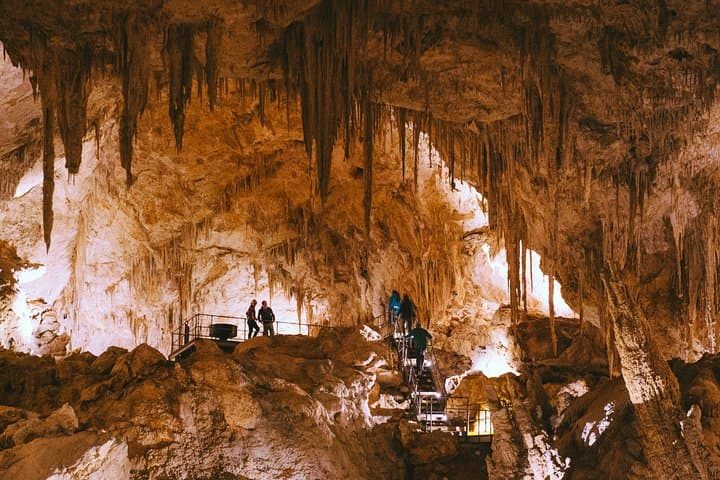
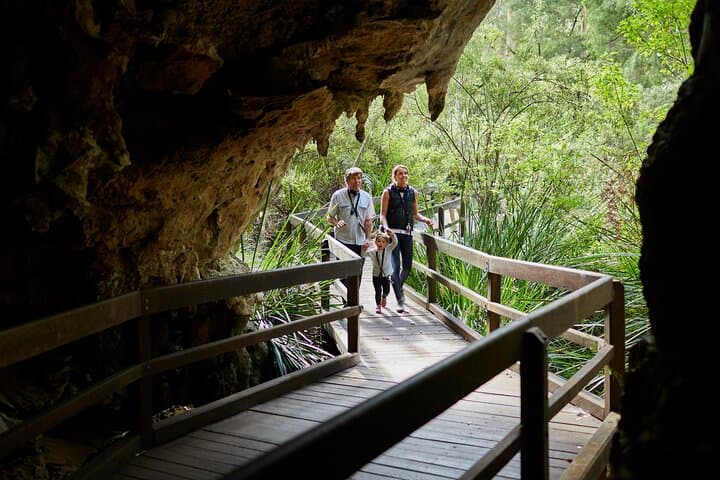
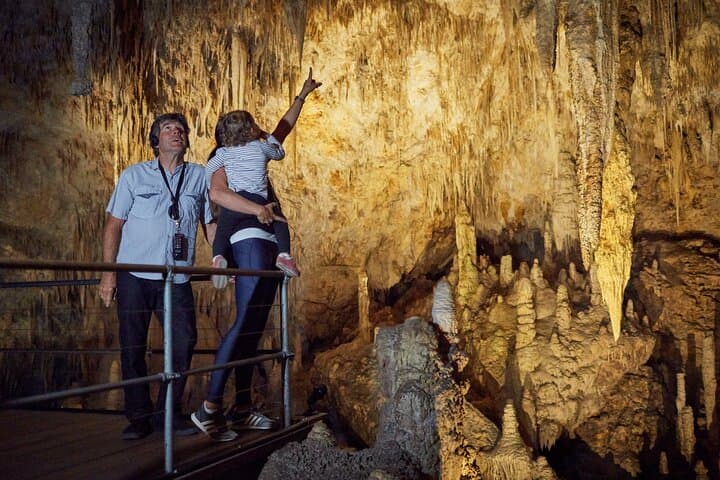
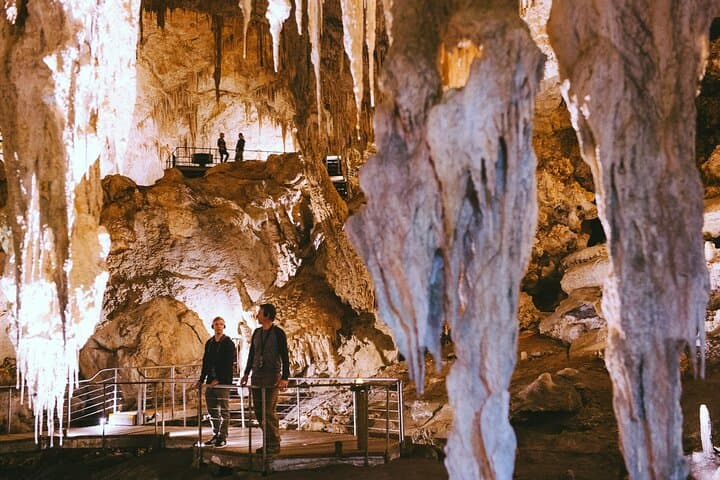
You step off a sun-warmed boardwalk and into a cool, echoing mouth of rock; the karri forest behind you hushes and a faint tannin-scented stream dares you deeper. The audio guide begins, and the cave answers—drips, gentle wind, and the low, patient geometry of stalactites and stalagmites that grew one grain of mineral at a time.
Verified experiences and guided adventures in the surrounding area.
Operated by Capes Foundation · Margaret River, Western Australia
You step off a sun-warmed boardwalk and into a cool, echoing mouth of rock; the karri forest behind you hushes and a faint tannin-scented stream dares you deeper. The audio guide begins, and the cave answers—drips, gentle wind, and the low, patient geometry of stalactites and stalagmites that grew one grain of mineral at a time.
Mammoth Cave sits in the Leeuwin-Naturaliste region and holds fossils from Australia’s megafauna. Archaeologists recovered thousands of bones here; a jawbone from a 50,000-year-old zygomaturus still protrudes from chamber rock. Geologically, the cave is a karst formation carved from limestone, with chambers formed over hundreds of thousands of years and occasional seasonal streams that run rust-red from forest tannins.
Culturally, the cave lies on land long used and managed by local Noongar peoples; contemporary interpretation respects that continuity of place. As you move between illuminated platforms, the audio narration links natural history, human stories, and practical notes about fragile formations.
Practical guidance: the self-guided loop takes about an hour—allow extra time for the Marri Trail after the cave. The first chamber is wheelchair accessible via a short boardwalk (about 30 m); beyond that, stairs and narrow passages require steady footing. Expect cool, damp air—layers are useful, and waterproof shoes are sensible in winter when the stream runs.
Timing visits for early morning or late afternoon can reduce crowding. Respect barriers: formations take millennia to form and only minutes to damage. The experience is compact, interpretive, and richly textured—an easy yet vividly educational cave walk in Western Australia.
easy.
1 hour (allow 1.5–2 hours with Marri Trail).
Moderate—able to manage short flights of stairs and uneven surfaces; wheelchair users can access first chamber.
The guided loop through Mammoth Cave takes about 60 minutes; allow extra time if you plan to walk the adjacent Marri Trail.
Yes—wheelchair access is available to the first chamber (approximately 30 metres); further sections require stairs.
The stream is seasonal, usually flowing in late winter and early spring after rain; it can have a tannin-rich red color from surrounding leaf litter.
The audio tour is designed to be comprehensive and self-paced; visitors who want additional context can join ranger talks when available.
Excavations in the mid-20th century revealed thousands of fossils from Ice Age megafauna; the site remains important for Pleistocene research and local heritage.
The cave’s formations and fossil deposits are fragile—stay on boardwalks and follow site rules to minimize impact; the park promotes Leave No Trace practices.
Capes Foundation operates guided outdoor trips and adventures with an emphasis on safety, stewardship, and memorable experiences.
You step off a sun-warmed boardwalk and into a cool, echoing mouth of rock; the karri forest behind you hushes and a faint tannin-scented stream dares you deeper. The audio guide begins, and the cave answers—drips, gentle wind, and the low, patient geometry of stalactites and stalagmites that grew one grain of mineral at a time.
You step off a sun-warmed boardwalk and into a cool, echoing mouth of rock; the karri forest behind you hushes and a faint tannin-scented stream dares you deeper. The audio guide begins, and the cave answers—drips, gentle wind, and the low, patient geometry of stalactites and stalagmites that grew one grain of mineral at a time.
Mammoth Cave sits in the Leeuwin-Naturaliste region and holds fossils from Australia’s megafauna. Archaeologists recovered thousands of bones here; a jawbone from a 50,000-year-old zygomaturus still protrudes from chamber rock. Geologically, the cave is a karst formation carved from limestone, with chambers formed over hundreds of thousands of years and occasional seasonal streams that run rust-red from forest tannins.
Culturally, the cave lies on land long used and managed by local Noongar peoples; contemporary interpretation respects that continuity of place. As you move between illuminated platforms, the audio narration links natural history, human stories, and practical notes about fragile formations.
Practical guidance: the self-guided loop takes about an hour—allow extra time for the Marri Trail after the cave. The first chamber is wheelchair accessible via a short boardwalk (about 30 m); beyond that, stairs and narrow passages require steady footing. Expect cool, damp air—layers are useful, and waterproof shoes are sensible in winter when the stream runs.
Timing visits for early morning or late afternoon can reduce crowding. Respect barriers: formations take millennia to form and only minutes to damage. The experience is compact, interpretive, and richly textured—an easy yet vividly educational cave walk in Western Australia.