THE ADVENTURE COLLECTIVE® · Independent discovery and booking for outdoor travel

On the Mambucaba River, Class II–III rapids offer an accessible white-water day trip through the Atlantic Forest near Paraty. Expect clear water, historic ruins along the banks, and a guided 6 km descent with swimming and cliff-jump stops.
On the Mambucaba River, Class II–III rapids offer an accessible white-water day trip through the Atlantic Forest near Paraty. Expect clear water, historic ruins along the banks, and a guided 6 km descent with swimming and cliff-jump stops.
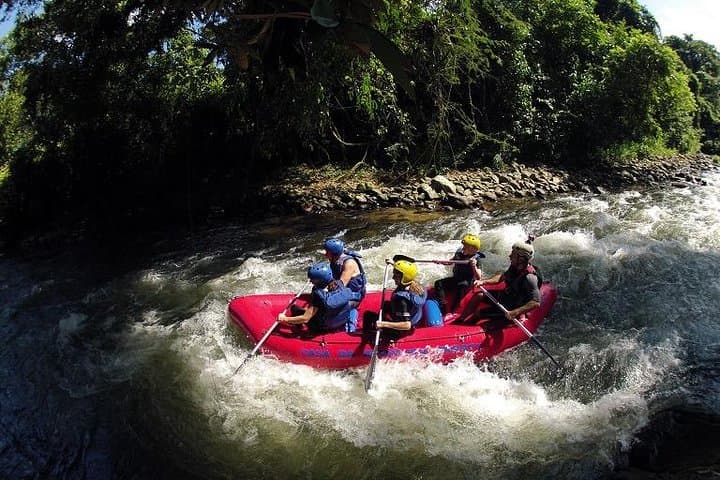
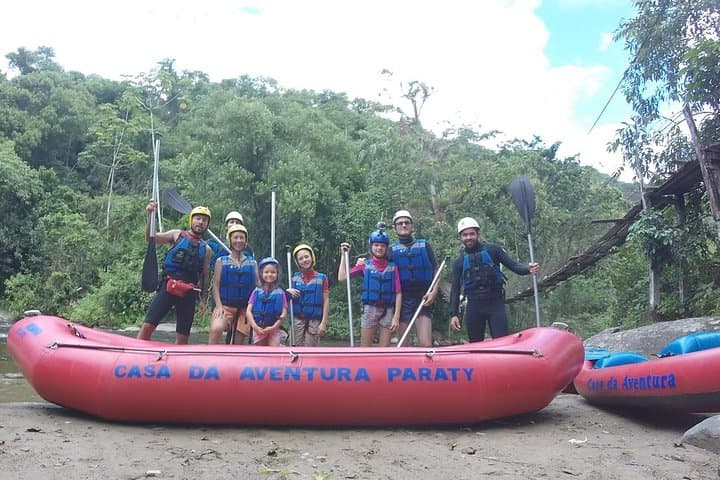
The raft rocks as it threads between sun-scoured boulders; spray cools the face and the Atlantic Forest presses close, leaves whispering encouragement. On the Rio Mambucaba, guides call commands that cut through the rush — paddle, brace, float — and the river answers with lively Class II–III rapids that push teams into motion without overwhelming them.
Verified experiences and guided adventures in the surrounding area.
Operated by Felipe Fernandes de Lima · Paraty, Rio de Janeiro
The raft rocks as it threads between sun-scoured boulders; spray cools the face and the Atlantic Forest presses close, leaves whispering encouragement. On the Rio Mambucaba, guides call commands that cut through the rush — paddle, brace, float — and the river answers with lively Class II–III rapids that push teams into motion without overwhelming them.
The Mambucaba flows down from the Serra da Bocaina, a region carved from ancient crystalline bedrock and shaped by heavy tropical rains. The valley carries traces of colonial Brazil: ruined masonry and old family homesteads that punctuate the riverside, reminders of a coastal economy that once routed goods through Paraty’s harbor. The surrounding forest is part of the Atlantic Forest biome, one of the planet’s most biodiverse and most threatened ecosystems.
Expect a two-hour, roughly 6 km river descent within a full-day program that includes transport, snacks, and a riverside stop for swimming and cliff jumps. The route alternates riffles and punchy waves where teamwork matters; water is clear and often cool, current steady but forgiving for first-timers who follow commands.
Practical notes: arrive hydrated and ready to swim; wear secure footwear and quick-dry clothing; bring a waterproof camera or use the included GoPro photos. The outing suits families with teens (minimum age 12) and anyone in good cardiovascular shape. Listen to briefings, respect cliff-jump limits, and leave no trace — the river relies on low-impact visitors. For a coastal-day adventure blending adrenaline, history, and rainforest edges, the Mambucaba delivers a compact, well-supported white-water experience.
moderate.
6–7 hours.
Good cardiovascular fitness and basic swimming comfort; must be able to follow physical instructions and perform short bursts of paddling.
Minimum age is 12 years; children should be comfortable in water and able to follow safety instructions.
The river descent is about 6 km and takes roughly two hours, within a full-day program of about 6–7 hours including transport and breaks.
No prior rafting experience is necessary, but participants should be in good physical condition and able to swim moderately well.
Yes, private transport to and from the river is included as part of the tour package.
The Mambucaba valley sits on routes that supplied coastal Paraty during colonial times; old ruins and family farms along the river reflect that layered past.
The area lies within or adjacent to protected fragments of the Atlantic Forest; follow leave-no-trace principles and support operators who use minimal-impact transport and local guides.
Felipe Fernandes de Lima operates guided outdoor trips and adventures with an emphasis on safety, stewardship, and memorable experiences.
The raft rocks as it threads between sun-scoured boulders; spray cools the face and the Atlantic Forest presses close, leaves whispering encouragement. On the Rio Mambucaba, guides call commands that cut through the rush — paddle, brace, float — and the river answers with lively Class II–III rapids that push teams into motion without overwhelming them.
The raft rocks as it threads between sun-scoured boulders; spray cools the face and the Atlantic Forest presses close, leaves whispering encouragement. On the Rio Mambucaba, guides call commands that cut through the rush — paddle, brace, float — and the river answers with lively Class II–III rapids that push teams into motion without overwhelming them.
The Mambucaba flows down from the Serra da Bocaina, a region carved from ancient crystalline bedrock and shaped by heavy tropical rains. The valley carries traces of colonial Brazil: ruined masonry and old family homesteads that punctuate the riverside, reminders of a coastal economy that once routed goods through Paraty’s harbor. The surrounding forest is part of the Atlantic Forest biome, one of the planet’s most biodiverse and most threatened ecosystems.
Expect a two-hour, roughly 6 km river descent within a full-day program that includes transport, snacks, and a riverside stop for swimming and cliff jumps. The route alternates riffles and punchy waves where teamwork matters; water is clear and often cool, current steady but forgiving for first-timers who follow commands.
Practical notes: arrive hydrated and ready to swim; wear secure footwear and quick-dry clothing; bring a waterproof camera or use the included GoPro photos. The outing suits families with teens (minimum age 12) and anyone in good cardiovascular shape. Listen to briefings, respect cliff-jump limits, and leave no trace — the river relies on low-impact visitors. For a coastal-day adventure blending adrenaline, history, and rainforest edges, the Mambucaba delivers a compact, well-supported white-water experience.