THE ADVENTURE COLLECTIVE® · Independent discovery and booking for outdoor travel

Walk the Mallorquín marsh on a three-hour guided tour from Barranquilla and discover mangrove ecology, shorebird roosts and the Magdalena River’s estuary. Perfect for travelers who want a nature escape without leaving the city.
Walk the Mallorquín marsh on a three-hour guided tour from Barranquilla and discover mangrove ecology, shorebird roosts and the Magdalena River’s estuary. Perfect for travelers who want a nature escape without leaving the city.
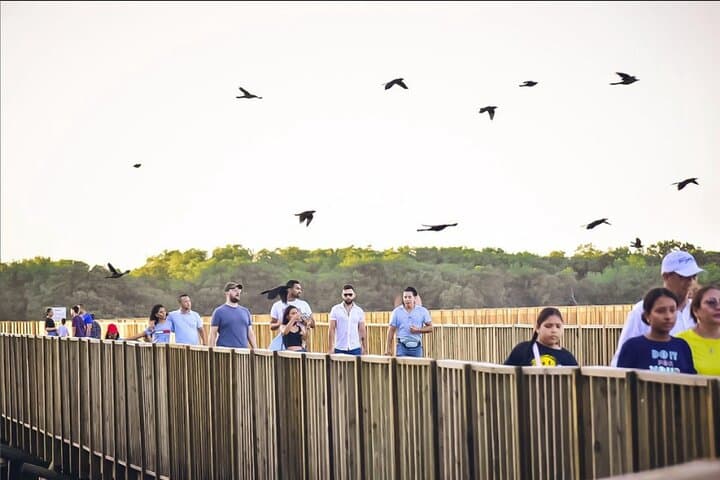
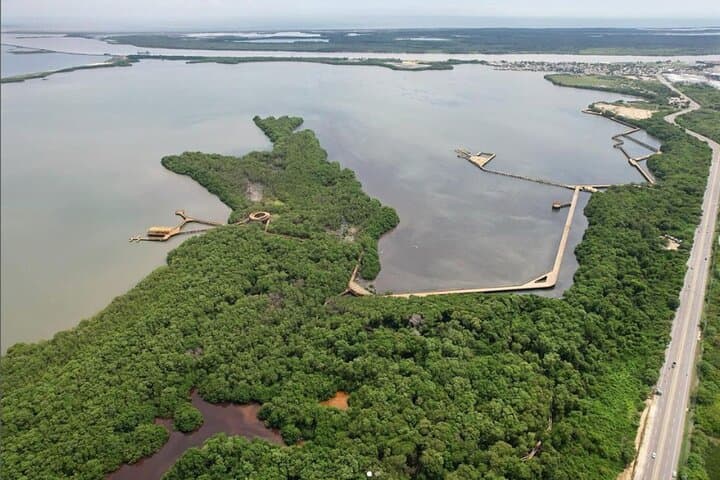
A salt-laced breeze pushes across low mangroves as the guide leads a small group onto a raised boardwalk — the city’s traffic fades and the marsh takes over, full of reed whispers and distant gull calls. Ciénaga de Mallorquín sits at the edge of Barranquilla where the Magdalena River finishes its long run to the Caribbean, and the walk feels like stepping into the river’s final slow breath.
Verified experiences and guided adventures in the surrounding area.
Operated by Gran Colombia Tours · Barranquilla, Atlántico
A salt-laced breeze pushes across low mangroves as the guide leads a small group onto a raised boardwalk — the city’s traffic fades and the marsh takes over, full of reed whispers and distant gull calls. Ciénaga de Mallorquín sits at the edge of Barranquilla where the Magdalena River finishes its long run to the Caribbean, and the walk feels like stepping into the river’s final slow breath.
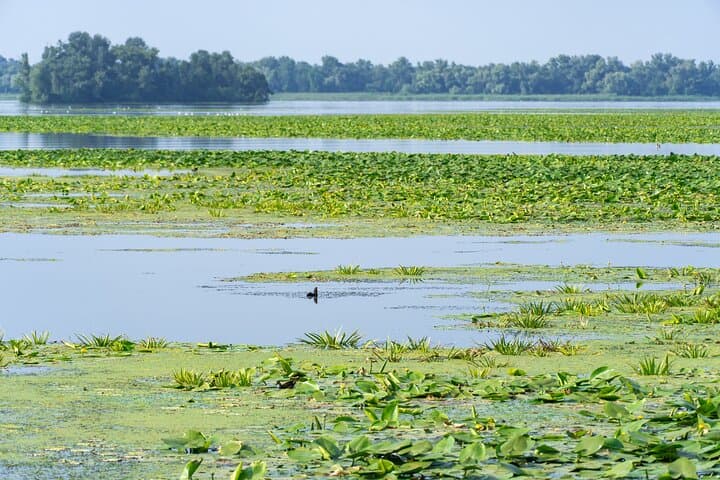
The park preserves an estuarine landscape shaped by river sediments and tidal push: mudflats, mangrove roots, and shallow channels that filter nutrients and cradle life. Locals have long relied on these wetlands for small-scale fisheries; more recently the area has gained attention as a living classroom about coastal ecology and the role of wetlands in flood mitigation.
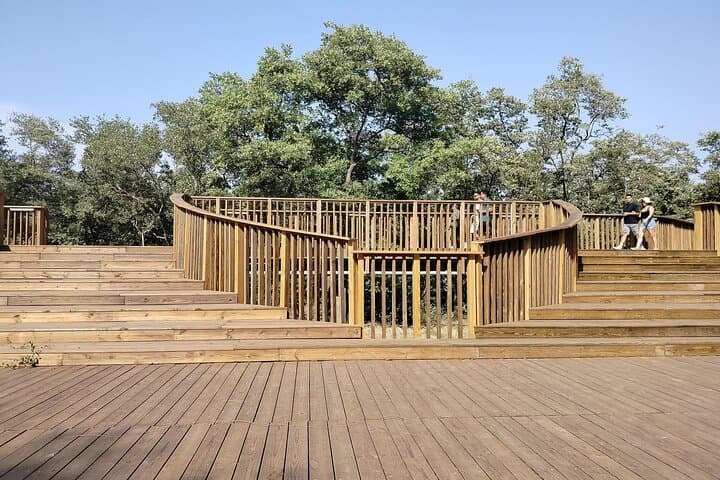
On a three-hour guided walk expect clear interpretive stops, simple wooden viewpoints and explanations of mangrove biology, bird migration patterns and the human history tied to the Magdalena’s delta. Trails are flat but can be soft or muddy after rain; guides point out crabs, shorebirds and the resilient mangrove root systems that slow the ocean’s push.
Practicalities are straightforward: hotel pickup is usually included, wear sturdy walking shoes and insect repellent, and bring water and sun protection. Photography is rewarding in late afternoon light when birds gather on exposed roots. The tour is an accessible, city‑adjacent nature experience that makes a compact lesson in coastal ecology and why these wetlands matter to Barranquilla and the wider Caribbean coast.
easy.
3 hours.
Suitable for light-to-moderate fitness; mainly flat walking with short stops
The guided experience runs about three hours door-to-door as described in the itinerary.
Yes — the trail is flat and short, making it appropriate for most ages, though mobility issues should be discussed when booking.
They can be, particularly near water and at dusk; bringing repellent and long sleeves is recommended.
Hotel pickup and drop-off in Barranquilla are included in the tour’s standard inclusions.
Mallorquín marsh sits at the Magdalena River’s delta near Barranquilla, an area historically linked to local fisheries and river transport.
The park serves educational and conservation roles; preserving mangroves here helps protect against coastal erosion and supports bird and fish habitat, though urban runoff and development remain pressures.
Gran Colombia Tours operates guided outdoor trips and adventures with an emphasis on safety, stewardship, and memorable experiences.
A salt-laced breeze pushes across low mangroves as the guide leads a small group onto a raised boardwalk — the city’s traffic fades and the marsh takes over, full of reed whispers and distant gull calls. Ciénaga de Mallorquín sits at the edge of Barranquilla where the Magdalena River finishes its long run to the Caribbean, and the walk feels like stepping into the river’s final slow breath.
A salt-laced breeze pushes across low mangroves as the guide leads a small group onto a raised boardwalk — the city’s traffic fades and the marsh takes over, full of reed whispers and distant gull calls. Ciénaga de Mallorquín sits at the edge of Barranquilla where the Magdalena River finishes its long run to the Caribbean, and the walk feels like stepping into the river’s final slow breath.
The park preserves an estuarine landscape shaped by river sediments and tidal push: mudflats, mangrove roots, and shallow channels that filter nutrients and cradle life. Locals have long relied on these wetlands for small-scale fisheries; more recently the area has gained attention as a living classroom about coastal ecology and the role of wetlands in flood mitigation.
On a three-hour guided walk expect clear interpretive stops, simple wooden viewpoints and explanations of mangrove biology, bird migration patterns and the human history tied to the Magdalena’s delta. Trails are flat but can be soft or muddy after rain; guides point out crabs, shorebirds and the resilient mangrove root systems that slow the ocean’s push.
Practicalities are straightforward: hotel pickup is usually included, wear sturdy walking shoes and insect repellent, and bring water and sun protection. Photography is rewarding in late afternoon light when birds gather on exposed roots. The tour is an accessible, city‑adjacent nature experience that makes a compact lesson in coastal ecology and why these wetlands matter to Barranquilla and the wider Caribbean coast.