THE ADVENTURE COLLECTIVE® · Independent discovery and booking for outdoor travel

Ride a century-old wooden train, roll along a seaside tram, cruise into a hidden cove and finish at an 18th‑century sanctuary — all in one accessible day. This full-day tour stitches Mallorca’s geology, history and village life into a single, photo-ready loop.
Ride a century-old wooden train, roll along a seaside tram, cruise into a hidden cove and finish at an 18th‑century sanctuary — all in one accessible day. This full-day tour stitches Mallorca’s geology, history and village life into a single, photo-ready loop.
The morning begins with the metallic clack of a century-old train threading through a valley of orange trees, sunlight striping the carriage like a film reel. You feel the island move under you — first the cultivated lowlands, then the serrated spine of the Tramuntana rising from the sea. This full-day loop stitches together Mallorca’s transport relics, sheer coastal cliffs and a cloistered mountain sanctuary: the wooden electric train to Sóller, the tram to Puerto de Sóller, a short boat crossing to Sa Calobra and a final stop at the historic Lluc monastery.
Verified experiences and guided adventures in the surrounding area.
Operated by Sidetours Incoming Services · Palma de Mallorca, Balearic Islands
The morning begins with the metallic clack of a century-old train threading through a valley of orange trees, sunlight striping the carriage like a film reel. You feel the island move under you — first the cultivated lowlands, then the serrated spine of the Tramuntana rising from the sea. This full-day loop stitches together Mallorca’s transport relics, sheer coastal cliffs and a cloistered mountain sanctuary: the wooden electric train to Sóller, the tram to Puerto de Sóller, a short boat crossing to Sa Calobra and a final stop at the historic Lluc monastery.
The route reads like an atlas of Mallorcan identity. The Serra de Tramuntana, carved from limestone over millennia, is a UNESCO World Heritage landscape where narrow terraces and dry-stone walls map ancient agricultural practices. Sóller and Port de Sóller grew around orange trade and fishing; the wooden tram — an early 20th-century innovation — still ferries locals and visitors between square and shore. Sa Calobra sits where the Torrent de Pareis carves a dramatic gorge into the sea; the narrow tunnel and pebble cove create a pocket of raw coastal geology that changes constantly with tide and light.
Culturally, the day balances lived village rhythms with pilgrimage quiet. Lluc monastery has been a spiritual waypoint for Mallorcans since the Middle Ages; its small museum and basilica host votive offerings and a black Madonna revered across the island. Between transit and stops you’ll pass terraced farms, limestone faces that seem to breathe, and tiny coves where fishermen still mend nets.
Practically, the tour is designed for easy travel rather than athletic challenge — transfers are all included and there are no commercial sales stops. Bring sturdy shoes for cobbles and beach pebbles, swimwear if you want to dip in Sa Calobra’s clear water, and a lightweight daypack for water, sunscreen and a camera. Expect a full 8–9 hour day with long photo windows and unstructured time at the cove and Lluc.
Timing matters: the train and tram runs are photogenic early when the valley lights up; the boat crossing rewards calmer seas usually late morning. If you’re prone to seasickness, choose morning slots when the Mediterranean is typically gentler. Respect the fragile limestone environment and local customs — Lluc is a place of worship, so modest attire and quiet voices are appropriate.
This itinerary gives you a concentrated sense of Mallorca’s contrasts: engineered transport running through agricultural landscapes, dramatic coastal geology, and a compact cultural finale in a mountain sanctuary. It’s a day that moves you through the island’s geography and history with the practical ease of door-to-door transport and enough free time to make parts of it your own.
easy.
8–9 hours.
Suitable for most fitness levels; requires standing, short walks and boarding a boat and tram.
Pickup is offered from hotels and central locations across Mallorca between 08:20 and 09:20; exact times are confirmed by email after booking.
Yes—the boat from Puerto de Sóller to Sa Calobra is included; the crossing is about 45–60 minutes depending on sea conditions.
Yes—there is free time at Sa Calobra for swimming, though the beach is pebbly and currents can change; swim with caution.
The tour is rated physically easy with short walks, but there are uneven surfaces and steps; not recommended for pregnant travelers or those with serious heart issues.
Lunch is not included, but there are restaurants and kiosks at Sa Calobra and Puerto de Sóller where you can purchase food during free time.
Take preventative medication or use acupressure bands before boarding; sit near the center of the boat for a more stable ride.
The Serra de Tramuntana’s stepped terraces reflect centuries of agriculture; Lluc monastery has been a pilgrimage site since medieval times and houses a revered Black Madonna.
The Tramuntana’s UNESCO status emphasizes protecting terraces and water channels; avoid leaving waste, stick to marked areas and support local businesses to minimize visitor impact.
Sidetours Incoming Services operates guided outdoor trips and adventures with an emphasis on safety, stewardship, and memorable experiences.
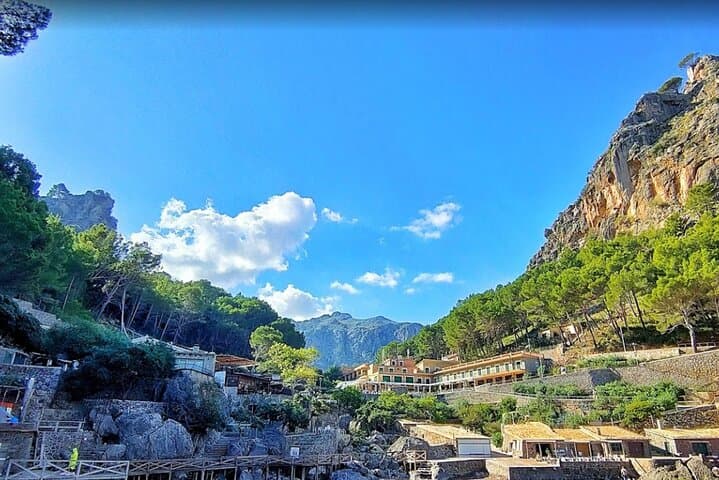
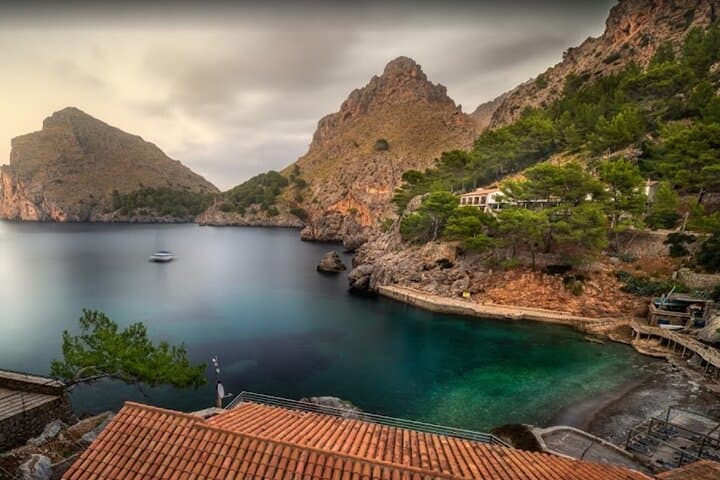
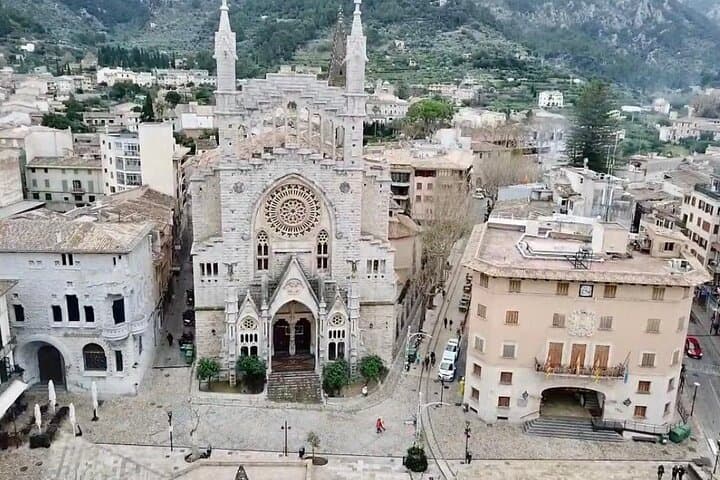
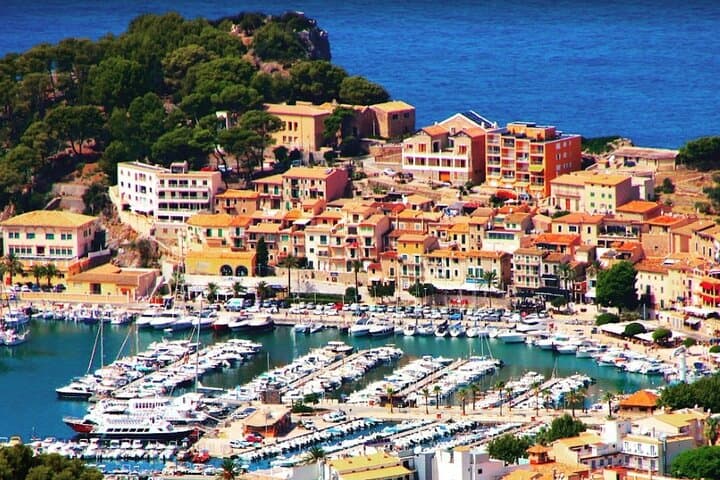
The morning begins with the metallic clack of a century-old train threading through a valley of orange trees, sunlight striping the carriage like a film reel. You feel the island move under you — first the cultivated lowlands, then the serrated spine of the Tramuntana rising from the sea. This full-day loop stitches together Mallorca’s transport relics, sheer coastal cliffs and a cloistered mountain sanctuary: the wooden electric train to Sóller, the tram to Puerto de Sóller, a short boat crossing to Sa Calobra and a final stop at the historic Lluc monastery.
The morning begins with the metallic clack of a century-old train threading through a valley of orange trees, sunlight striping the carriage like a film reel. You feel the island move under you — first the cultivated lowlands, then the serrated spine of the Tramuntana rising from the sea. This full-day loop stitches together Mallorca’s transport relics, sheer coastal cliffs and a cloistered mountain sanctuary: the wooden electric train to Sóller, the tram to Puerto de Sóller, a short boat crossing to Sa Calobra and a final stop at the historic Lluc monastery.
The route reads like an atlas of Mallorcan identity. The Serra de Tramuntana, carved from limestone over millennia, is a UNESCO World Heritage landscape where narrow terraces and dry-stone walls map ancient agricultural practices. Sóller and Port de Sóller grew around orange trade and fishing; the wooden tram — an early 20th-century innovation — still ferries locals and visitors between square and shore. Sa Calobra sits where the Torrent de Pareis carves a dramatic gorge into the sea; the narrow tunnel and pebble cove create a pocket of raw coastal geology that changes constantly with tide and light.
Culturally, the day balances lived village rhythms with pilgrimage quiet. Lluc monastery has been a spiritual waypoint for Mallorcans since the Middle Ages; its small museum and basilica host votive offerings and a black Madonna revered across the island. Between transit and stops you’ll pass terraced farms, limestone faces that seem to breathe, and tiny coves where fishermen still mend nets.
Practically, the tour is designed for easy travel rather than athletic challenge — transfers are all included and there are no commercial sales stops. Bring sturdy shoes for cobbles and beach pebbles, swimwear if you want to dip in Sa Calobra’s clear water, and a lightweight daypack for water, sunscreen and a camera. Expect a full 8–9 hour day with long photo windows and unstructured time at the cove and Lluc.
Timing matters: the train and tram runs are photogenic early when the valley lights up; the boat crossing rewards calmer seas usually late morning. If you’re prone to seasickness, choose morning slots when the Mediterranean is typically gentler. Respect the fragile limestone environment and local customs — Lluc is a place of worship, so modest attire and quiet voices are appropriate.
This itinerary gives you a concentrated sense of Mallorca’s contrasts: engineered transport running through agricultural landscapes, dramatic coastal geology, and a compact cultural finale in a mountain sanctuary. It’s a day that moves you through the island’s geography and history with the practical ease of door-to-door transport and enough free time to make parts of it your own.