THE ADVENTURE COLLECTIVE® · Independent discovery and booking for outdoor travel

Experience Mallorca’s wild west in a single day: hairpin mountain roads to Sa Calobra, a boat along the Tramuntana coast, a tram through citrus orchards and the century-old wooden Sóller train. This full-day loop blends geology, local culture and classic transport for a compact island primer.
Experience Mallorca’s wild west in a single day: hairpin mountain roads to Sa Calobra, a boat along the Tramuntana coast, a tram through citrus orchards and the century-old wooden Sóller train. This full-day loop blends geology, local culture and classic transport for a compact island primer.
The coach hums away from Palma, and within an hour the city slips into a spine of limestone—Serra de Tramuntana—its ridges cutting a serrated horizon. You feel the road lift and lean; pine-scented air slides through the open windows and the guide points out the hairpin ribbon ahead: the road to Sa Calobra, thirteen kilometers of carved switchbacks that dare drivers and cameras alike.
Verified experiences and guided adventures in the surrounding area.
Operated by Nofrills Excursions · Palma, Balearic Islands
The coach hums away from Palma, and within an hour the city slips into a spine of limestone—Serra de Tramuntana—its ridges cutting a serrated horizon. You feel the road lift and lean; pine-scented air slides through the open windows and the guide points out the hairpin ribbon ahead: the road to Sa Calobra, thirteen kilometers of carved switchbacks that dare drivers and cameras alike.
At La Calobra the sea waits like a promise. The pebble cove sits at the mouth of the Torrente de Pareis, a canyon forged over millennia where torrents pushed through limestone to create a three-kilometre gorge that now funnels light, wind and winter water. You get free time here—forty minutes to stroll the stony beach, slip into a café for an espresso, or walk the short tunnel to the gorge mouth and let the cliffs feel like they’re watching you back.
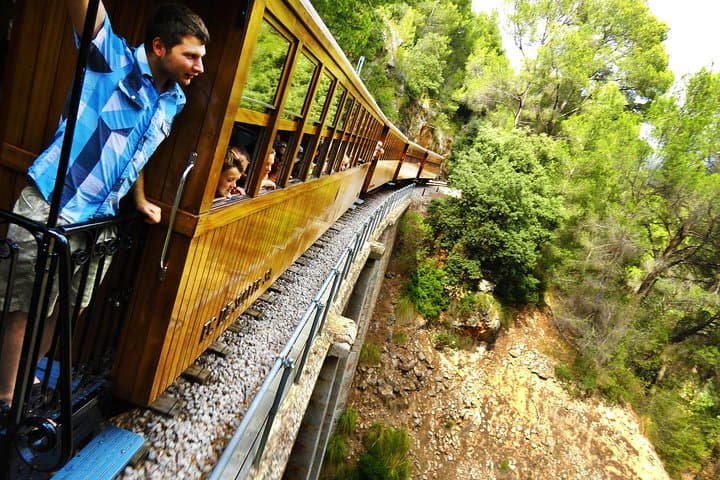
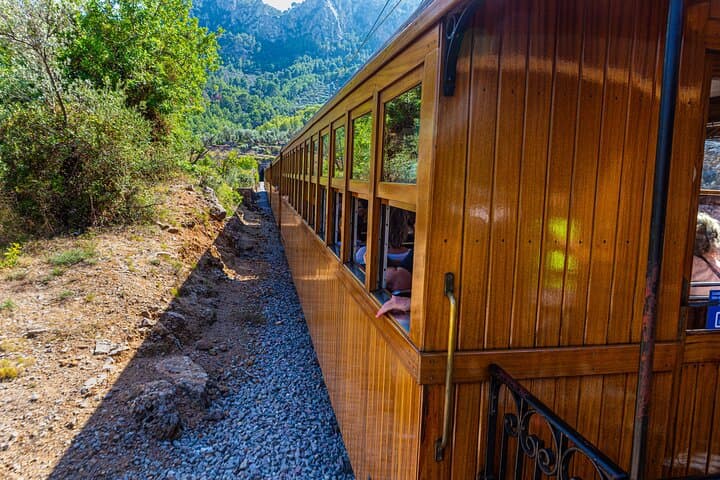
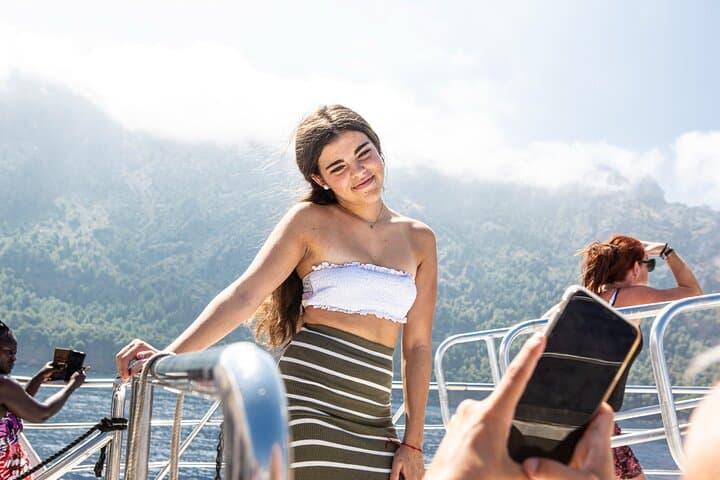
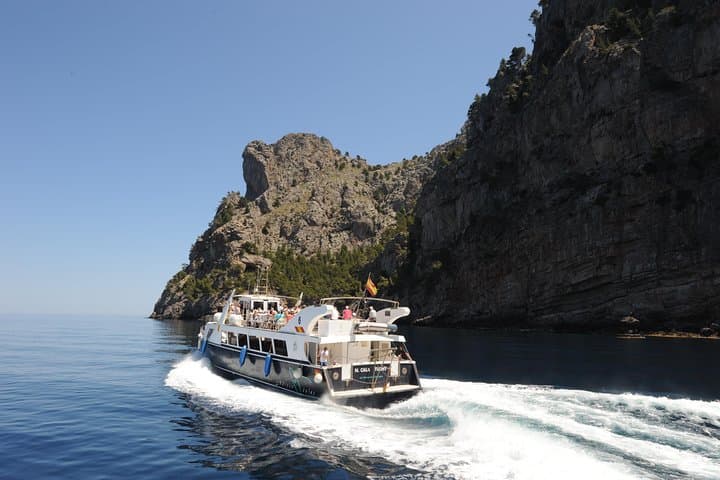
The day keeps changing its language. A 40–45 minute boat ride reads the coastline aloud: watch towers, marine caves and unexpected slices of aquamarine tucked under overhanging rock. The boat deposits you in Port de Sóller, where a tram threads through citrus orchards—orange and lemon trees tilt their branches as if to say hello—before you step into Sòller and the wooden train built in 1912. The century-old carriages rattle through tunnels and terraces across the valley; the ninety-kilometre span of the Tramuntana becomes a smaller, cultivated world of stone walls and orange groves.
This loop—coach, hairpin road, beach, boat, tram, town, vintage train—maps both natural history and Mallorca’s human story: defensive coastal towers from pirate times, monasteries like Lluc, and the agricultural terraces that supported island life for centuries. The Serra de Tramuntana has UNESCO protection for good reason: the combination of dry-stone walls, irrigation channels and terraces is a landscape shaped by people and water.
Practicalities matter. The full excursion runs about nine hours from a Palma 9:30 AM start; boat and train timetables can flip the order of stops. If you’re prone to seasickness, take precautions before the boat leg; if you’re coming from the island’s south you may get a stop at Lluc Monastery instead of the northern ‘‘Nudo de la Corbata’’ viewpoint. Wear sturdy shoes for the stone beach and gorge approaches, bring sun protection and at least 1–1.5 liters of water, and carry cash for small cafés. Check pickup details 24 hours ahead via the operator’s email or WhatsApp to avoid last-minute confusion.
In one day this tour stages Mallorca’s contrasts—raw coastal geology that pushes and composes, cultivated valleys that breathe citrus, and a timeless train that hums you back to the coast—making it an efficient, sensory way to understand the island without rushing it.
moderate.
9 hours (full-day).
Suitable for most fitness levels but expect some short walks on uneven, rocky terrain and standing on boat decks
The tour is approximately 9 hours and typically starts in Palma at 9:30 AM; confirm your pickup point when you book.
If the Sa Calobra boat is cancelled, the operator usually reroutes to Port de Sóller for a bay cruise to avoid long waits and keep the tram and train on schedule.
Train seats are not individually reserved on this shared tour; seating is first-come at the boarding platform—arrive on time for your carriage.
Yes—it's family-friendly and suitable for older travelers who can manage short walking sections; notify the operator of mobility needs when booking.
Accessibility is limited: some stops involve uneven surfaces and the wooden train has steps; contact the operator before booking to discuss specific needs.
Lunch is at your leisure in Port de Sóller—meals are not included so bring cash or card for restaurants and cafés.
The Serra de Tramuntana’s terraces and stone channels are centuries-old agricultural systems; the Sóller train dates to 1912 and reflects early-20th-century island connections.
The Tramuntana is UNESCO-protected—stick to marked paths, avoid removing stones from dry walls, and minimize single-use plastics to protect fragile coastal and mountain habitats.
Nofrills Excursions operates guided outdoor trips and adventures with an emphasis on safety, stewardship, and memorable experiences.
The coach hums away from Palma, and within an hour the city slips into a spine of limestone—Serra de Tramuntana—its ridges cutting a serrated horizon. You feel the road lift and lean; pine-scented air slides through the open windows and the guide points out the hairpin ribbon ahead: the road to Sa Calobra, thirteen kilometers of carved switchbacks that dare drivers and cameras alike.
The coach hums away from Palma, and within an hour the city slips into a spine of limestone—Serra de Tramuntana—its ridges cutting a serrated horizon. You feel the road lift and lean; pine-scented air slides through the open windows and the guide points out the hairpin ribbon ahead: the road to Sa Calobra, thirteen kilometers of carved switchbacks that dare drivers and cameras alike.
At La Calobra the sea waits like a promise. The pebble cove sits at the mouth of the Torrente de Pareis, a canyon forged over millennia where torrents pushed through limestone to create a three-kilometre gorge that now funnels light, wind and winter water. You get free time here—forty minutes to stroll the stony beach, slip into a café for an espresso, or walk the short tunnel to the gorge mouth and let the cliffs feel like they’re watching you back.
The day keeps changing its language. A 40–45 minute boat ride reads the coastline aloud: watch towers, marine caves and unexpected slices of aquamarine tucked under overhanging rock. The boat deposits you in Port de Sóller, where a tram threads through citrus orchards—orange and lemon trees tilt their branches as if to say hello—before you step into Sòller and the wooden train built in 1912. The century-old carriages rattle through tunnels and terraces across the valley; the ninety-kilometre span of the Tramuntana becomes a smaller, cultivated world of stone walls and orange groves.
This loop—coach, hairpin road, beach, boat, tram, town, vintage train—maps both natural history and Mallorca’s human story: defensive coastal towers from pirate times, monasteries like Lluc, and the agricultural terraces that supported island life for centuries. The Serra de Tramuntana has UNESCO protection for good reason: the combination of dry-stone walls, irrigation channels and terraces is a landscape shaped by people and water.
Practicalities matter. The full excursion runs about nine hours from a Palma 9:30 AM start; boat and train timetables can flip the order of stops. If you’re prone to seasickness, take precautions before the boat leg; if you’re coming from the island’s south you may get a stop at Lluc Monastery instead of the northern ‘‘Nudo de la Corbata’’ viewpoint. Wear sturdy shoes for the stone beach and gorge approaches, bring sun protection and at least 1–1.5 liters of water, and carry cash for small cafés. Check pickup details 24 hours ahead via the operator’s email or WhatsApp to avoid last-minute confusion.
In one day this tour stages Mallorca’s contrasts—raw coastal geology that pushes and composes, cultivated valleys that breathe citrus, and a timeless train that hums you back to the coast—making it an efficient, sensory way to understand the island without rushing it.