THE ADVENTURE COLLECTIVE® · Independent discovery and booking for outdoor travel

Explore Malindi’s history and coastal landscapes on a six-hour private tour that moves from the Malindi Museum to bustling markets, the ruins and beach at Mambrui, and the dramatic Hell’s Kitchen canyon. Practical guidance on timing, gear, and local customs helps you make the most of the day.
Explore Malindi’s history and coastal landscapes on a six-hour private tour that moves from the Malindi Museum to bustling markets, the ruins and beach at Mambrui, and the dramatic Hell’s Kitchen canyon. Practical guidance on timing, gear, and local customs helps you make the most of the day.
You step off the coastal road and the Indian Ocean tugs at your attention, a blue presence that frames Malindi’s compact streets. Morning light picks out peeling coral-stone façades as your guide leads you into the Malindi Museum, where Swahili pottery shards and colonial-era photographs let the town’s layered past speak in object language.
Verified experiences and guided adventures in the surrounding area.
Operated by Opatrip.com Kenya · Malindi, Kilifi County
You step off the coastal road and the Indian Ocean tugs at your attention, a blue presence that frames Malindi’s compact streets. Morning light picks out peeling coral-stone façades as your guide leads you into the Malindi Museum, where Swahili pottery shards and colonial-era photographs let the town’s layered past speak in object language.
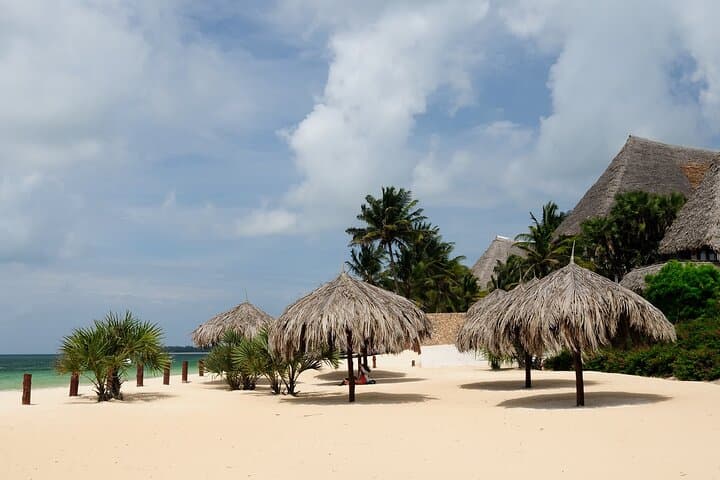
From the museum the day unfurls—market alleys where traders call out spices and textiles, the tidy stalls of Market Village Boutique, and the golden sweep of Mambrui beach punctuated by ancient ruins. Then the landscape takes a sharper voice: Hell’s Kitchen, a raw canyon carved from coastal sediments, reminding you that geology here is a slow-moving storyteller as much as the town’s Swahili and Portuguese histories.
Malindi’s arc runs from centuries of Indian Ocean trade—Arab, Persian and later Portuguese contact after Vasco da Gama—to a present shaped by tourism and coastal livelihoods. Expect coral limestone platforms, low elevation walking, sand underfoot and uneven paths at archaeological sites; distances between stops are short, with driving between sites. Guides provide context and transport, and some POIs may have modest local entry fees.
Practical notes: start early to beat heat, carry sun protection and water, and wear sturdy walking shoes for limestone and sand. Bring small-denomination Kenyan shillings for market purchases and tips. Be respectful when photographing people—ask first. Mosquito repellent is useful at dusk, and reef-friendly behavior matters: leave shells and artifacts in place. This six-hour private tour balances cultural depth with easy pacing, giving you a clear, grounded look at Malindi’s stories and landscapes.
easy.
6 hours.
Suitable for most fitness levels; mainly short walks and short drives between points of interest
The tour itinerary notes transport and guide inclusion; some sites like the Malindi Museum or local ruins may charge modest entry fees payable locally.
Yes—pace is gentle with short walks; however, uneven ground on beaches and at Hell's Kitchen may be challenging for limited mobility.
Guides commonly speak English and Swahili; specific language needs should be requested at booking time.
Malindi is in a region where malaria exists—consult your physician about prophylaxis and use insect repellent, especially at dawn and dusk.
Malindi was a key stop on Indian Ocean trade routes; Arab and Persian traders shaped Swahili culture and Portuguese contact began in the late 15th century with Vasco da Gama's visit.
Local conservation focuses on protecting coral reefs and archaeological ruins—avoid removing shells or artifacts and use reef-safe sunscreen to minimize impact.
Opatrip.com Kenya operates guided outdoor trips and adventures with an emphasis on safety, stewardship, and memorable experiences.

You step off the coastal road and the Indian Ocean tugs at your attention, a blue presence that frames Malindi’s compact streets. Morning light picks out peeling coral-stone façades as your guide leads you into the Malindi Museum, where Swahili pottery shards and colonial-era photographs let the town’s layered past speak in object language.
You step off the coastal road and the Indian Ocean tugs at your attention, a blue presence that frames Malindi’s compact streets. Morning light picks out peeling coral-stone façades as your guide leads you into the Malindi Museum, where Swahili pottery shards and colonial-era photographs let the town’s layered past speak in object language.
From the museum the day unfurls—market alleys where traders call out spices and textiles, the tidy stalls of Market Village Boutique, and the golden sweep of Mambrui beach punctuated by ancient ruins. Then the landscape takes a sharper voice: Hell’s Kitchen, a raw canyon carved from coastal sediments, reminding you that geology here is a slow-moving storyteller as much as the town’s Swahili and Portuguese histories.
Malindi’s arc runs from centuries of Indian Ocean trade—Arab, Persian and later Portuguese contact after Vasco da Gama—to a present shaped by tourism and coastal livelihoods. Expect coral limestone platforms, low elevation walking, sand underfoot and uneven paths at archaeological sites; distances between stops are short, with driving between sites. Guides provide context and transport, and some POIs may have modest local entry fees.
Practical notes: start early to beat heat, carry sun protection and water, and wear sturdy walking shoes for limestone and sand. Bring small-denomination Kenyan shillings for market purchases and tips. Be respectful when photographing people—ask first. Mosquito repellent is useful at dusk, and reef-friendly behavior matters: leave shells and artifacts in place. This six-hour private tour balances cultural depth with easy pacing, giving you a clear, grounded look at Malindi’s stories and landscapes.