THE ADVENTURE COLLECTIVE® · Independent discovery and booking for outdoor travel

Island-hopping in North Ari Atoll pairs short boat transfers with standout snorkeling, island culture, and Thoddoo’s fruit farms. Expect clear water, village walks, and community-led reef conservation.
Island-hopping in North Ari Atoll pairs short boat transfers with standout snorkeling, island culture, and Thoddoo’s fruit farms. Expect clear water, village walks, and community-led reef conservation.
You step from the dhoni onto a narrow spit of sand and the ocean breathes around you—clear, thermally blue, alive with silver fish. Boats punctuate the horizon as each island reveals its character: Thoddoo’s tidy farms and watermelon rows, Rasdhoo’s compact fishing village with windswept palms, Ukulhas’s bright houses and conservancy-minded reef.
Verified experiences and guided adventures in the surrounding area.
You step from the dhoni onto a narrow spit of sand and the ocean breathes around you—clear, thermally blue, alive with silver fish. Boats punctuate the horizon as each island reveals its character: Thoddoo’s tidy farms and watermelon rows, Rasdhoo’s compact fishing village with windswept palms, Ukulhas’s bright houses and conservancy-minded reef.
The islands sit on a coral skeleton built over millennia; the atoll’s rim shelters lagoons that sequester sand and nurture reefs. Thoddoo’s unusual arable plots are a cultural outlier in the Maldives—agriculture introduced and adapted to coral soils—while Rasdhoo preserves a small-scale fishing tradition. Ukulhas is known locally for community-driven waste and reef programs that help keep its lagoons swimmable.
Expect multiple short boat hops, snorkeling off house reefs, brief village walks, and time on sandbanks. Terrain is flat—sandy paths and concrete village lanes—so mobility issues are limited but sea transfers can be bouncy. Water clarity and coral life are the draw: reef fish, turtles, and seasonal rays are common; currents can be present around channels.
Practical guidance: carry reef-safe sunscreen, a good mask and fins, and a dry bag for electronics. Bring small-denomination cash for shops and local cafés; respect mosque areas and modesty rules on inhabited islands. Plan transfers around daylight—boat schedules and sea state change with monsoon seasons. Hydrate and protect from sun; if you plan active snorkeling, a basic swim fitness level and comfort in open water will make the trip more rewarding.
moderate.
9 days (approx).
Should be comfortable with full days of snorkeling, short walks, and repeated boat transfers; basic swim ability recommended
Most island-hopping trips depart by speedboat or local dhoni from Malé or its nearby harbors; organizers will list pickup details and approximate transfer times.
Some operators include basic snorkel gear, but fit and quality vary—bringing your own mask and fins is recommended for comfort and hygiene.
Yes—inhabited islands have local cafés and small restaurants serving Maldivian fare; Thoddoo also has produce stands selling fresh fruit.
Mosquitoes are seasonal—bring repellent; basic clinics exist on larger islands but bring necessary prescriptions and a small first-aid kit.
The atoll’s islands evolved from coral growth atop subsiding volcanic rims; culturally, communities long combined fishing with small-scale farming and inter-island trade.
Local reef cleanup programs and marine-protected areas near inhabited islands aim to limit damage from anchoring and plastic pollution; travelers can support by using reef-safe products and minimizing single-use plastics.
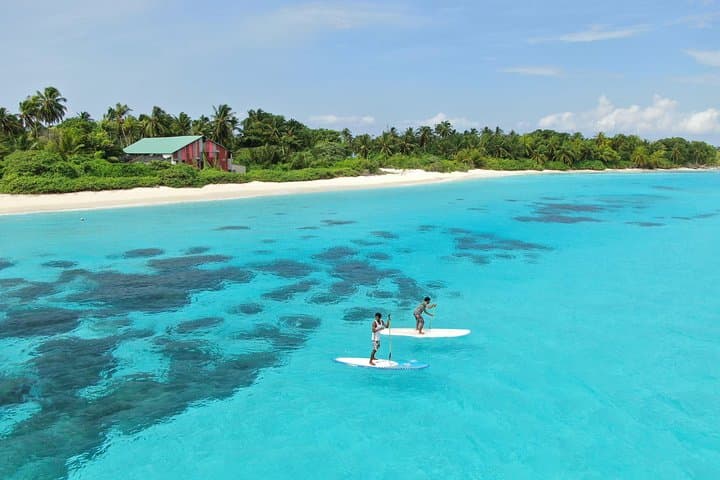
You step from the dhoni onto a narrow spit of sand and the ocean breathes around you—clear, thermally blue, alive with silver fish. Boats punctuate the horizon as each island reveals its character: Thoddoo’s tidy farms and watermelon rows, Rasdhoo’s compact fishing village with windswept palms, Ukulhas’s bright houses and conservancy-minded reef.
You step from the dhoni onto a narrow spit of sand and the ocean breathes around you—clear, thermally blue, alive with silver fish. Boats punctuate the horizon as each island reveals its character: Thoddoo’s tidy farms and watermelon rows, Rasdhoo’s compact fishing village with windswept palms, Ukulhas’s bright houses and conservancy-minded reef.
The islands sit on a coral skeleton built over millennia; the atoll’s rim shelters lagoons that sequester sand and nurture reefs. Thoddoo’s unusual arable plots are a cultural outlier in the Maldives—agriculture introduced and adapted to coral soils—while Rasdhoo preserves a small-scale fishing tradition. Ukulhas is known locally for community-driven waste and reef programs that help keep its lagoons swimmable.
Expect multiple short boat hops, snorkeling off house reefs, brief village walks, and time on sandbanks. Terrain is flat—sandy paths and concrete village lanes—so mobility issues are limited but sea transfers can be bouncy. Water clarity and coral life are the draw: reef fish, turtles, and seasonal rays are common; currents can be present around channels.
Practical guidance: carry reef-safe sunscreen, a good mask and fins, and a dry bag for electronics. Bring small-denomination cash for shops and local cafés; respect mosque areas and modesty rules on inhabited islands. Plan transfers around daylight—boat schedules and sea state change with monsoon seasons. Hydrate and protect from sun; if you plan active snorkeling, a basic swim fitness level and comfort in open water will make the trip more rewarding.