THE ADVENTURE COLLECTIVE® · Independent discovery and booking for outdoor travel

Take the elevator up to Abraj Al‑Bait’s observation deck for the closest panoramic view of the Kaaba and a four‑floor museum on Islamic timekeeping and astronomy. The 45‑minute visit combines technical exhibits with one of Makkah’s most arresting vistas.
Take the elevator up to Abraj Al‑Bait’s observation deck for the closest panoramic view of the Kaaba and a four‑floor museum on Islamic timekeeping and astronomy. The 45‑minute visit combines technical exhibits with one of Makkah’s most arresting vistas.
You step off the elevator into a hush that offsets the bustle below; the Grand Mosque spreads like a living map beneath the terrace, the Kaaba a precise dark cube at the center. From the Abraj Al‑Bait observation deck the city’s stone and glass grids fall away, and the call to prayer threads the scene—immediate, human, and enormous.
Verified experiences and guided adventures in the surrounding area.
Operated by GLOBAL EXPLORERS · Makkah, Makkah Province
You step off the elevator into a hush that offsets the bustle below; the Grand Mosque spreads like a living map beneath the terrace, the Kaaba a precise dark cube at the center. From the Abraj Al‑Bait observation deck the city’s stone and glass grids fall away, and the call to prayer threads the scene—immediate, human, and enormous.
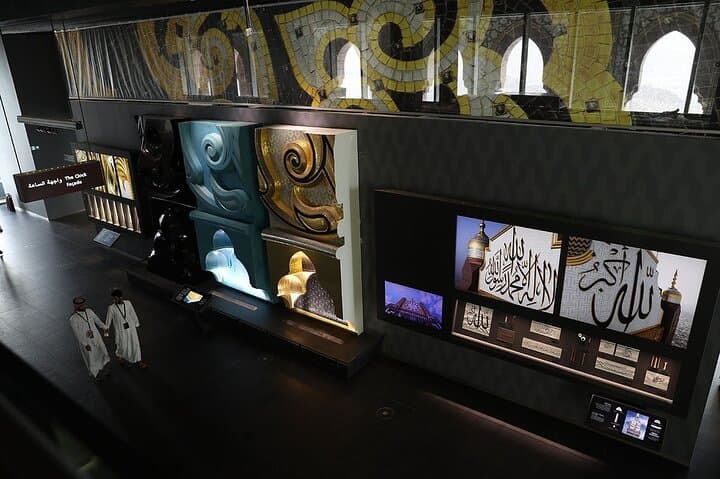
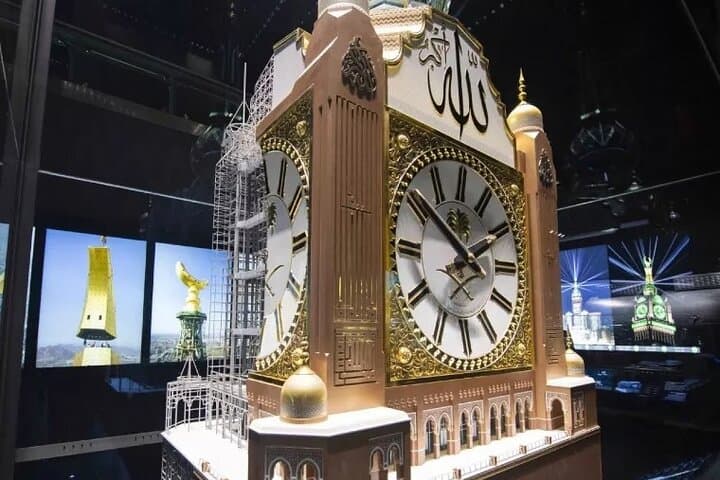
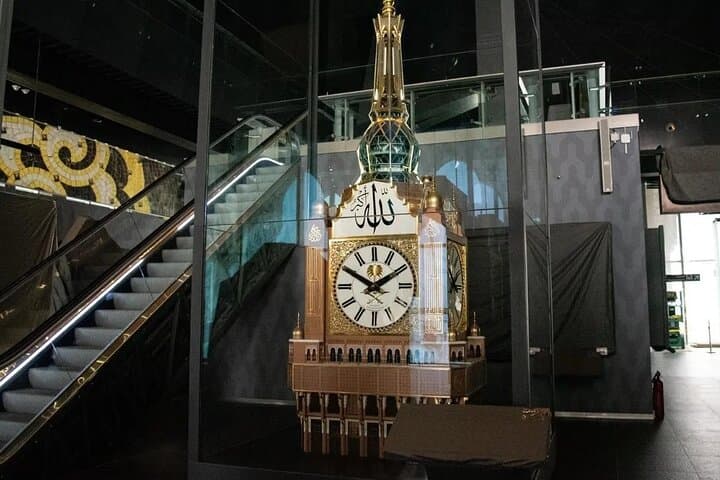
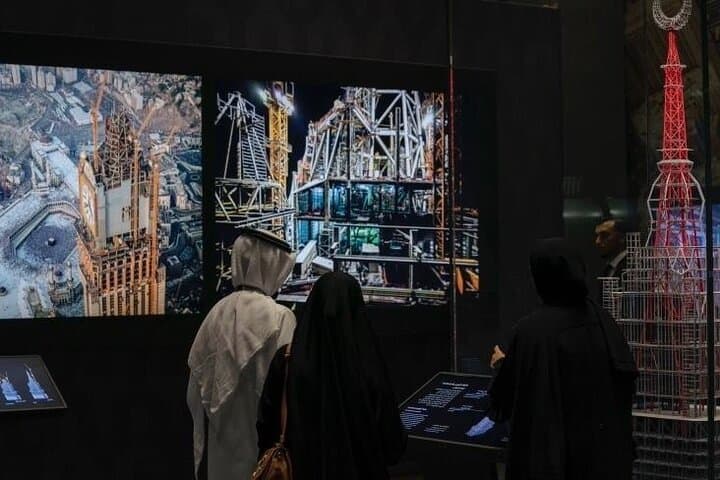
The Clock Tower Museum occupies four interpretive floors that pair engineering with religion: displays chart early Islamic astronomy and the evolution of timekeeping before bringing visitors face‑to‑face with the mechanisms behind the world’s largest clock. The tower itself is a modern addition to Makkah’s long history of pilgrimage infrastructure, part of the Abraj Al‑Bait complex built to serve millions of visitors annually.
Geologically the area sits on ancient Precambrian rocks of the Hijaz, the hard, weathered hills hemming the city and influencing its compact urban form. Culturally, a visit here is as much about orientation—seeing the Grand Mosque from above—as it is about learning how time, prayer and astronomy intersect in Islamic practice.
Practical guidance: the experience is designed as a focused 45‑minute visit; plan arrival before peak prayer times and bring ID and your ticket on mobile. The site is wheelchair accessible and stroller friendly; security screenings are routine. Modest dress is required and a calm pace inside the exhibits helps preserve the sacred atmosphere. For photographers, changing light makes early evening especially dramatic; for quieter viewing, schedule outside the main prayer windows. This is a compact, informative stop that pairs technical displays with one of the most powerful urban views in the Muslim world.
easy.
45 minutes.
Suitable for people of average mobility; elevators provide access so little physical exertion is required.
The standard visit is about 45 minutes, enough to tour the four exhibit floors and spend time on the observation terrace.
Yes—personal photography is permitted on the observation deck and in most exhibits, but be respectful of worshippers and avoid flash in crowded areas.
Yes, the Clock Tower Museum and terrace are wheelchair accessible with elevators and accessible routes throughout.
No, according to the booking terms all sales are final and tickets are non‑refundable.
The Abraj Al‑Bait complex was developed in the 2000s to expand pilgrim accommodation and includes the Clock Tower, which houses exhibits on Islamic astronomy and modern timekeeping.
High visitor volumes require strict crowd management and waste protocols; follow signage, minimize single‑use plastics, and avoid leaving litter.
GLOBAL EXPLORERS operates guided outdoor trips and adventures with an emphasis on safety, stewardship, and memorable experiences.
You step off the elevator into a hush that offsets the bustle below; the Grand Mosque spreads like a living map beneath the terrace, the Kaaba a precise dark cube at the center. From the Abraj Al‑Bait observation deck the city’s stone and glass grids fall away, and the call to prayer threads the scene—immediate, human, and enormous.
You step off the elevator into a hush that offsets the bustle below; the Grand Mosque spreads like a living map beneath the terrace, the Kaaba a precise dark cube at the center. From the Abraj Al‑Bait observation deck the city’s stone and glass grids fall away, and the call to prayer threads the scene—immediate, human, and enormous.
The Clock Tower Museum occupies four interpretive floors that pair engineering with religion: displays chart early Islamic astronomy and the evolution of timekeeping before bringing visitors face‑to‑face with the mechanisms behind the world’s largest clock. The tower itself is a modern addition to Makkah’s long history of pilgrimage infrastructure, part of the Abraj Al‑Bait complex built to serve millions of visitors annually.
Geologically the area sits on ancient Precambrian rocks of the Hijaz, the hard, weathered hills hemming the city and influencing its compact urban form. Culturally, a visit here is as much about orientation—seeing the Grand Mosque from above—as it is about learning how time, prayer and astronomy intersect in Islamic practice.
Practical guidance: the experience is designed as a focused 45‑minute visit; plan arrival before peak prayer times and bring ID and your ticket on mobile. The site is wheelchair accessible and stroller friendly; security screenings are routine. Modest dress is required and a calm pace inside the exhibits helps preserve the sacred atmosphere. For photographers, changing light makes early evening especially dramatic; for quieter viewing, schedule outside the main prayer windows. This is a compact, informative stop that pairs technical displays with one of the most powerful urban views in the Muslim world.