THE ADVENTURE COLLECTIVE® · Independent discovery and booking for outdoor travel

Join local artisans in Luang Prabang to handcraft Mulberry Saa paper and decorative lanterns. This four-hour, family-friendly workshop teaches sustainable techniques and leaves you with handmade keepsakes and a deeper appreciation for Lao craft.
Join local artisans in Luang Prabang to handcraft Mulberry Saa paper and decorative lanterns. This four-hour, family-friendly workshop teaches sustainable techniques and leaves you with handmade keepsakes and a deeper appreciation for Lao craft.
You step off a shaded street in Luang Prabang and into a bright studio where the air smells faintly of wet fiber and jasmine tea. Artisans at the Porsaa Learning Center spread strips of mulberry bark pulp on wooden frames while sunlight from high windows picks out gilded temple roofs beyond. The workbench is both classroom and compact laboratory—sheets of fresh Saa paper stack slowly as you press, press, and press again.
Verified experiences and guided adventures in the surrounding area.
Operated by Discova - Asia · Luang Prabang, Luang Prabang Province
You step off a shaded street in Luang Prabang and into a bright studio where the air smells faintly of wet fiber and jasmine tea. Artisans at the Porsaa Learning Center spread strips of mulberry bark pulp on wooden frames while sunlight from high windows picks out gilded temple roofs beyond. The workbench is both classroom and compact laboratory—sheets of fresh Saa paper stack slowly as you press, press, and press again.
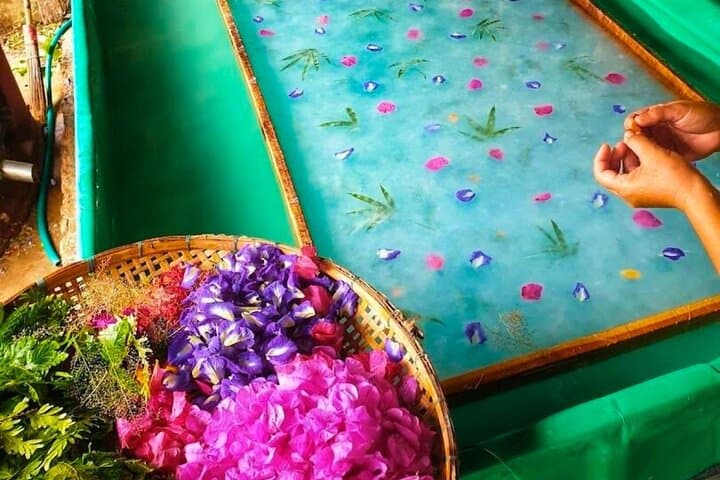
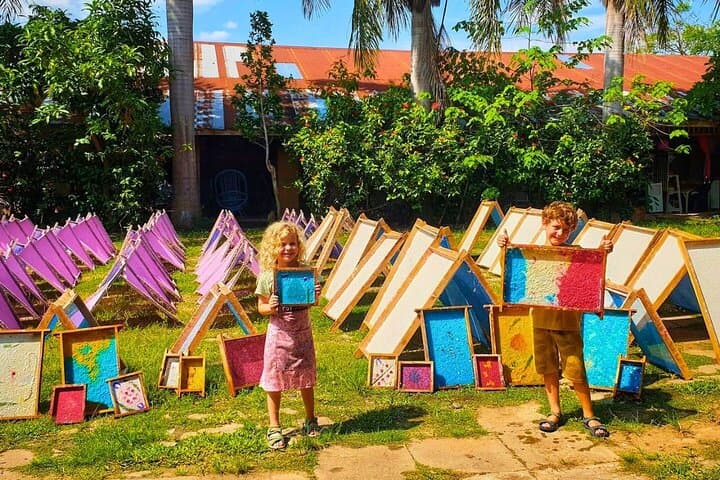
Saa paper has long been woven into northern Laos’ craft economy; made from the inner bark of fast-growing mulberry shrubs, it’s been used for religious banners, book pages, and lanterns. The technique is simple but exacting: fibers are soaked, beaten, blended with local flowers or leaves, and lifted on a mesh mold to drain and dry. Lantern-making draws on Lao decorative styles but lets visitors add personal touches—paint, rice-paper panels, and simple frames.
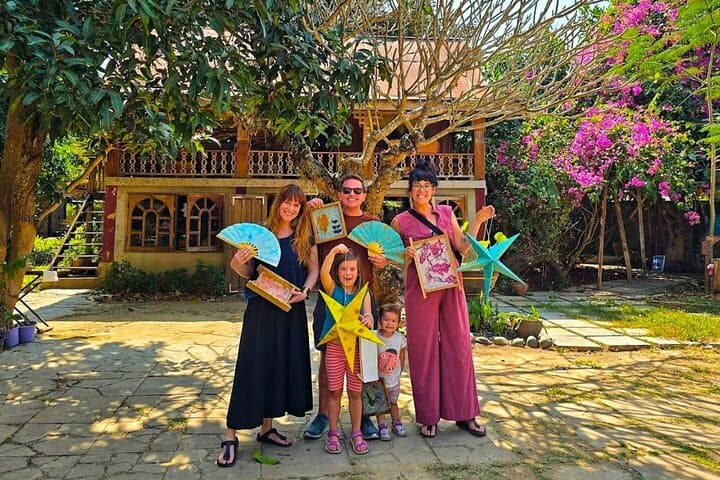
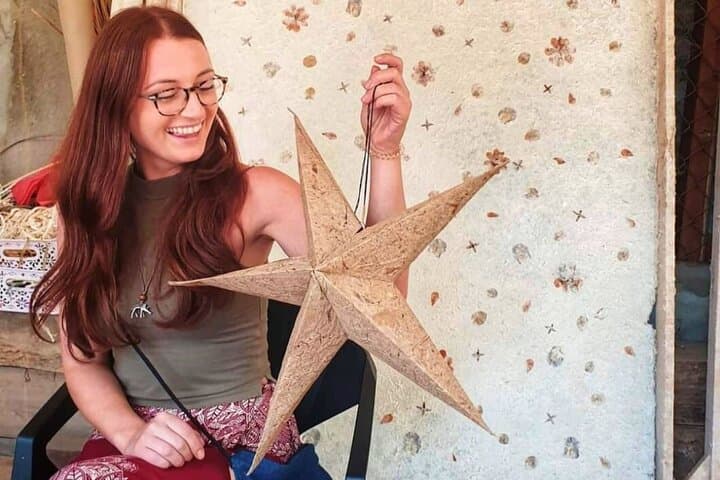
Expect a hands-on four-hour session where an English-speaking guide and local artisans walk you through each step. The tempo is patient; children and beginners are welcome. You’ll leave with at least one finished lantern and several sheets of handmade paper—fragile keepsakes that tell a story of sustainable materials and community craft.
Practical notes: hotel pickup is commonly included, bring a passport copy for booking, and wear clothes you don’t mind splashing. Plan for drying time if you want fully cured paper—shops can often finish items for transit. This workshop is a compact cultural exchange: tactile, instructive, and rooted in Luang Prabang’s living craft traditions.
easy.
4 hours.
Suitable for all fitness levels; requires standing and light manual work.
Yes—sessions are family-friendly and paced for beginners; young children may need supervision during knife or frame work.
Yes—mulberry bark pulp, frames, flowers, and basic decorating supplies are provided; additional decorative items may cost extra.
Many bookings include hotel pickup and drop-off in Luang Prabang—confirm at booking and provide your pickup point and passport copy.
Some centers can prepare and pack fragile items for shipping or recommend local shops that will finish and ship your paper and lanterns.
Saa paper production in Laos ties to Buddhist and bookmaking traditions; the craft grew around mulberry cultivation and small household workshops in the north.
Mulberry fiber is a fast-renewing resource, but responsible workshops emphasize sustainable bark harvesting and minimal chemical use to protect waterways and local flora.
Discova - Asia operates guided outdoor trips and adventures with an emphasis on safety, stewardship, and memorable experiences.
You step off a shaded street in Luang Prabang and into a bright studio where the air smells faintly of wet fiber and jasmine tea. Artisans at the Porsaa Learning Center spread strips of mulberry bark pulp on wooden frames while sunlight from high windows picks out gilded temple roofs beyond. The workbench is both classroom and compact laboratory—sheets of fresh Saa paper stack slowly as you press, press, and press again.
You step off a shaded street in Luang Prabang and into a bright studio where the air smells faintly of wet fiber and jasmine tea. Artisans at the Porsaa Learning Center spread strips of mulberry bark pulp on wooden frames while sunlight from high windows picks out gilded temple roofs beyond. The workbench is both classroom and compact laboratory—sheets of fresh Saa paper stack slowly as you press, press, and press again.
Saa paper has long been woven into northern Laos’ craft economy; made from the inner bark of fast-growing mulberry shrubs, it’s been used for religious banners, book pages, and lanterns. The technique is simple but exacting: fibers are soaked, beaten, blended with local flowers or leaves, and lifted on a mesh mold to drain and dry. Lantern-making draws on Lao decorative styles but lets visitors add personal touches—paint, rice-paper panels, and simple frames.
Expect a hands-on four-hour session where an English-speaking guide and local artisans walk you through each step. The tempo is patient; children and beginners are welcome. You’ll leave with at least one finished lantern and several sheets of handmade paper—fragile keepsakes that tell a story of sustainable materials and community craft.
Practical notes: hotel pickup is commonly included, bring a passport copy for booking, and wear clothes you don’t mind splashing. Plan for drying time if you want fully cured paper—shops can often finish items for transit. This workshop is a compact cultural exchange: tactile, instructive, and rooted in Luang Prabang’s living craft traditions.