THE ADVENTURE COLLECTIVE® · Independent discovery and booking for outdoor travel

Roll up your sleeves and learn how candy canes are made at Sweet Pete’s in Jacksonville. This one-hour class blends live demonstration with hands-on shaping—take home 6–8 canes.
Roll up your sleeves and learn how candy canes are made at Sweet Pete’s in Jacksonville. This one-hour class blends live demonstration with hands-on shaping—take home 6–8 canes.
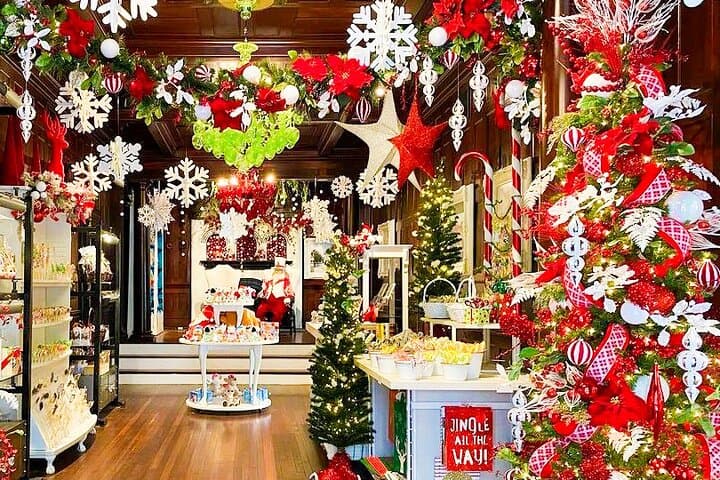
The room smells of sugar and spice before the day starts—bright lights catch the glossy sheen of a long candy hook as a line of molten ribbon stretches and snaps. In Sweet Pete’s demonstrative kitchen you’re close enough to feel the heat from copper pots and to hear the steady rhythm of candy being pulled into stripes.
Verified experiences and guided adventures in the surrounding area.
Operated by Sweet Pete's Candy · Jacksonville, Florida
The room smells of sugar and spice before the day starts—bright lights catch the glossy sheen of a long candy hook as a line of molten ribbon stretches and snaps. In Sweet Pete’s demonstrative kitchen you’re close enough to feel the heat from copper pots and to hear the steady rhythm of candy being pulled into stripes.
Candy canes have roots in European confectionery traditions and were popularized in American holiday culture during the 19th century; the modern striped cane and peppermint flavor are the product of that evolution. Jacksonville itself sits on Florida’s low coastal plain beside the St. Johns River, and its holiday downtown markets and historic neighborhoods provide a festive backdrop for this hands-on class.
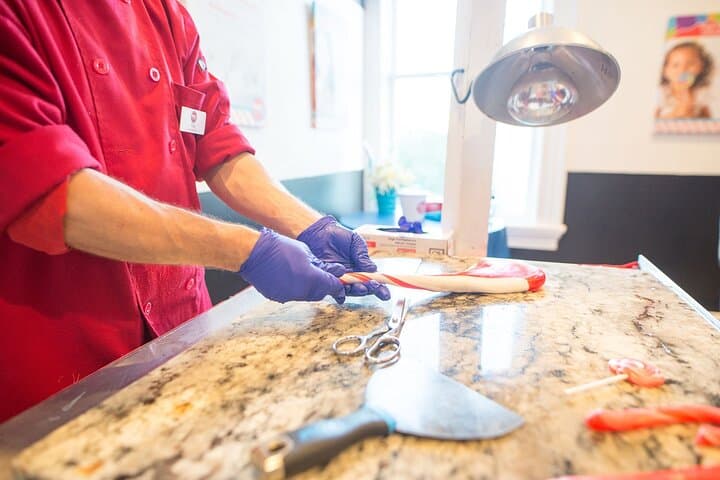
Expect a practical demonstration followed by supervised shaping: instructors cook and stripe the candy, mount it on the hook, and once it cools to touch participants pull and form pieces into traditional canes or playful shapes. You’ll leave with roughly six to eight freshly made canes and a better sense of temperature control, pulling technique, and candy hygiene.
Plan to arrive early to check in at the first-floor concierge, be ready for a warm, fast-paced workshop, and keep children close—hot sugar is part of the process. Mobile tickets are accepted; the venue is wheelchair accessible. This is a short, social, and seasonal experience—ideal as a holiday activity or a culinary primer in traditional candy craft.
easy.
1 hour.
Minimal physical exertion; suitable for most fitness levels though standing for short periods is required
The experience runs about one hour and includes a full demonstration plus hands-on shaping; expect to be on your feet for portions of the session.
Each participant typically takes home approximately six to eight candy canes made during the workshop.
Yes—infants may sit on laps per venue policy, but small children should be supervised closely because the process involves very hot sugar.
For a full refund you must cancel at least 24 hours before the scheduled time; check your booking confirmation for specifics.
Candy canes grew from European sugar traditions and became a North American holiday staple in the 19th century; Sweet Pete’s brings that craft into a live, modern studio setting.
Bring reusable containers for your treats when possible and recycle packaging on site; small-group workshops reduce waste compared with mass-produced samples.
Sweet Pete's Candy operates guided outdoor trips and adventures with an emphasis on safety, stewardship, and memorable experiences.


The room smells of sugar and spice before the day starts—bright lights catch the glossy sheen of a long candy hook as a line of molten ribbon stretches and snaps. In Sweet Pete’s demonstrative kitchen you’re close enough to feel the heat from copper pots and to hear the steady rhythm of candy being pulled into stripes.
The room smells of sugar and spice before the day starts—bright lights catch the glossy sheen of a long candy hook as a line of molten ribbon stretches and snaps. In Sweet Pete’s demonstrative kitchen you’re close enough to feel the heat from copper pots and to hear the steady rhythm of candy being pulled into stripes.
Candy canes have roots in European confectionery traditions and were popularized in American holiday culture during the 19th century; the modern striped cane and peppermint flavor are the product of that evolution. Jacksonville itself sits on Florida’s low coastal plain beside the St. Johns River, and its holiday downtown markets and historic neighborhoods provide a festive backdrop for this hands-on class.
Expect a practical demonstration followed by supervised shaping: instructors cook and stripe the candy, mount it on the hook, and once it cools to touch participants pull and form pieces into traditional canes or playful shapes. You’ll leave with roughly six to eight freshly made canes and a better sense of temperature control, pulling technique, and candy hygiene.
Plan to arrive early to check in at the first-floor concierge, be ready for a warm, fast-paced workshop, and keep children close—hot sugar is part of the process. Mobile tickets are accepted; the venue is wheelchair accessible. This is a short, social, and seasonal experience—ideal as a holiday activity or a culinary primer in traditional candy craft.