THE ADVENTURE COLLECTIVE® · Independent discovery and booking for outdoor travel

A short, paved hike on Oahu’s eastern point with sweeping ocean views, seasonal whale watching, and an early-20th-century lighthouse. Perfect for families and beginners looking for dramatic coastal scenery without rough terrain.
A short, paved hike on Oahu’s eastern point with sweeping ocean views, seasonal whale watching, and an early-20th-century lighthouse. Perfect for families and beginners looking for dramatic coastal scenery without rough terrain.
The trail opens with ocean wind pressing forward, the Pacific daring you toward a white sentinel on the headland. On the Makapuu Lighthouse paved path the view unfolds in clear, linear frames: basalt cliffs dropping into turbulent blue, sea spray articulating each contour, and, in season, spouts of humpback whales punctuating the horizon.
Verified experiences and guided adventures in the surrounding area.
Operated by Fit Trip Hawaii · Honolulu, Hawaii
The trail opens with ocean wind pressing forward, the Pacific daring you toward a white sentinel on the headland. On the Makapuu Lighthouse paved path the view unfolds in clear, linear frames: basalt cliffs dropping into turbulent blue, sea spray articulating each contour, and, in season, spouts of humpback whales punctuating the horizon.
The lighthouse itself dates to the early 20th century and was erected to guide ships around Oahu’s exposed eastern point. Geologically, Makapuu sits on a raised pali of oxidized lava flows and tuff cones carved by surf and wind—rock that reads like a slow-motion pageant of volcanic activity. Culturally the point is part of a long Hawaiian coastline where navigators and local communities have watched currents and stars for generations.
The walk is wide and paved, largely exposed to sun and wind, with interpretive signs and benches that invite slow observation. Guides usually include hotel pick-up and bring bottled water; they’ll point out other islands visible on clear days and the seasonal window for whale watching (typically December–May).
Practical guidance: wear sun protection and a wind layer, shoes with good tread for the paved climb, and bring binoculars for marine mammals. Plan mornings for cooler air and clearer visibility; the trail is stroller-accessible but can be windy. Stay on the paved route to protect fragile coastal vegetation and seabird nesting areas, and give wildlife space—humpbacks and monk seals need distance from curious observers.
easy.
4 hours.
Suitable for most fitness levels; minimal elevation gain but some steady paved uphill sections.
The paved round-trip walk from the main parking area to the lookout is roughly 2–2.5 miles and typically takes 45–90 minutes depending on stops; the tour compensates travel time to and from hotels for a total of about 4 hours.
Yes—the trail is wide and paved and accessible to strollers, though sections are exposed and can be windy; infants are allowed but must sit on laps during transport portions of the tour.
Yes—during peak season (roughly December through May) guides often spot humpback whales from the lookout, but sightings depend on weather and whale movements.
Most organized tours include hotel pickup on Oahu’s primary hotel corridors; check your booking details—the activity description notes pickup and bottled water are provided.
Makapuu Lighthouse was constructed in the early 1900s to aid navigation around Oahu’s eastern point; the area also holds significance in native Hawaiian coastal practices.
Stay on paved pathways to protect native coastal plants and seabird nesting habitat; observe marine mammals from shore and avoid disturbing resting seals or mother-young pairs.
Fit Trip Hawaii operates guided outdoor trips and adventures with an emphasis on safety, stewardship, and memorable experiences.
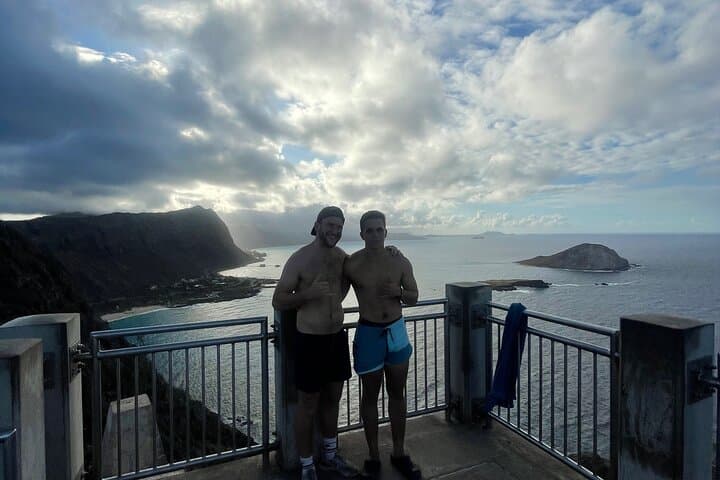

The trail opens with ocean wind pressing forward, the Pacific daring you toward a white sentinel on the headland. On the Makapuu Lighthouse paved path the view unfolds in clear, linear frames: basalt cliffs dropping into turbulent blue, sea spray articulating each contour, and, in season, spouts of humpback whales punctuating the horizon.
The trail opens with ocean wind pressing forward, the Pacific daring you toward a white sentinel on the headland. On the Makapuu Lighthouse paved path the view unfolds in clear, linear frames: basalt cliffs dropping into turbulent blue, sea spray articulating each contour, and, in season, spouts of humpback whales punctuating the horizon.
The lighthouse itself dates to the early 20th century and was erected to guide ships around Oahu’s exposed eastern point. Geologically, Makapuu sits on a raised pali of oxidized lava flows and tuff cones carved by surf and wind—rock that reads like a slow-motion pageant of volcanic activity. Culturally the point is part of a long Hawaiian coastline where navigators and local communities have watched currents and stars for generations.
The walk is wide and paved, largely exposed to sun and wind, with interpretive signs and benches that invite slow observation. Guides usually include hotel pick-up and bring bottled water; they’ll point out other islands visible on clear days and the seasonal window for whale watching (typically December–May).
Practical guidance: wear sun protection and a wind layer, shoes with good tread for the paved climb, and bring binoculars for marine mammals. Plan mornings for cooler air and clearer visibility; the trail is stroller-accessible but can be windy. Stay on the paved route to protect fragile coastal vegetation and seabird nesting areas, and give wildlife space—humpbacks and monk seals need distance from curious observers.