THE ADVENTURE COLLECTIVE® · Independent discovery and booking for outdoor travel

A compact day tour through Makandawa Rainforest combining a short waterfall hike, dugout canoe on Kelani tributaries, and guided birding. Expect lush shade, village lunch, and close encounters with endemic birds.
A compact day tour through Makandawa Rainforest combining a short waterfall hike, dugout canoe on Kelani tributaries, and guided birding. Expect lush shade, village lunch, and close encounters with endemic birds.
You step from the vehicle into a green dimness: the rainforest canopy draws a cool breath and the air smells of wet earth and leaf mold. A narrow trail threads uphill toward an old waterfall, while the Kelani’s side channels murmur nearby — the river dares you to slow down and listen.
Verified experiences and guided adventures in the surrounding area.
Operated by Ceylon Travel Dream · Kegalle, Sabaragamuwa Province
You step from the vehicle into a green dimness: the rainforest canopy draws a cool breath and the air smells of wet earth and leaf mold. A narrow trail threads uphill toward an old waterfall, while the Kelani’s side channels murmur nearby — the river dares you to slow down and listen.
Makandawa’s slopes are part of Sri Lanka’s lowland wet zone, formed by ancient metamorphic rock and shaped by heavy monsoon flows. Local villages have long relied on the river and forest for transport, food, and crafts; today conservation efforts balance community livelihoods with protecting endemic species. Along the way an experienced naturalist points out the Sri Lanka Magpie, Green-billed Coucal and flashes of Malabar Trogon that favor the shadowed understorey.
The hike itself is short but textured: slick stone steps, soft leaf litter, occasional root tangles and a steady canopy that keeps midday heat at bay. The waterfall, older than the footpath, offers a quiet plunge pool and a place for a village-style lunch prepared by local mothers — a practical reward after a morning of walking and canoeing.
Plan for humid conditions, muddy stretches after rain and uneven footing. Bring a waterproof layer, sturdy shoes with good grip, and insect repellent. Aim for morning starts to catch bird activity and avoid the late-afternoon squalls. Respect village protocols, leave no trace, and be ready for a compact, sensory day that mixes river, forest and community in a single loop.
moderate.
3–6 hours.
Light to moderate fitness; able to walk uneven ground for up to an hour and board a dugout canoe.
The walking section is short—typically 30–60 minutes each way depending on pace and stops for birding.
The itinerary is rated easy–moderate; children and less mobile guests can participate but should be prepared for uneven terrain and canoe boarding.
Yes—guides focus on endemic species like Sri Lanka Magpie, Malabar Trogon and others, though sightings depend on season and time of day.
An English-speaking naturalist is provided as part of the tour.
Local communities have long used these forest corridors for subsistence and river transport; recent conservation efforts combine community ecotourism with habitat protection.
Tours operate with small groups and local guides to minimize disturbance; follow leave-no-trace rules and avoid feeding wildlife to support long-term protection.
Ceylon Travel Dream operates guided outdoor trips and adventures with an emphasis on safety, stewardship, and memorable experiences.


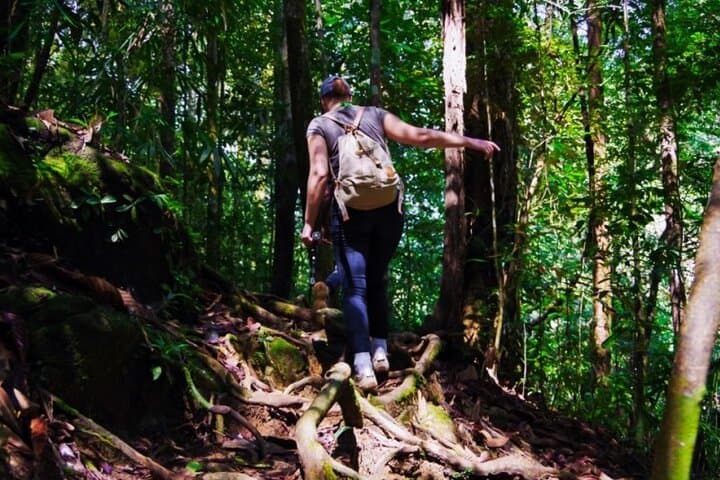
You step from the vehicle into a green dimness: the rainforest canopy draws a cool breath and the air smells of wet earth and leaf mold. A narrow trail threads uphill toward an old waterfall, while the Kelani’s side channels murmur nearby — the river dares you to slow down and listen.
You step from the vehicle into a green dimness: the rainforest canopy draws a cool breath and the air smells of wet earth and leaf mold. A narrow trail threads uphill toward an old waterfall, while the Kelani’s side channels murmur nearby — the river dares you to slow down and listen.
Makandawa’s slopes are part of Sri Lanka’s lowland wet zone, formed by ancient metamorphic rock and shaped by heavy monsoon flows. Local villages have long relied on the river and forest for transport, food, and crafts; today conservation efforts balance community livelihoods with protecting endemic species. Along the way an experienced naturalist points out the Sri Lanka Magpie, Green-billed Coucal and flashes of Malabar Trogon that favor the shadowed understorey.
The hike itself is short but textured: slick stone steps, soft leaf litter, occasional root tangles and a steady canopy that keeps midday heat at bay. The waterfall, older than the footpath, offers a quiet plunge pool and a place for a village-style lunch prepared by local mothers — a practical reward after a morning of walking and canoeing.
Plan for humid conditions, muddy stretches after rain and uneven footing. Bring a waterproof layer, sturdy shoes with good grip, and insect repellent. Aim for morning starts to catch bird activity and avoid the late-afternoon squalls. Respect village protocols, leave no trace, and be ready for a compact, sensory day that mixes river, forest and community in a single loop.