THE ADVENTURE COLLECTIVE® · Independent discovery and booking for outdoor travel

Discover Marrakech's Majorelle Garden, the Berber Museum and the Yves Saint Laurent Museum in one practical visit. This guide outlines what to expect, why the site matters, and how to plan a smooth 2–4 hour visit.
Discover Marrakech's Majorelle Garden, the Berber Museum and the Yves Saint Laurent Museum in one practical visit. This guide outlines what to expect, why the site matters, and how to plan a smooth 2–4 hour visit.
Stepping through the gate of Majorelle Garden, the city noise slips away and a sharp cobalt appears—walls and villas painted a blue so deliberate it redirects the light. Water basins mirror palms; a line of cacti angles like a slow motion sketch. The garden moves at its own pace, plants and pools guiding visitors through shaded alleys toward the Berber Museum and the low-profile modernity of the Yves Saint Laurent Museum nearby.
Verified experiences and guided adventures in the surrounding area.
Operated by Sky And Sea Land · Marrakech, Marrakesh-Safi
Stepping through the gate of Majorelle Garden, the city noise slips away and a sharp cobalt appears—walls and villas painted a blue so deliberate it redirects the light. Water basins mirror palms; a line of cacti angles like a slow motion sketch. The garden moves at its own pace, plants and pools guiding visitors through shaded alleys toward the Berber Museum and the low-profile modernity of the Yves Saint Laurent Museum nearby.
The site began as Jacques Majorelle's private botanical project in the 1920s–30s, later rescued and restored in the 1980s by Yves Saint Laurent and Pierre Bergé. The Berber Museum occupies the villa that once served as Majorelle’s studio, presenting textiles, jewelry and daily objects that trace North Africa’s indigenous craft traditions. The YSL Museum, opened in 2017, pairs contemporary architecture with a deep archive of fashion and design inspiration drawn from Morocco.
Practicalities are straightforward: allow 2–4 hours to move between the garden, Berber Museum and YSL exhibitions; tickets are timed and often sold in advance. Paths are paved and mostly flat—wheelchair access is available—but expect crowds mid-day, particularly in high season. Wear comfortable shoes for strolling, bring sun protection and a refillable water bottle; photography is welcomed but follow signage inside exhibition spaces. Combine this visit with a walk through the nearby Rue Yves Saint Laurent neighborhood for cafés and design shops, or quiet down at Le Jardin Secret for another garden pause. The experience balances botanical calm with cultural depth—ideal for travelers who want sensory relief from Marrakech’s souks without sacrificing historical context.
easy.
2–4 hours.
Suitable for most visitors; requires basic mobility for walking short paved paths
Yes—Majorelle Garden and the YSL Museum use timed admissions; book in advance during high season to secure your preferred slot.
Most garden paths and museum areas are wheelchair accessible and the operator notes accessibility features; check specific pickup or transport accessibility when booking round-trip service.
Allocate 2–4 hours to visit the garden, the Berber Museum and the YSL Museum at a steady pace, longer if you plan to linger at exhibits or the café.
Photography policies vary by gallery and temporary exhibit—look for signage and staff guidance; outdoor garden photography is generally fine.
Created by Jacques Majorelle in the 1920s–30s and restored by Yves Saint Laurent and Pierre Bergé in the 1980s, the site blends French art-deco influences with Moroccan motifs.
The gardens prioritize water-wise plantings and controlled visitor flow to protect plant collections and cultural artifacts; stay on paths and avoid touching exhibits.
Sky And Sea Land operates guided outdoor trips and adventures with an emphasis on safety, stewardship, and memorable experiences.
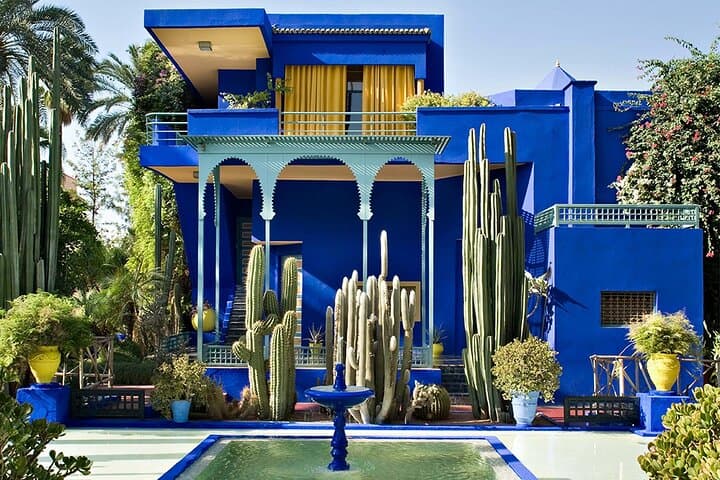
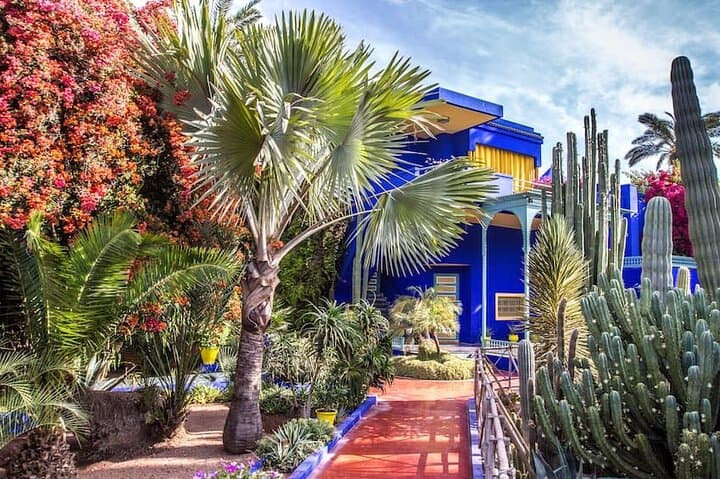
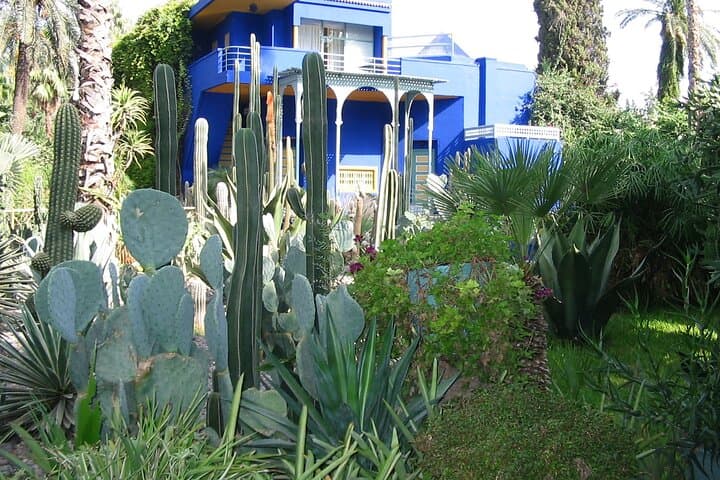
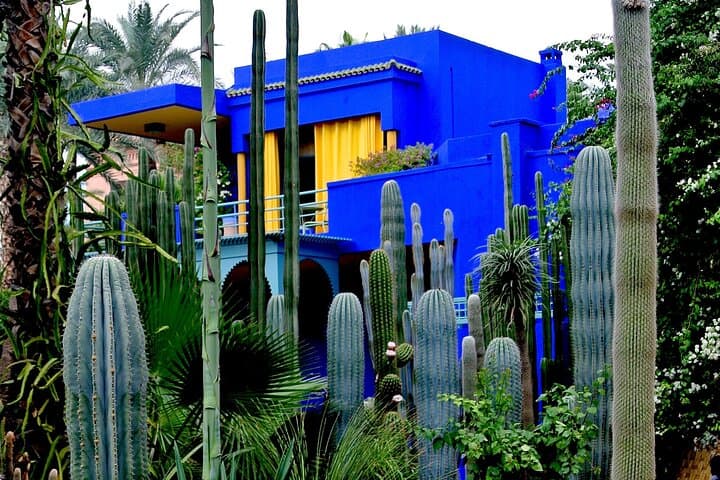
Stepping through the gate of Majorelle Garden, the city noise slips away and a sharp cobalt appears—walls and villas painted a blue so deliberate it redirects the light. Water basins mirror palms; a line of cacti angles like a slow motion sketch. The garden moves at its own pace, plants and pools guiding visitors through shaded alleys toward the Berber Museum and the low-profile modernity of the Yves Saint Laurent Museum nearby.
Stepping through the gate of Majorelle Garden, the city noise slips away and a sharp cobalt appears—walls and villas painted a blue so deliberate it redirects the light. Water basins mirror palms; a line of cacti angles like a slow motion sketch. The garden moves at its own pace, plants and pools guiding visitors through shaded alleys toward the Berber Museum and the low-profile modernity of the Yves Saint Laurent Museum nearby.
The site began as Jacques Majorelle's private botanical project in the 1920s–30s, later rescued and restored in the 1980s by Yves Saint Laurent and Pierre Bergé. The Berber Museum occupies the villa that once served as Majorelle’s studio, presenting textiles, jewelry and daily objects that trace North Africa’s indigenous craft traditions. The YSL Museum, opened in 2017, pairs contemporary architecture with a deep archive of fashion and design inspiration drawn from Morocco.
Practicalities are straightforward: allow 2–4 hours to move between the garden, Berber Museum and YSL exhibitions; tickets are timed and often sold in advance. Paths are paved and mostly flat—wheelchair access is available—but expect crowds mid-day, particularly in high season. Wear comfortable shoes for strolling, bring sun protection and a refillable water bottle; photography is welcomed but follow signage inside exhibition spaces. Combine this visit with a walk through the nearby Rue Yves Saint Laurent neighborhood for cafés and design shops, or quiet down at Le Jardin Secret for another garden pause. The experience balances botanical calm with cultural depth—ideal for travelers who want sensory relief from Marrakech’s souks without sacrificing historical context.