THE ADVENTURE COLLECTIVE® · Independent discovery and booking for outdoor travel

Step into Majorelle Garden’s cobalt gates, where exotic plantings and reflective pools offer cool contrast to Marrakech’s ochre streets. This private round-trip pairs the tranquil garden with the Yves Saint Laurent Museum and the Berber Museum—an efficient cultural loop for art, fashion, and history lovers.
Step into Majorelle Garden’s cobalt gates, where exotic plantings and reflective pools offer cool contrast to Marrakech’s ochre streets. This private round-trip pairs the tranquil garden with the Yves Saint Laurent Museum and the Berber Museum—an efficient cultural loop for art, fashion, and history lovers.
You push through cobalt-blue gates and the city noise slips behind you; palms and bamboo close ranks while water lilies drift in shaded pools that seem to watch you as you walk. The garden’s exotic plantings—succulents, towering cacti and planted palms—create cool pockets of air, and the burbling streams dare you to pause and listen.
Verified experiences and guided adventures in the surrounding area.
Operated by Sky And Sea Land · Marrakech, Marrakesh-Safi
You push through cobalt-blue gates and the city noise slips behind you; palms and bamboo close ranks while water lilies drift in shaded pools that seem to watch you as you walk. The garden’s exotic plantings—succulents, towering cacti and planted palms—create cool pockets of air, and the burbling streams dare you to pause and listen.
Created by French painter Jacques Majorelle in the 1920s and rescued in the 1980s by Yves Saint Laurent and Pierre Bergé, Majorelle Garden blends French-colonial garden design with North African planting. Nearby, the Yves Saint Laurent Museum (opened 2017) frames four decades of couture inside an architecturally distinctive building, while the Berber Museum occupies Majorelle’s former studio and displays over 600 artifacts that map Berber (Amazigh) culture from the Rif to the Sahara.
Geologically Marrakech sits on the northern edge of the High Atlas’s alluvial plain; the garden’s plant palette deliberately contrasts the city’s red earth with splashes of exotic greens and Majorelle blue. The walk is cultural and sensory: textiles, beads and metalwork in the Berber Museum tell a practical, living story of local craft.
Practical guidance: allow 2–3 hours for the combined visits; mornings or late afternoons offer cooler light and smaller crowds. Wear comfortable walking shoes and sun protection, bring a refillable water bottle (bottled water provided on the tour), and respect indoor photo rules at museum exhibits. The route is stroller-friendly and the private round-trip transport makes timing easy—still, give yourself time to linger by the lily pools and on the museum terrace cafe.
easy.
2–3 hours.
Suitable for most fitness levels; light walking on mostly flat, landscaped paths.
The tour includes admission to Majorelle Garden; admission to the Yves Saint Laurent and Berber Museums is included only if you select the option that specifies those tickets.
Plan on roughly 2–3 hours total: about 60 minutes at the garden, 60 minutes at the YSL Museum, and ~30 minutes at the Berber Museum as outlined by the itinerary.
Paths in Majorelle Garden are mostly flat and stroller-accessible; museums have accessibility features but check specific entrance access in advance for full wheelchair accommodations.
Photography rules vary by exhibit—non-flash photography is often allowed, but certain galleries or haute couture pieces may be restricted; follow onsite signage.
Jacques Majorelle began the garden in the 1920s; Yves Saint Laurent and Pierre Bergé later purchased and restored it, protecting its plants and establishing the Berber Museum as a cultural offshoot.
The foundation that manages the garden focuses on preserving historic plantings and minimizing visitor impact; stick to paths, avoid picking plants, and use designated bins to help protect the site.
Sky And Sea Land operates guided outdoor trips and adventures with an emphasis on safety, stewardship, and memorable experiences.
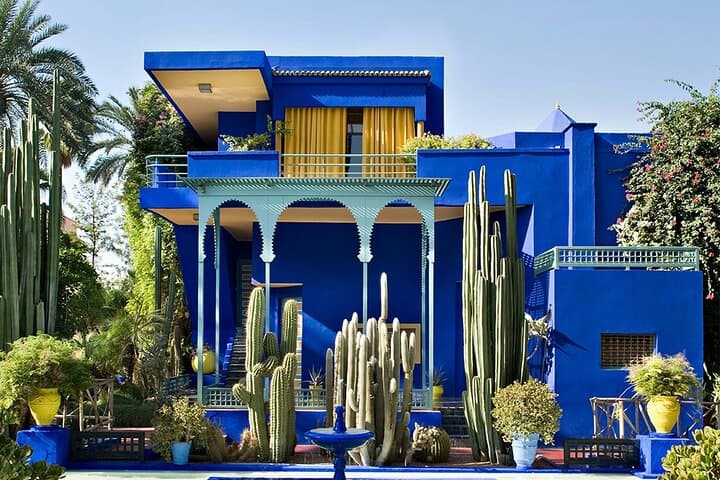
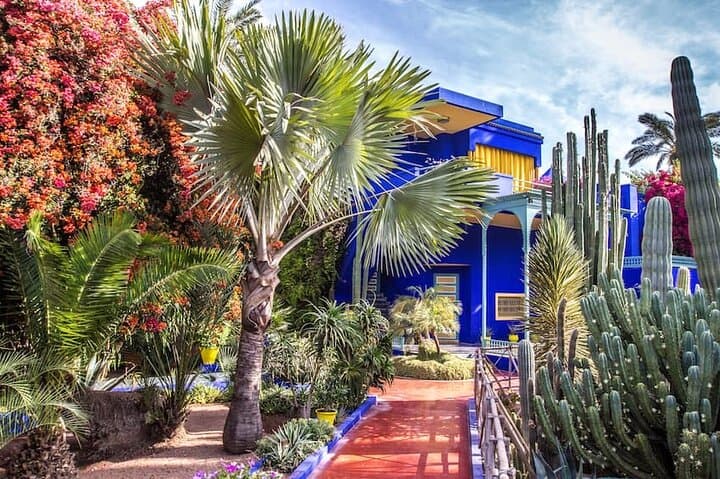
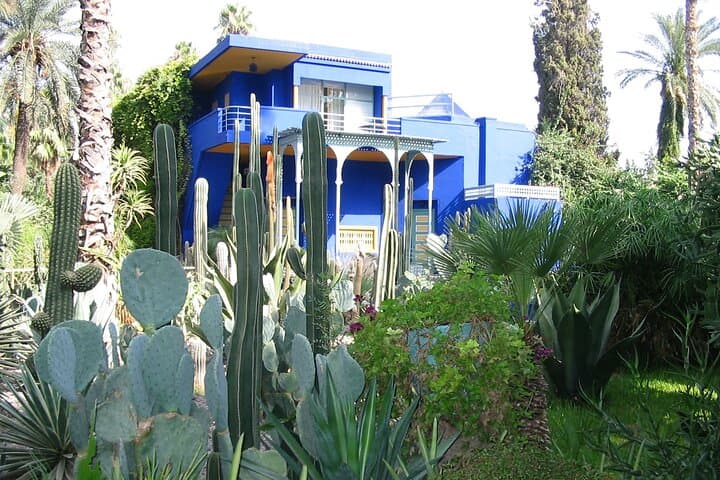
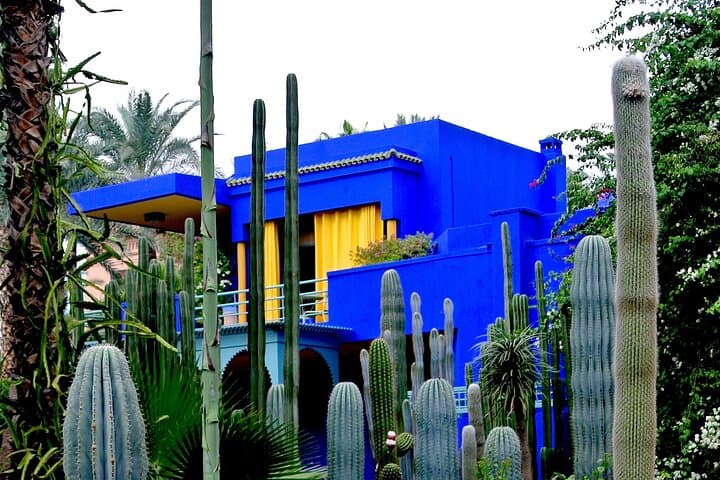
You push through cobalt-blue gates and the city noise slips behind you; palms and bamboo close ranks while water lilies drift in shaded pools that seem to watch you as you walk. The garden’s exotic plantings—succulents, towering cacti and planted palms—create cool pockets of air, and the burbling streams dare you to pause and listen.
You push through cobalt-blue gates and the city noise slips behind you; palms and bamboo close ranks while water lilies drift in shaded pools that seem to watch you as you walk. The garden’s exotic plantings—succulents, towering cacti and planted palms—create cool pockets of air, and the burbling streams dare you to pause and listen.
Created by French painter Jacques Majorelle in the 1920s and rescued in the 1980s by Yves Saint Laurent and Pierre Bergé, Majorelle Garden blends French-colonial garden design with North African planting. Nearby, the Yves Saint Laurent Museum (opened 2017) frames four decades of couture inside an architecturally distinctive building, while the Berber Museum occupies Majorelle’s former studio and displays over 600 artifacts that map Berber (Amazigh) culture from the Rif to the Sahara.
Geologically Marrakech sits on the northern edge of the High Atlas’s alluvial plain; the garden’s plant palette deliberately contrasts the city’s red earth with splashes of exotic greens and Majorelle blue. The walk is cultural and sensory: textiles, beads and metalwork in the Berber Museum tell a practical, living story of local craft.
Practical guidance: allow 2–3 hours for the combined visits; mornings or late afternoons offer cooler light and smaller crowds. Wear comfortable walking shoes and sun protection, bring a refillable water bottle (bottled water provided on the tour), and respect indoor photo rules at museum exhibits. The route is stroller-friendly and the private round-trip transport makes timing easy—still, give yourself time to linger by the lily pools and on the museum terrace cafe.