THE ADVENTURE COLLECTIVE® · Independent discovery and booking for outdoor travel

Explore the cobalt-walled Majorelle Garden and cross into the Palmeraie for a gentle camel ride on this 3–4 hour half-day tour from Marrakech. Perfect for travelers who want botanical design, brief desert scenery, and convenient hotel pickup.
Explore the cobalt-walled Majorelle Garden and cross into the Palmeraie for a gentle camel ride on this 3–4 hour half-day tour from Marrakech. Perfect for travelers who want botanical design, brief desert scenery, and convenient hotel pickup.
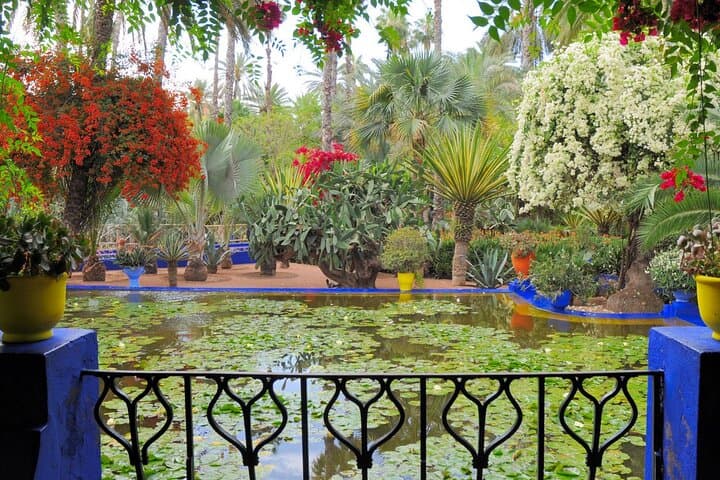
You step through a narrow medina street and the city exhales blue: cobalt walls, clipped hedges, fountains that chop the heat into manageable slices. Majorelle Garden opens as an ordered oasis—stepped pools, sculpted cactus beds and tall bamboo lanes—where songbirds flit among 15 recorded species and the painted blue holds the eye.
Verified experiences and guided adventures in the surrounding area.
Operated by Morocco AdvenTours · Marrakech, Marrakesh-Safi
You step through a narrow medina street and the city exhales blue: cobalt walls, clipped hedges, fountains that chop the heat into manageable slices. Majorelle Garden opens as an ordered oasis—stepped pools, sculpted cactus beds and tall bamboo lanes—where songbirds flit among 15 recorded species and the painted blue holds the eye.
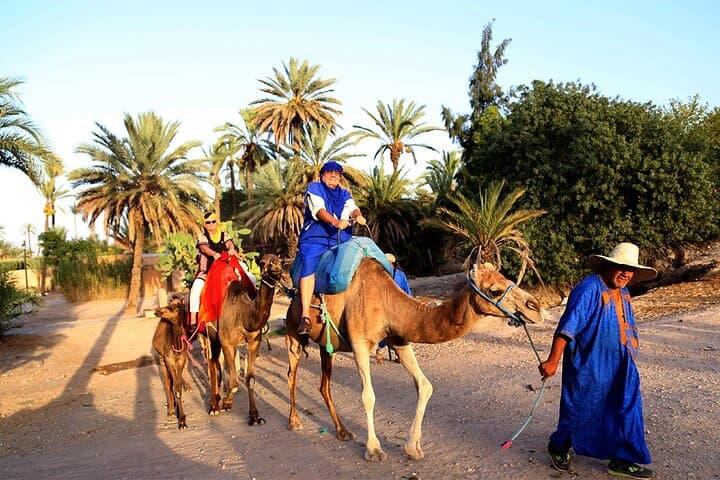
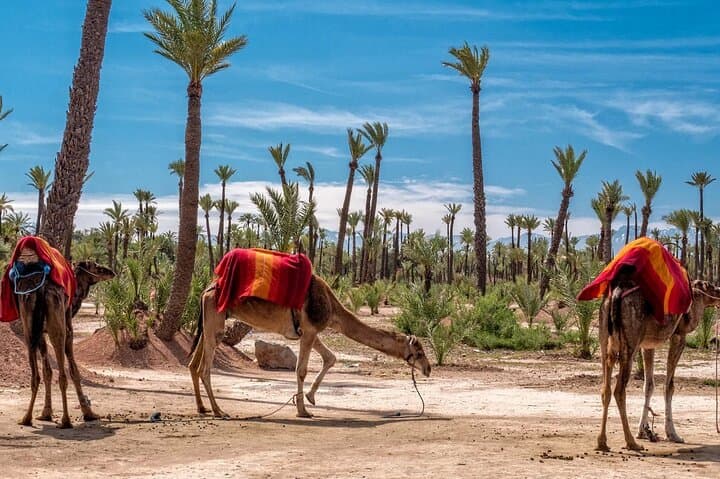
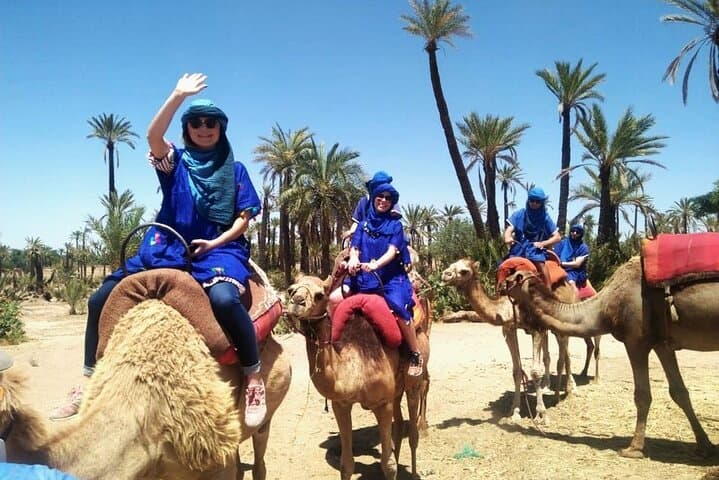
Designed by French artist Jacques Majorelle in the 1920s and later restored by Yves Saint Laurent and Pierre Bergé, the garden mixes North African plantings with an artist’s sense of line; nearby the Berber Museum traces Amazigh craft and regional textiles. A short transfer brings you to the Palmeraie, the wide palm grove at Marrakech’s edge where irrigation and date palms have anchored life on the semi-arid plain for centuries. Here, local guides offer calm camel rides that follow sandy alleys and manicured villas, a low, swaying rhythm that reads like the landscape itself taking a breath.
Practical guidance: the tour runs about 3–4 hours with hotel pickup and drop-off; plan to spend an hour in the garden and 30–60 minutes on a camel. Bring sunscreen, a brimmed hat, and comfortable shoes for gravel paths. Mornings and late afternoons are best for light and to avoid peak heat. The sites are largely accessible, but camel mounting requires basic mobility; bottled water and entrance fees are included on most departures. Photographers should arrive early for softer light and smaller crowds; respect planted areas and the Berber Museum displays. This half-day pairs culture, botany, and a touch of desert travel in an easily managed slice of Marrakech.
easy.
3–4 hours.
Suitable for most fitness levels; requires basic mobility to mount and dismount a camel and walk garden paths.
Yes; most bookings include round-trip pickup and drop-off from Marrakech hotels or riads.
The Majorelle grounds have accessible paths and the tour lists wheelchair-compatible options, though some areas use gravel or steps.
Camel rides typically last 30–60 minutes depending on the chosen option and group size.
Some tours offer YSL Museum admission as an add-on; check the booking details to confirm inclusion.
Majorelle was created by Jacques Majorelle in the 1920s and later preserved by Yves Saint Laurent and Pierre Bergé; the Palmeraie is a historic irrigated date-palm zone that predates Marrakech’s modern expansion.
The garden and Palmeraie rely on careful water management; visitors should stay on paths and avoid disturbing plantings to support preservation efforts.
Morocco AdvenTours operates guided outdoor trips and adventures with an emphasis on safety, stewardship, and memorable experiences.
You step through a narrow medina street and the city exhales blue: cobalt walls, clipped hedges, fountains that chop the heat into manageable slices. Majorelle Garden opens as an ordered oasis—stepped pools, sculpted cactus beds and tall bamboo lanes—where songbirds flit among 15 recorded species and the painted blue holds the eye.
You step through a narrow medina street and the city exhales blue: cobalt walls, clipped hedges, fountains that chop the heat into manageable slices. Majorelle Garden opens as an ordered oasis—stepped pools, sculpted cactus beds and tall bamboo lanes—where songbirds flit among 15 recorded species and the painted blue holds the eye.
Designed by French artist Jacques Majorelle in the 1920s and later restored by Yves Saint Laurent and Pierre Bergé, the garden mixes North African plantings with an artist’s sense of line; nearby the Berber Museum traces Amazigh craft and regional textiles. A short transfer brings you to the Palmeraie, the wide palm grove at Marrakech’s edge where irrigation and date palms have anchored life on the semi-arid plain for centuries. Here, local guides offer calm camel rides that follow sandy alleys and manicured villas, a low, swaying rhythm that reads like the landscape itself taking a breath.
Practical guidance: the tour runs about 3–4 hours with hotel pickup and drop-off; plan to spend an hour in the garden and 30–60 minutes on a camel. Bring sunscreen, a brimmed hat, and comfortable shoes for gravel paths. Mornings and late afternoons are best for light and to avoid peak heat. The sites are largely accessible, but camel mounting requires basic mobility; bottled water and entrance fees are included on most departures. Photographers should arrive early for softer light and smaller crowds; respect planted areas and the Berber Museum displays. This half-day pairs culture, botany, and a touch of desert travel in an easily managed slice of Marrakech.