THE ADVENTURE COLLECTIVE® · Independent discovery and booking for outdoor travel

Step past Marrakech’s blue wall into one of North Africa’s most photographed gardens. This practical guide explains what to expect at Jardin Majorelle, its history, and how to make the most of a 2–3 hour visit with skip-the-line tickets and private transfers.
Step past Marrakech’s blue wall into one of North Africa’s most photographed gardens. This practical guide explains what to expect at Jardin Majorelle, its history, and how to make the most of a 2–3 hour visit with skip-the-line tickets and private transfers.
You arrive through a narrow Marrakech street and then, as if stepping between painted shutters, the garden opens: a wall of cobalt blue, a shaft of sunlight over bamboo stalks, cacti angles like sculptures. The air smells faintly of citrus and potting soil; the traffic of the medina drops away.
Verified experiences and guided adventures in the surrounding area.
Operated by Sky And Sea Land · Marrakech, Marrakech-Safi
You arrive through a narrow Marrakech street and then, as if stepping between painted shutters, the garden opens: a wall of cobalt blue, a shaft of sunlight over bamboo stalks, cacti angles like sculptures. The air smells faintly of citrus and potting soil; the traffic of the medina drops away.
The garden began as the private project of French painter Jacques Majorelle in the 1920s and 30s, later rescued and restored by Yves Saint Laurent and Pierre Bergé in the 1980s. Its layered plantings -- giant bamboo, papyrus, yucca, palms and succulents -- sit on reworked soils and irrigation paths that speak to 20th-century colonial-era landscape design adapted to a semi-arid North African climate.
Culturally, the gardens sit at the intersection of European modernism and Berber art; nearby museums and boutiques reflect the city's entwined histories of craft, couture and colonial patronage.
Practical guidance: plan 2–3 hours to move through the gardens at an unhurried pace, allow extra time for the small Berber Museum and the Yves Saint Laurent Museum nearby. Ticket-and-transfer options remove the logistics of taxis in the medina, and the site is largely wheelchair accessible. Peak sun from late morning to mid-afternoon makes a morning or late-afternoon visit more comfortable.
Bring sun protection, a refillable water bottle, and a camera with a mid-range lens to capture both intimate plant details and the villa’s bold blue planes. Respect planting beds and follow posted paths—this is a high-traffic cultural landscape where modest behavior and small conservation choices preserve the place for others.
easy.
2–3 hours.
Suitable for most fitness levels; involves flat walking on paved paths with some steps.
Yes; the described product includes entrance fees to Majorelle Garden and private round-trip transportation as part of the booking.
Most main paths and areas are accessible and the transfer options list wheelchair-accessible vehicles, though some smaller zones may have steps.
Plan 2–3 hours to tour the garden, visit the Berber Museum, and enjoy a coffee at the onsite café; add time if visiting the Yves Saint Laurent Museum nearby.
Photography for personal use is allowed; tripods may be restricted during busy periods—check onsite rules or ask staff if unsure.
Created by Jacques Majorelle in the early 20th century and restored by Yves Saint Laurent and Pierre Bergé in the 1980s, the garden reflects a layered Franco-Moroccan history of art and patronage.
The garden relies on fee revenue for maintenance and has implemented water-wise planting and irrigation; visitors should remain on paths and avoid wasting water to support conservation efforts.
Sky And Sea Land operates guided outdoor trips and adventures with an emphasis on safety, stewardship, and memorable experiences.
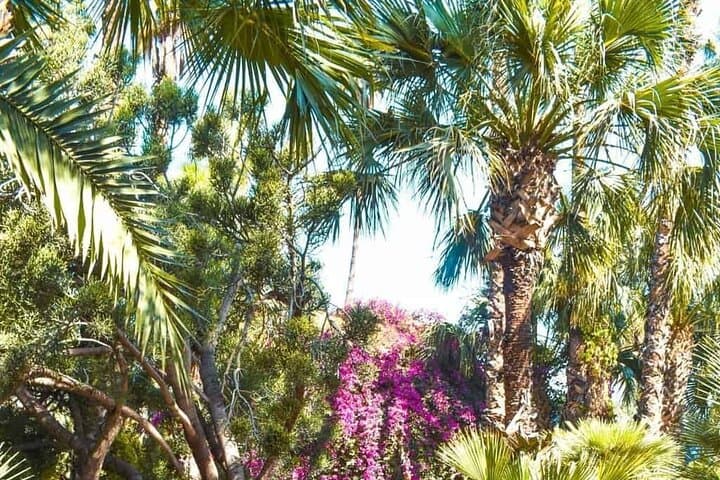
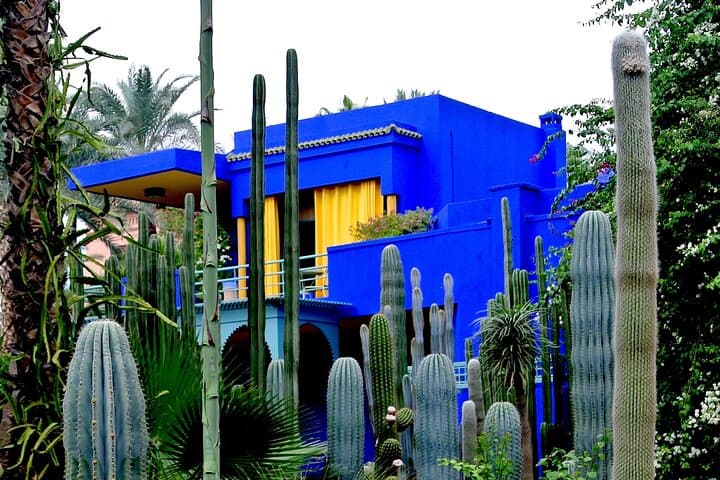
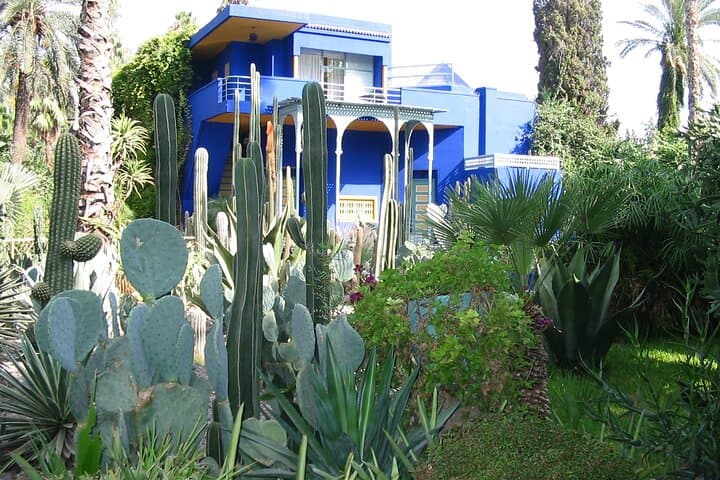
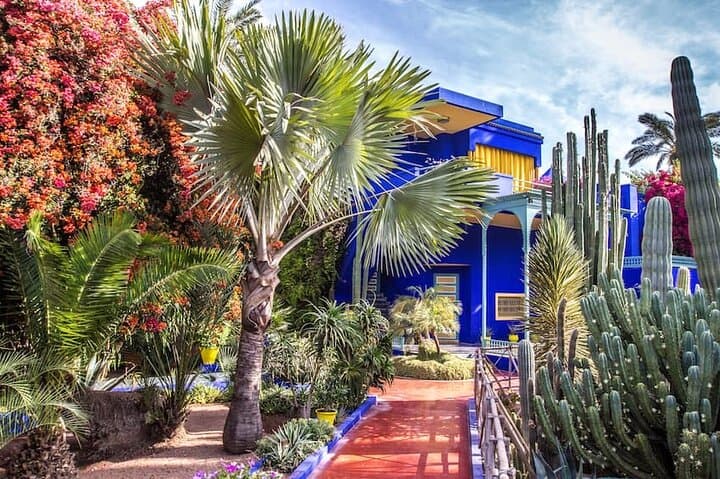
You arrive through a narrow Marrakech street and then, as if stepping between painted shutters, the garden opens: a wall of cobalt blue, a shaft of sunlight over bamboo stalks, cacti angles like sculptures. The air smells faintly of citrus and potting soil; the traffic of the medina drops away.
You arrive through a narrow Marrakech street and then, as if stepping between painted shutters, the garden opens: a wall of cobalt blue, a shaft of sunlight over bamboo stalks, cacti angles like sculptures. The air smells faintly of citrus and potting soil; the traffic of the medina drops away.
The garden began as the private project of French painter Jacques Majorelle in the 1920s and 30s, later rescued and restored by Yves Saint Laurent and Pierre Bergé in the 1980s. Its layered plantings -- giant bamboo, papyrus, yucca, palms and succulents -- sit on reworked soils and irrigation paths that speak to 20th-century colonial-era landscape design adapted to a semi-arid North African climate.
Culturally, the gardens sit at the intersection of European modernism and Berber art; nearby museums and boutiques reflect the city's entwined histories of craft, couture and colonial patronage.
Practical guidance: plan 2–3 hours to move through the gardens at an unhurried pace, allow extra time for the small Berber Museum and the Yves Saint Laurent Museum nearby. Ticket-and-transfer options remove the logistics of taxis in the medina, and the site is largely wheelchair accessible. Peak sun from late morning to mid-afternoon makes a morning or late-afternoon visit more comfortable.
Bring sun protection, a refillable water bottle, and a camera with a mid-range lens to capture both intimate plant details and the villa’s bold blue planes. Respect planting beds and follow posted paths—this is a high-traffic cultural landscape where modest behavior and small conservation choices preserve the place for others.