THE ADVENTURE COLLECTIVE® · Independent discovery and booking for outdoor travel

Step through cobalt gates into Majorelle Garden — an intimate botanical haven in Marrakech shaped by artist Jacques Majorelle and later saved by Yves Saint Laurent. This practical guide covers what to expect, timing, and tips to make the most of a short, fragrant visit.
Step through cobalt gates into Majorelle Garden — an intimate botanical haven in Marrakech shaped by artist Jacques Majorelle and later saved by Yves Saint Laurent. This practical guide covers what to expect, timing, and tips to make the most of a short, fragrant visit.
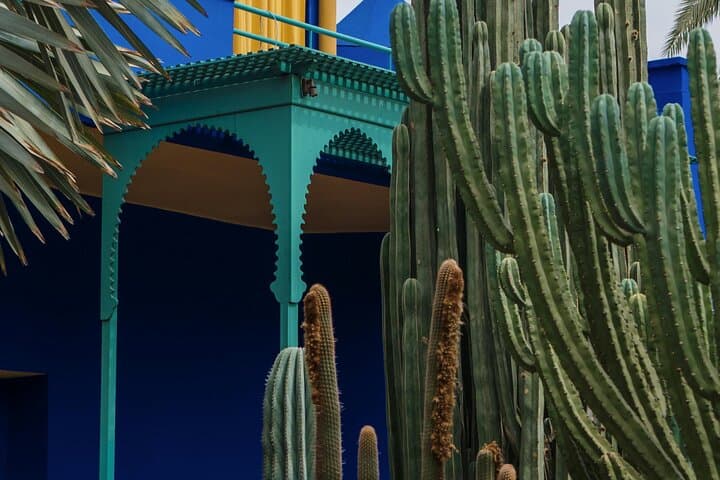
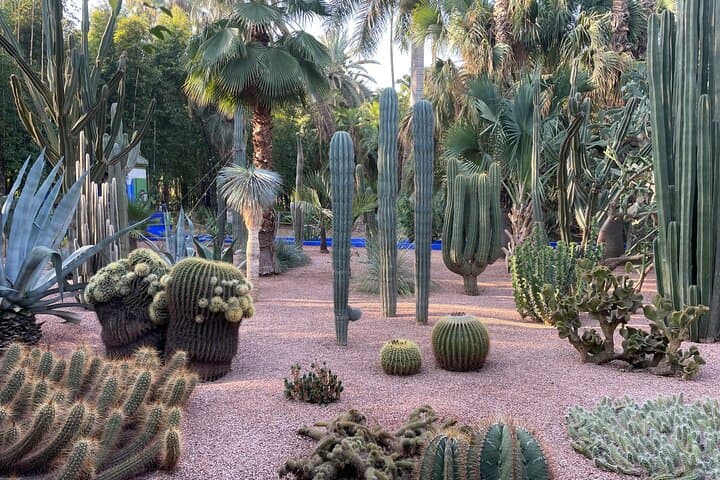
The path into Majorelle Garden opens like a calm exhale — cobalt walls bright against the ochre city, palms and towering cacti shading narrow walkways. Visitors move from sunlit plazas into a hush of foliage where fountains breathe and the scent of jasmine drifts in the warm air.
Verified experiences and guided adventures in the surrounding area.
Operated by Sunny Morocco · Marrakech, Marrakech-Safi
The path into Majorelle Garden opens like a calm exhale — cobalt walls bright against the ochre city, palms and towering cacti shading narrow walkways. Visitors move from sunlit plazas into a hush of foliage where fountains breathe and the scent of jasmine drifts in the warm air.
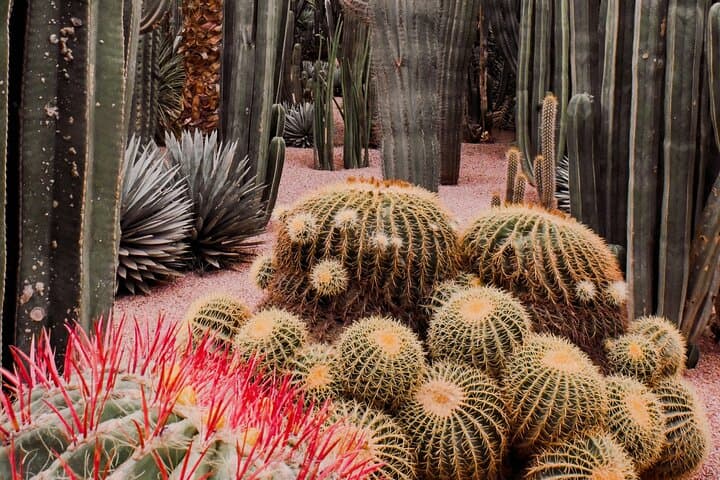
Created by French painter Jacques Majorelle in the 1920s–30s, the garden is both artistic statement and botanical experiment: exotic palms, succulents, and rare cacti planted around a signature blue villa. In the 1980s Yves Saint Laurent and Pierre Bergé saved the site from development, restoring plantings and establishing the Berber Museum on site; today the garden is a compact cultural stop that links colonial-era design, Moroccan craft, and modern conservation.
Geology here is subtle — the garden’s microclimate and irrigation sustain non-native species in Marrakech’s semi-arid plain. Culturally, Majorelle sits near the medina and the newer Yves Saint Laurent Museum, making it an easy half-day insert into a city itinerary.
Practicalities matter: visits are typically 1–2 hours; paths are paved but can be busy, so timed tickets and an early arrival flatten the crowds. Sun protection and water are essential during summer, while spring and fall offer the most comfortable temperatures. Photography is a draw — respect signage around museum interiors and avoid tripods during peak hours. The site is widely accessible and suitable for most fitness levels; plan transport by taxi or a short walk from central Marrakech. Majorelle is a quiet, cultivated encounter with plants and design — relaxing, photo-rich, and historically layered.
easy.
1–3 hours.
Suitable for most visitors; requires light walking on paved and sometimes narrow paths.
Yes; entry is controlled and you’ll receive exact visit timing at booking—arrive within your slot to avoid being turned away.
Most visitors spend 1–2 hours exploring the garden and the small Berber Museum; budget 2–3 hours if you include nearby museums or a café break.
The site reports wheelchair-accessible routes and surfaces, though staff can advise on the smoothest paths and any temporary access changes.
Yes—paths are generally stroller-friendly, but some narrower areas and steps may require lifting or an alternate route.
Jacques Majorelle built the garden in the early 20th century; Yves Saint Laurent and Pierre Bergé purchased and restored it in the 1980s, preserving its plant collections and villa.
Water management is central—maintaining this exotic collection in an arid region requires careful irrigation; visitors are encouraged to stay on paths and avoid disturbing plantings.
Sunny Morocco operates guided outdoor trips and adventures with an emphasis on safety, stewardship, and memorable experiences.

The path into Majorelle Garden opens like a calm exhale — cobalt walls bright against the ochre city, palms and towering cacti shading narrow walkways. Visitors move from sunlit plazas into a hush of foliage where fountains breathe and the scent of jasmine drifts in the warm air.
The path into Majorelle Garden opens like a calm exhale — cobalt walls bright against the ochre city, palms and towering cacti shading narrow walkways. Visitors move from sunlit plazas into a hush of foliage where fountains breathe and the scent of jasmine drifts in the warm air.
Created by French painter Jacques Majorelle in the 1920s–30s, the garden is both artistic statement and botanical experiment: exotic palms, succulents, and rare cacti planted around a signature blue villa. In the 1980s Yves Saint Laurent and Pierre Bergé saved the site from development, restoring plantings and establishing the Berber Museum on site; today the garden is a compact cultural stop that links colonial-era design, Moroccan craft, and modern conservation.
Geology here is subtle — the garden’s microclimate and irrigation sustain non-native species in Marrakech’s semi-arid plain. Culturally, Majorelle sits near the medina and the newer Yves Saint Laurent Museum, making it an easy half-day insert into a city itinerary.
Practicalities matter: visits are typically 1–2 hours; paths are paved but can be busy, so timed tickets and an early arrival flatten the crowds. Sun protection and water are essential during summer, while spring and fall offer the most comfortable temperatures. Photography is a draw — respect signage around museum interiors and avoid tripods during peak hours. The site is widely accessible and suitable for most fitness levels; plan transport by taxi or a short walk from central Marrakech. Majorelle is a quiet, cultivated encounter with plants and design — relaxing, photo-rich, and historically layered.