THE ADVENTURE COLLECTIVE® · Independent discovery and booking for outdoor travel

Dress as a maiko and samurai in Higashiyama near Kiyomizu-dera—an intimate studio transformation that pairs historic kimono dressing with staged portrait photography. Expect 2–2.5 hours of makeup, costume, and curated photos with optional neighborhood strolling.
Dress as a maiko and samurai in Higashiyama near Kiyomizu-dera—an intimate studio transformation that pairs historic kimono dressing with staged portrait photography. Expect 2–2.5 hours of makeup, costume, and curated photos with optional neighborhood strolling.
A narrow stone lane in Higashiyama opens like a quiet stage: paper lanterns hang low, wooden eaves throw cool shadows, and the air smells faintly of polished wood and incense. Here, in a renovated machiya near Kiyomizu-dera, a maiko's white face and a samurai's simple kimono are not costume pieces but entry points to another era.
Verified experiences and guided adventures in the surrounding area.
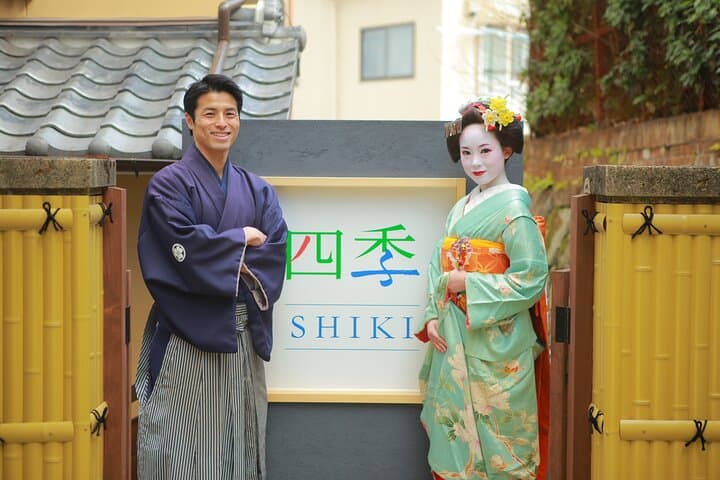
Operated by 舞妓体験・レンタル着物 スタジオ四季 · Kyoto, Kyoto
A narrow stone lane in Higashiyama opens like a quiet stage: paper lanterns hang low, wooden eaves throw cool shadows, and the air smells faintly of polished wood and incense. Here, in a renovated machiya near Kiyomizu-dera, a maiko's white face and a samurai's simple kimono are not costume pieces but entry points to another era.
The neighborhood around Kiyomizu-dera grew around pilgrimage routes in the Edo period, its streets shaped by steep slopes and compact wooden townhouses. The experience leans on that history—kimono cuts and obi knots reflect centuries of Kyoto tailoring, and posed portraits echo studio practices developed in the early 20th century as Japan engaged with modern photography.
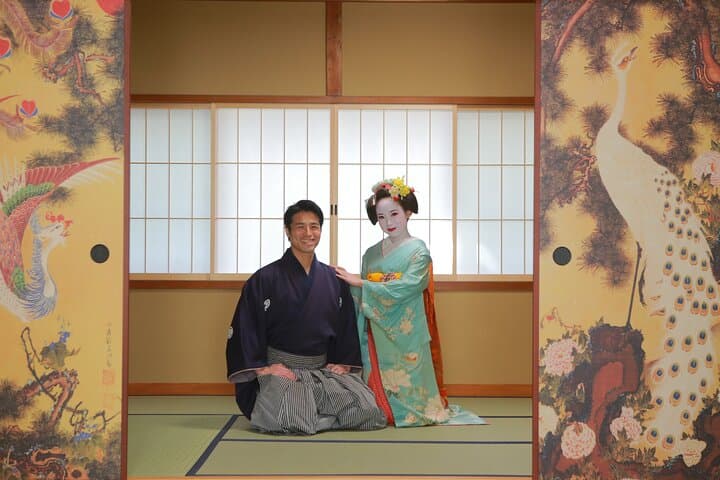
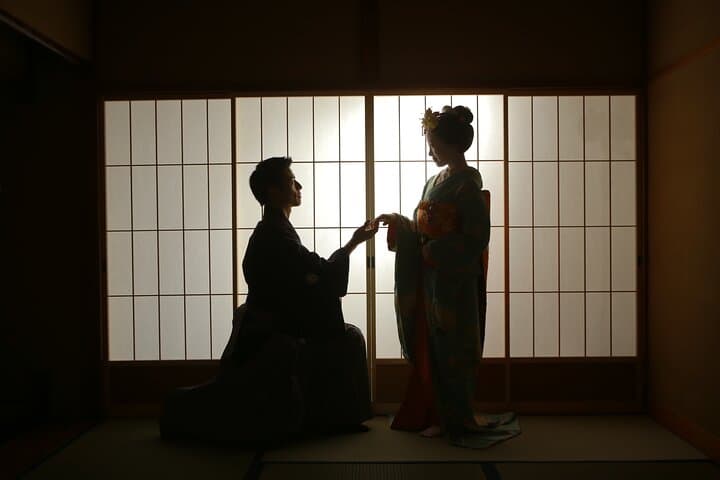
You’ll move through ritual: cleansing, dressing from a collection of roughly 200 kimonos, optional white makeup for women, and final touches like tabi socks and a wig or traditional hairstyle. Photographers stage you in a Japanese room, tea garden, or against a gold screen; digital files and four prints are provided, with a short window for your own photos.
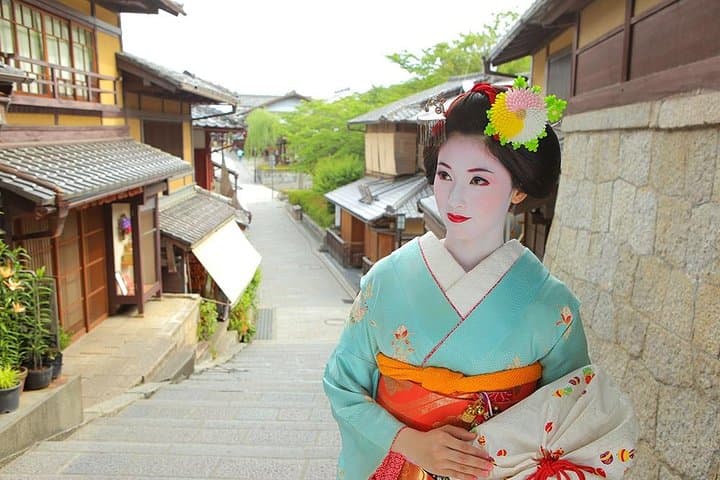
Practically, the session runs about 2–2.5 hours. Allow extra time for travel through narrow streets and for a 30–60 minute optional stroll among Sanenzaka and Nene no Michi. Note health and safety rules: participants must be at least 140 cm tall; pregnant guests and those with certain skin conditions are not eligible. Public transit drops you within easy walking distance; comfortable footwear for travel, modest layers under the kimono, and a charged camera will make the day smoother.
This is a hands-on cultural portrait of Kyoto—performative, precise, and rooted in place.
easy.
2–3 hours.
Light activity: ability to stand and sit for fittings and short walks is sufficient
Yes; the couple plan includes kimono dressing for men and photos in samurai-style attire, with tabi provided.
The studio lists about 2 to 2.5 hours, which includes makeup, dressing, studio photography and a short self-photo window; optional strolls add 30–60 minutes.
Yes; all selected photographs are provided as data, plus four printed 203 x 133 mm images included in the package.
Participants must be 140 cm or taller; the studio does not accept pregnant guests or those with certain skin conditions—check at booking.
Higashiyama’s streets formed around pilgrimage routes to Kiyomizu-dera during the Edo period; the area preserves wooden machiya and narrow lanes that shaped Kyoto’s urban culture.
Studios and local shops encourage low-impact tourism—follow signage, avoid trampling plantings, and ask before photographing private gardens to respect preservation efforts.
舞妓体験・レンタル着物 スタジオ四季 operates guided outdoor trips and adventures with an emphasis on safety, stewardship, and memorable experiences.
A narrow stone lane in Higashiyama opens like a quiet stage: paper lanterns hang low, wooden eaves throw cool shadows, and the air smells faintly of polished wood and incense. Here, in a renovated machiya near Kiyomizu-dera, a maiko's white face and a samurai's simple kimono are not costume pieces but entry points to another era.
A narrow stone lane in Higashiyama opens like a quiet stage: paper lanterns hang low, wooden eaves throw cool shadows, and the air smells faintly of polished wood and incense. Here, in a renovated machiya near Kiyomizu-dera, a maiko's white face and a samurai's simple kimono are not costume pieces but entry points to another era.
The neighborhood around Kiyomizu-dera grew around pilgrimage routes in the Edo period, its streets shaped by steep slopes and compact wooden townhouses. The experience leans on that history—kimono cuts and obi knots reflect centuries of Kyoto tailoring, and posed portraits echo studio practices developed in the early 20th century as Japan engaged with modern photography.
You’ll move through ritual: cleansing, dressing from a collection of roughly 200 kimonos, optional white makeup for women, and final touches like tabi socks and a wig or traditional hairstyle. Photographers stage you in a Japanese room, tea garden, or against a gold screen; digital files and four prints are provided, with a short window for your own photos.
Practically, the session runs about 2–2.5 hours. Allow extra time for travel through narrow streets and for a 30–60 minute optional stroll among Sanenzaka and Nene no Michi. Note health and safety rules: participants must be at least 140 cm tall; pregnant guests and those with certain skin conditions are not eligible. Public transit drops you within easy walking distance; comfortable footwear for travel, modest layers under the kimono, and a charged camera will make the day smoother.
This is a hands-on cultural portrait of Kyoto—performative, precise, and rooted in place.