THE ADVENTURE COLLECTIVE® · Independent discovery and booking for outdoor travel

A two-day route from Hanoi that threads Mai Chau’s valley lanes with the wild ridges of Pu Luong Nature Reserve — cycling past stilt houses, learning silk weaving in Lan Village, and drifting on a bamboo raft down Cham Stream. Practical yet immersive, the trip pairs cultural encounters with short treks and gentle climbs.
A two-day route from Hanoi that threads Mai Chau’s valley lanes with the wild ridges of Pu Luong Nature Reserve — cycling past stilt houses, learning silk weaving in Lan Village, and drifting on a bamboo raft down Cham Stream. Practical yet immersive, the trip pairs cultural encounters with short treks and gentle climbs.
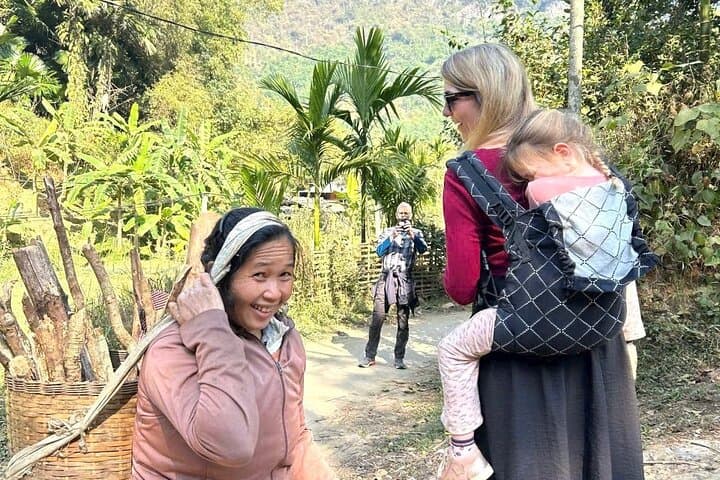
You step out of the minivan and the valley inhales—wide, green and sharp-edged, the terraces slicing the hills like steps cut for giants. Morning mist clings to thatch roofs while waterwheels turn with a slow, polite insistence; village dogs move through alleys like weathered locals who’ve seen thousands of visitors and still keep their own pace. On this two-day loop from Hanoi, the landscape alternates between the soft hum of Thai villages in Mai Chau and the steeper, limestone-folded ridges of Pu Luong Nature Reserve.
Verified experiences and guided adventures in the surrounding area.
Operated by Divi Travel · Mai Chau, Hoa Binh
You step out of the minivan and the valley inhales—wide, green and sharp-edged, the terraces slicing the hills like steps cut for giants. Morning mist clings to thatch roofs while waterwheels turn with a slow, polite insistence; village dogs move through alleys like weathered locals who’ve seen thousands of visitors and still keep their own pace. On this two-day loop from Hanoi, the landscape alternates between the soft hum of Thai villages in Mai Chau and the steeper, limestone-folded ridges of Pu Luong Nature Reserve.
The region’s human story reads across the land. White Thai and other hill communities have farmed these slopes for centuries; rows of narrow paddies and elevated stilt houses are practical answers to heavy seasonal rains and steep terrain. Geologically, Pu Luong’s ridges are part of the Red River Delta’s peripheral uplands—limestone and karst that have been cut into sharp gullies and amphitheaters by monsoon-fed streams. That same erosion has also gifted the valley its clear tributaries—Cham Stream waits below for a bamboo raft to slide downstream.
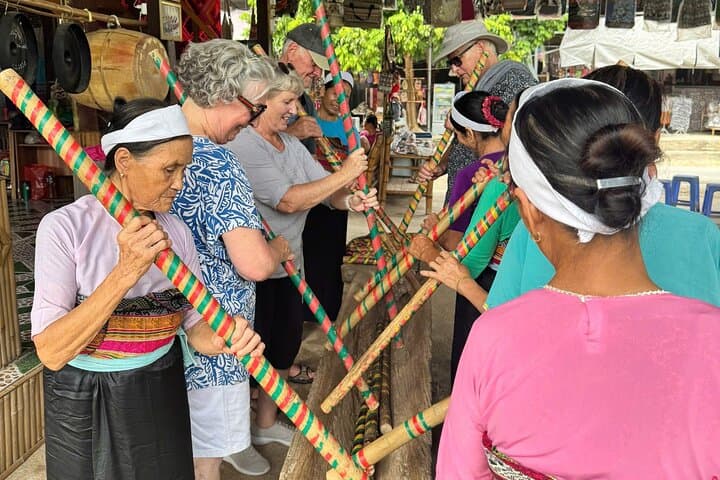
Culture is tactile here. In Lan Village, silk weaving is both craft and calendar: cocoons boiled, threads dyed with local plants, looms clacking in synchrony. You’ll get hands-on, learning simple patterns under the eye of an artisan who treats technique like language. In Chieu Lau, ancient wooden waterwheels and traditional farming show how communities choreograph water, soil and labor into harvests that sustain families and ceremonies.
Practically, the itinerary balances motion and quiet. Day one mixes a 3.5-hour drive from Hanoi with lunchtime in Mai Chau and a gentle cycling loop across valley lanes; Chieu Cave (Thousand Steps) involves a stiff climb to a viewpoint—expect several hundred meters of elevation gain if you take the ridgeline up. Day two centers on a scenic 4 km trek to Cham Stream, followed by a bamboo rafting float and lunch on the boat. Trails are a mixture of packed dirt, grassy farm paths and occasional rocky sections; good shoes and steady knees are recommended.
Timing matters: start early to avoid midday heat, and bring a swimsuit for the raft stop if weather allows. Respect homes: ask before photographing people, remove shoes in stilt houses, and consider buying brocade or handwoven scarves to support artisans directly. Hydrate for the climbs, pack a light rain shell during shoulder seasons, and leave with the satisfying sense that you’ve seen not a postcard but a working landscape—rivers that dare you to slow down, terraces that keep pushing the eye onward.
moderate.
2 days (2D1N).
Suitable for travelers who can handle several hours of light cycling, a 4 km trek and short uphill sections; basic stamina recommended.
Pick-up is available from Hanoi Old Quarter and several hotels; confirm your exact pickup point after booking—drivers typically arrive 30 minutes before departure.
Cycling is on gentle valley lanes and short hills; electric bikes are not guaranteed—moderate fitness and confidence on a bike are recommended.
Yes—bamboo rafting is stable and you can wear a life jacket; swimming is optional but not required for participation.
You’ll stay in comfortable lodges (examples: Pu Luong Amigo or Luna Resort) with basic amenities and pool access—upgrades may be available depending on availability.
Most lunches and one dinner are included as per the itinerary; expect local specialties and a floating lunch on Cham Stream.
The operator notes it’s suitable for most fitness levels but not recommended for pregnant travelers or those with serious back problems; infants must sit on laps.
Mai Chau and Pu Luong have long been home to Tai-speaking groups whose stilt houses and brocade traditions evolved from mountain rice farming practices over centuries.
Pu Luong is a protected reserve; stay on established trails, avoid single-use plastics, and buy crafts directly from local artisans to support sustainable incomes.
Divi Travel operates guided outdoor trips and adventures with an emphasis on safety, stewardship, and memorable experiences.

You step out of the minivan and the valley inhales—wide, green and sharp-edged, the terraces slicing the hills like steps cut for giants. Morning mist clings to thatch roofs while waterwheels turn with a slow, polite insistence; village dogs move through alleys like weathered locals who’ve seen thousands of visitors and still keep their own pace. On this two-day loop from Hanoi, the landscape alternates between the soft hum of Thai villages in Mai Chau and the steeper, limestone-folded ridges of Pu Luong Nature Reserve.
You step out of the minivan and the valley inhales—wide, green and sharp-edged, the terraces slicing the hills like steps cut for giants. Morning mist clings to thatch roofs while waterwheels turn with a slow, polite insistence; village dogs move through alleys like weathered locals who’ve seen thousands of visitors and still keep their own pace. On this two-day loop from Hanoi, the landscape alternates between the soft hum of Thai villages in Mai Chau and the steeper, limestone-folded ridges of Pu Luong Nature Reserve.
The region’s human story reads across the land. White Thai and other hill communities have farmed these slopes for centuries; rows of narrow paddies and elevated stilt houses are practical answers to heavy seasonal rains and steep terrain. Geologically, Pu Luong’s ridges are part of the Red River Delta’s peripheral uplands—limestone and karst that have been cut into sharp gullies and amphitheaters by monsoon-fed streams. That same erosion has also gifted the valley its clear tributaries—Cham Stream waits below for a bamboo raft to slide downstream.
Culture is tactile here. In Lan Village, silk weaving is both craft and calendar: cocoons boiled, threads dyed with local plants, looms clacking in synchrony. You’ll get hands-on, learning simple patterns under the eye of an artisan who treats technique like language. In Chieu Lau, ancient wooden waterwheels and traditional farming show how communities choreograph water, soil and labor into harvests that sustain families and ceremonies.
Practically, the itinerary balances motion and quiet. Day one mixes a 3.5-hour drive from Hanoi with lunchtime in Mai Chau and a gentle cycling loop across valley lanes; Chieu Cave (Thousand Steps) involves a stiff climb to a viewpoint—expect several hundred meters of elevation gain if you take the ridgeline up. Day two centers on a scenic 4 km trek to Cham Stream, followed by a bamboo rafting float and lunch on the boat. Trails are a mixture of packed dirt, grassy farm paths and occasional rocky sections; good shoes and steady knees are recommended.
Timing matters: start early to avoid midday heat, and bring a swimsuit for the raft stop if weather allows. Respect homes: ask before photographing people, remove shoes in stilt houses, and consider buying brocade or handwoven scarves to support artisans directly. Hydrate for the climbs, pack a light rain shell during shoulder seasons, and leave with the satisfying sense that you’ve seen not a postcard but a working landscape—rivers that dare you to slow down, terraces that keep pushing the eye onward.