THE ADVENTURE COLLECTIVE® · Independent discovery and booking for outdoor travel

Escape Hanoi for a day and ride through Mai Chau’s green rice valleys, visit Thai stilt houses, and browse hill-tribe markets at Thung Khe Pass. This full-day tour blends gentle cycling, a short hike and cultural stops with round-trip transport and lunch included.
Escape Hanoi for a day and ride through Mai Chau’s green rice valleys, visit Thai stilt houses, and browse hill-tribe markets at Thung Khe Pass. This full-day tour blends gentle cycling, a short hike and cultural stops with round-trip transport and lunch included.
The van eases out of Hanoi before dawn, the city receding into a low, gray smudge while karst ridges begin to rise like quiet teeth on the horizon. By mid-morning the road drops into Mai Chau Valley and the air changes — cooler, dust-muted, carrying the faint scent of wet earth and young rice. Visitors step out to meet the rhythm here: slow conversations, children running between stilt houses, and the steady scrape of looms in a village workshop.
Verified experiences and guided adventures in the surrounding area.
Operated by Before2 · Mai Chau, Hoa Binh
The van eases out of Hanoi before dawn, the city receding into a low, gray smudge while karst ridges begin to rise like quiet teeth on the horizon. By mid-morning the road drops into Mai Chau Valley and the air changes — cooler, dust-muted, carrying the faint scent of wet earth and young rice. Visitors step out to meet the rhythm here: slow conversations, children running between stilt houses, and the steady scrape of looms in a village workshop.
Mai Chau sits on the edge of the Red River Delta where limestone highlands yield to broad, fertile basins. The valley has been farmed by Thai and Muong communities for centuries; the wooden stilt houses you visit today follow architectural patterns designed for monsoon seasons, ventilation and the easy storage of harvested rice. Thung Khe Pass, the high point on the drive in, offers a sweeping viewpoint where vendors from hill tribes sell woven goods — a practical market born of the region’s role as a crossroads between upland and lowland cultures.
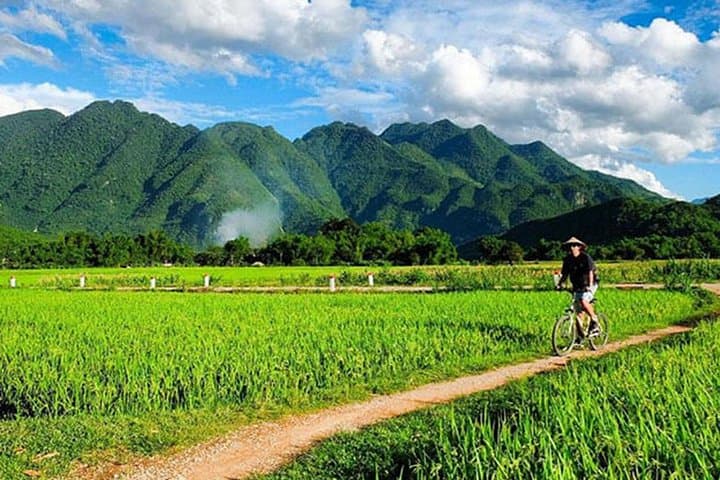
Geologically, the surrounding landscape is karst—limestone shaped by water into jagged ridges and hidden caves. The valley floor, in contrast, is alluvial generosity: flat fields that flood and renew each season, daring you to count the shades of green.
The day is organized to be approachable for travelers who want culture, light exercise and scenery without a multi-day commitment. After a village tour and a lunch of regional dishes—sticky rice, grilled fish and vegetable dishes with herbs—guests take a guided bicycle loop through gravel lanes and firm earth roads. The cycling is gentle: expect 8–15 km on mostly flat terrain with short, occasional inclines; a short hike (30–45 minutes with up to 200 m elevation gain) leads to a viewpoint above the valley.
Practical edge: the program includes round-trip transport from Hanoi (approx. 3–4 hours each way depending on traffic), an English-speaking guide, entrance fees and lunch. Wear sturdy sneakers or light hiking shoes, bring sun protection and a refillable water bottle, and pack a light rain jacket—weather can shift quickly in the highlands. If you want to shop, bring small local currency for handcrafted textiles; bargaining is expected but should be polite.
This is a day meant to balance ease and immersion. It’s not a strenuous backcountry outing; instead it offers a compressed but meaningful window into northern Vietnam’s rural life—banded looms, rice paddies that act like mirrors at dusk, and hosts who measure time by seasons rather than schedules. For travelers short on time but hungry for landscape and culture, Mai Chau delivers both in one well-paced day.
moderate.
7–8 hours.
Moderate fitness: able to cycle 8–15 km on flat to gently rolling roads and walk a short uphill trail.
Expect about 3–4 hours each way depending on traffic; pickup occurs in Hanoi’s Old Quarter early in the morning.
Yes—routes are mostly flat on firm village roads; guides set a comfortable pace and you can opt for a shorter ride if needed.
Lunch in the village is included; operators can usually accommodate vegetarian, vegan and gluten-free requests with advance notice.
Polite, casual clothing that covers shoulders and knees is respectful when entering homes or community spaces; breathable fabrics are best.
Children are welcome but infants must sit on an adult’s lap during transport; consider the length of the day before booking for very young children.
Yes, polite bargaining is customary at hill-tribe stalls—start lower and meet the seller in the middle while remaining respectful.
Mai Chau has long been home to Thai and Muong ethnic groups; their stilt-house architecture and woven brocades reflect a farming culture shaped by seasonal monsoons and valley agriculture.
Tour operators are encouraged to support local artisans directly and to minimize single-use plastics; stay on designated paths to protect crop margins and nesting birds.
Before2 operates guided outdoor trips and adventures with an emphasis on safety, stewardship, and memorable experiences.



The van eases out of Hanoi before dawn, the city receding into a low, gray smudge while karst ridges begin to rise like quiet teeth on the horizon. By mid-morning the road drops into Mai Chau Valley and the air changes — cooler, dust-muted, carrying the faint scent of wet earth and young rice. Visitors step out to meet the rhythm here: slow conversations, children running between stilt houses, and the steady scrape of looms in a village workshop.
The van eases out of Hanoi before dawn, the city receding into a low, gray smudge while karst ridges begin to rise like quiet teeth on the horizon. By mid-morning the road drops into Mai Chau Valley and the air changes — cooler, dust-muted, carrying the faint scent of wet earth and young rice. Visitors step out to meet the rhythm here: slow conversations, children running between stilt houses, and the steady scrape of looms in a village workshop.
Mai Chau sits on the edge of the Red River Delta where limestone highlands yield to broad, fertile basins. The valley has been farmed by Thai and Muong communities for centuries; the wooden stilt houses you visit today follow architectural patterns designed for monsoon seasons, ventilation and the easy storage of harvested rice. Thung Khe Pass, the high point on the drive in, offers a sweeping viewpoint where vendors from hill tribes sell woven goods — a practical market born of the region’s role as a crossroads between upland and lowland cultures.
Geologically, the surrounding landscape is karst—limestone shaped by water into jagged ridges and hidden caves. The valley floor, in contrast, is alluvial generosity: flat fields that flood and renew each season, daring you to count the shades of green.
The day is organized to be approachable for travelers who want culture, light exercise and scenery without a multi-day commitment. After a village tour and a lunch of regional dishes—sticky rice, grilled fish and vegetable dishes with herbs—guests take a guided bicycle loop through gravel lanes and firm earth roads. The cycling is gentle: expect 8–15 km on mostly flat terrain with short, occasional inclines; a short hike (30–45 minutes with up to 200 m elevation gain) leads to a viewpoint above the valley.
Practical edge: the program includes round-trip transport from Hanoi (approx. 3–4 hours each way depending on traffic), an English-speaking guide, entrance fees and lunch. Wear sturdy sneakers or light hiking shoes, bring sun protection and a refillable water bottle, and pack a light rain jacket—weather can shift quickly in the highlands. If you want to shop, bring small local currency for handcrafted textiles; bargaining is expected but should be polite.
This is a day meant to balance ease and immersion. It’s not a strenuous backcountry outing; instead it offers a compressed but meaningful window into northern Vietnam’s rural life—banded looms, rice paddies that act like mirrors at dusk, and hosts who measure time by seasons rather than schedules. For travelers short on time but hungry for landscape and culture, Mai Chau delivers both in one well-paced day.