THE ADVENTURE COLLECTIVE® · Independent discovery and booking for outdoor travel

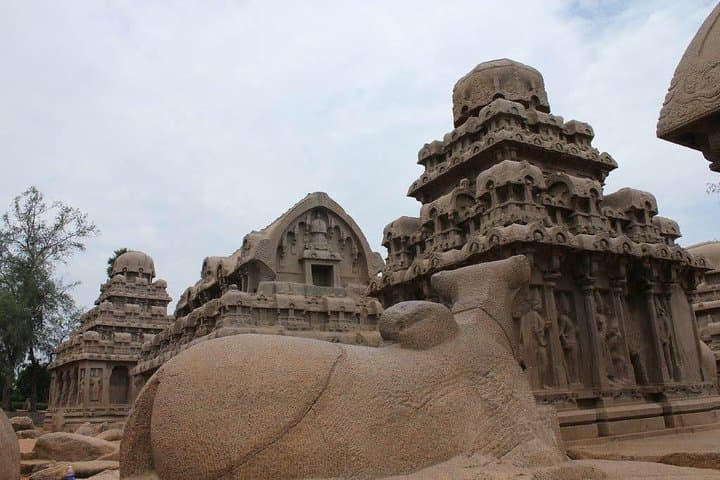
Explore 7th‑century Pallava rock‑cut monuments with a heritage storyteller who links myth, architecture and coastal trade. This 3–4 hour guided walk covers Shore Temple, Pancha Rathas, Arjuna’s Penance and the astonishing Krishna’s Butter Ball.
Explore 7th‑century Pallava rock‑cut monuments with a heritage storyteller who links myth, architecture and coastal trade. This 3–4 hour guided walk covers Shore Temple, Pancha Rathas, Arjuna’s Penance and the astonishing Krishna’s Butter Ball.
The sea wind cuts across low cliffs as you step onto the broad stone forecourt of the Shore Temple, salt spray daring you to look closer at its weathered bas-relief faces. A heritage storyteller guides the group, voices threading myth into masonry as gulls wheel above the ancient coastline.
Verified experiences and guided adventures in the surrounding area.
Operated by KeyTerns · Mahabalipuram, Tamil Nadu
The sea wind cuts across low cliffs as you step onto the broad stone forecourt of the Shore Temple, salt spray daring you to look closer at its weathered bas-relief faces. A heritage storyteller guides the group, voices threading myth into masonry as gulls wheel above the ancient coastline.
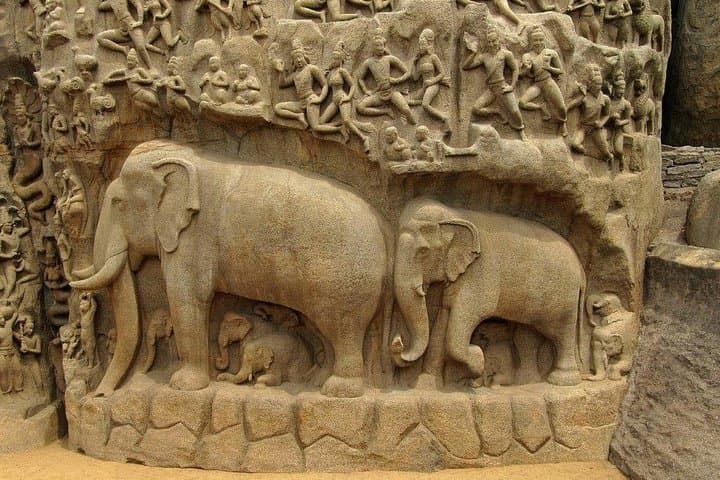
Mahabalipuram (Mamallapuram) preserves the work of the 7th‑century Pallava rulers: rock‑cut temples, monolithic rathas and vast bas‑reliefs like Arjuna’s Penance carved directly into granite. Geology here is obvious—the hard, coarse-grained granite resists erosion in places and flakes elsewhere, producing the dramatic boulders and the famous Krishna’s Butter Ball that seems to defy gravity.
Culturally this was a bustling port on trade routes to Southeast Asia; the lighthouse and shoreline attest to centuries of ship traffic, and today local stone carvers still sell hand‑chiseled figures and seashell crafts near the sites.
Expect three to four hours of walking over uneven rock, stone steps and short climbs to viewpoints. The storyteller fills gaps that plaques don’t: why certain panels show procession scenes, how temple plans mirror cosmology, and how myths and trade shaped sculptural choices.
Practical notes: arrive in the morning to avoid heat and the strongest sun; wear grippy shoes for slick rock; carry water and sun protection; dress respectfully for active temple sites. Photography is rewarding but watch footing around cliff edges. Small admission fees may apply at specific monuments; check opening hours and local rules. With a balanced mix of context and close‑up observation, this guided visit turns stone into story and history into a paced, tangible walk through time.
easy.
3–4 hours.
Light walking ability; suitable for most fitness levels but expect uneven terrain and short climbs
The guided experience runs about 3–4 hours and covers multiple monuments with short walking segments between sites.
The tour is rated easy but involves uneven rock and steps; it's stroller and wheelchair accessible in some areas, though certain viewpoints require climbing.
Admission is not uniformly included—specific monuments may charge a small fee; check the booking details or ask the guide on arrival.
Early morning and late afternoon offer cooler temperatures and better photographic light; avoid the hottest part of summer midday if possible.
Mahabalipuram was a major 7th‑century Pallava port and sculptural center; many of the rock‑cut temples date to that era and reflect both Hindu ritual and maritime trade influences.
The granite carvings are sensitive to salt weathering and foot traffic—avoid touching surfaces, and follow local rules to minimize wear; supporting licensed local artisans helps sustain community heritage.
KeyTerns operates guided outdoor trips and adventures with an emphasis on safety, stewardship, and memorable experiences.
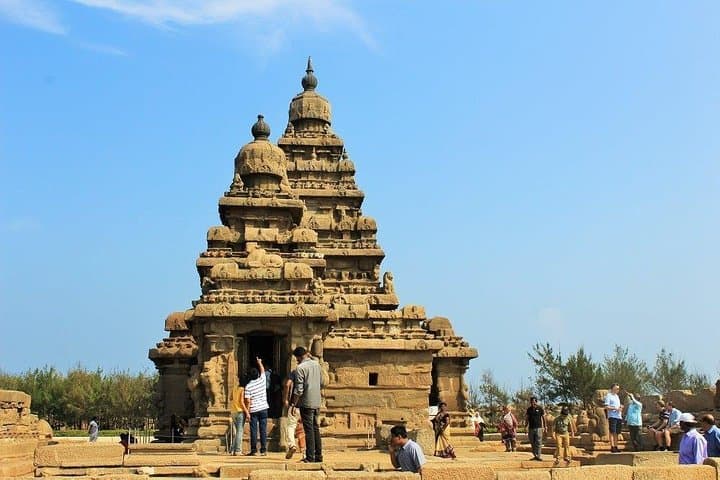
The sea wind cuts across low cliffs as you step onto the broad stone forecourt of the Shore Temple, salt spray daring you to look closer at its weathered bas-relief faces. A heritage storyteller guides the group, voices threading myth into masonry as gulls wheel above the ancient coastline.
The sea wind cuts across low cliffs as you step onto the broad stone forecourt of the Shore Temple, salt spray daring you to look closer at its weathered bas-relief faces. A heritage storyteller guides the group, voices threading myth into masonry as gulls wheel above the ancient coastline.
Mahabalipuram (Mamallapuram) preserves the work of the 7th‑century Pallava rulers: rock‑cut temples, monolithic rathas and vast bas‑reliefs like Arjuna’s Penance carved directly into granite. Geology here is obvious—the hard, coarse-grained granite resists erosion in places and flakes elsewhere, producing the dramatic boulders and the famous Krishna’s Butter Ball that seems to defy gravity.
Culturally this was a bustling port on trade routes to Southeast Asia; the lighthouse and shoreline attest to centuries of ship traffic, and today local stone carvers still sell hand‑chiseled figures and seashell crafts near the sites.
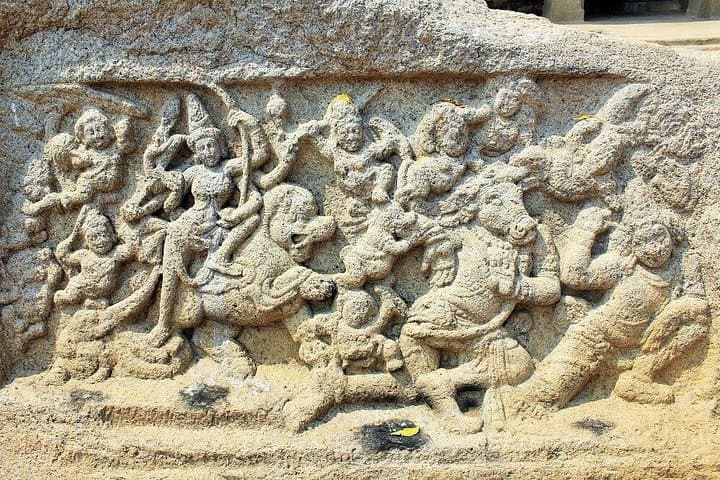
Expect three to four hours of walking over uneven rock, stone steps and short climbs to viewpoints. The storyteller fills gaps that plaques don’t: why certain panels show procession scenes, how temple plans mirror cosmology, and how myths and trade shaped sculptural choices.
Practical notes: arrive in the morning to avoid heat and the strongest sun; wear grippy shoes for slick rock; carry water and sun protection; dress respectfully for active temple sites. Photography is rewarding but watch footing around cliff edges. Small admission fees may apply at specific monuments; check opening hours and local rules. With a balanced mix of context and close‑up observation, this guided visit turns stone into story and history into a paced, tangible walk through time.