THE ADVENTURE COLLECTIVE® · Independent discovery and booking for outdoor travel

Walk between two of Japan’s best-preserved Edo-period post towns on a private, guided day tour. Expect valley views, traditional inns, and a culturally rich stroll along the historic Nakasendo with public-bus connections.
Walk between two of Japan’s best-preserved Edo-period post towns on a private, guided day tour. Expect valley views, traditional inns, and a culturally rich stroll along the historic Nakasendo with public-bus connections.
Morning mist clings to cedar trunks as you step from Nagiso station onto the stone-slab path that links Magome and Tsumago. The air smells of wet earth and charcoal from local hearths; wooden eaves throw narrow pools of shadow across the lane. On this private, guided day trip you trade modern bustle for a corridor of Edo-era post towns where merchants, samurai and pilgrims once paused between Tokyo and Kyoto.
Verified experiences and guided adventures in the surrounding area.
Operated by Japan Guide Agency · Nakatsugawa, Gifu Prefecture
Morning mist clings to cedar trunks as you step from Nagiso station onto the stone-slab path that links Magome and Tsumago. The air smells of wet earth and charcoal from local hearths; wooden eaves throw narrow pools of shadow across the lane. On this private, guided day trip you trade modern bustle for a corridor of Edo-era post towns where merchants, samurai and pilgrims once paused between Tokyo and Kyoto.
The Nakasendo route was one of two principal inland highways in the Edo period. Magome perches on a slope with a broad stone promenade and valley views; Tsumago preserves flat, unpaved streets, original inns and the Honjin, offering a rare, low-technology glimpse into 17th–19th century Japan. Geologically the trail skirts the Kiso River basin, carved from granite foothills; forested stretches alternately climb and descend gentle ridgelines that retain the scent of hinoki and cedar.
Expect a culturally attentive pace—your government-licensed guide explains local crafts, the role of post towns, and simple etiquette when entering shrines or family-run shops. The tour uses public buses between points; it is accessible for most fitness levels and is not a rugged hike, though some walking on slopes and packed earth is required.
Plan for 6 hours total, bring cash for bus fares and small purchases, and wear comfortable shoes with good grip. Carry a lightweight waterproof, snacks and water, and arrive early at Nagiso or Nakatsugawa station to beat midday crowds. Respect quiet hours in Tsumago—photography is welcomed, but keep voices low near residential inns. Always.
easy.
6 hours.
Light walking ability — able to handle several hours on mixed paved and packed-earth surfaces and moderate slopes.
The guided private tour runs about 6 hours and involves light to moderate walking on village streets and short slopes; it’s not a strenuous hike.
No private vehicle is included—this itinerary uses local buses and public transport; bring cash for fares or coordinate transport with your guide after booking.
Many main streets and public areas in both towns are accessible, but some older sections have steps or uneven surfaces; contact the operator to confirm specific access needs.
Photography is generally allowed outdoors; interior access to historic inns (honjin) may require admission or permission—follow signage and guide recommendations.
The Nakasendo was a principal inland route in the Edo period connecting Edo (Tokyo) and Kyoto; Magome and Tsumago were key post towns offering lodging and services to travelers and officials.
Both towns maintain strict preservation rules to protect historic buildings; visitors are asked to avoid littering and to minimize noise to preserve fragile wooden structures.
Japan Guide Agency operates guided outdoor trips and adventures with an emphasis on safety, stewardship, and memorable experiences.

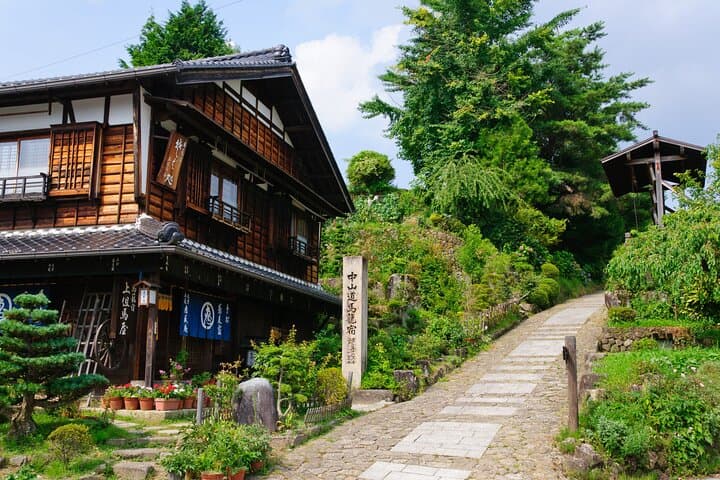


Morning mist clings to cedar trunks as you step from Nagiso station onto the stone-slab path that links Magome and Tsumago. The air smells of wet earth and charcoal from local hearths; wooden eaves throw narrow pools of shadow across the lane. On this private, guided day trip you trade modern bustle for a corridor of Edo-era post towns where merchants, samurai and pilgrims once paused between Tokyo and Kyoto.
Morning mist clings to cedar trunks as you step from Nagiso station onto the stone-slab path that links Magome and Tsumago. The air smells of wet earth and charcoal from local hearths; wooden eaves throw narrow pools of shadow across the lane. On this private, guided day trip you trade modern bustle for a corridor of Edo-era post towns where merchants, samurai and pilgrims once paused between Tokyo and Kyoto.
The Nakasendo route was one of two principal inland highways in the Edo period. Magome perches on a slope with a broad stone promenade and valley views; Tsumago preserves flat, unpaved streets, original inns and the Honjin, offering a rare, low-technology glimpse into 17th–19th century Japan. Geologically the trail skirts the Kiso River basin, carved from granite foothills; forested stretches alternately climb and descend gentle ridgelines that retain the scent of hinoki and cedar.
Expect a culturally attentive pace—your government-licensed guide explains local crafts, the role of post towns, and simple etiquette when entering shrines or family-run shops. The tour uses public buses between points; it is accessible for most fitness levels and is not a rugged hike, though some walking on slopes and packed earth is required.
Plan for 6 hours total, bring cash for bus fares and small purchases, and wear comfortable shoes with good grip. Carry a lightweight waterproof, snacks and water, and arrive early at Nagiso or Nakatsugawa station to beat midday crowds. Respect quiet hours in Tsumago—photography is welcomed, but keep voices low near residential inns. Always.